

Do you think you might be seeing things because you spot vertical lines on your horse’s barrel or abdomen? Think again — they are probably Lines of Blaschko
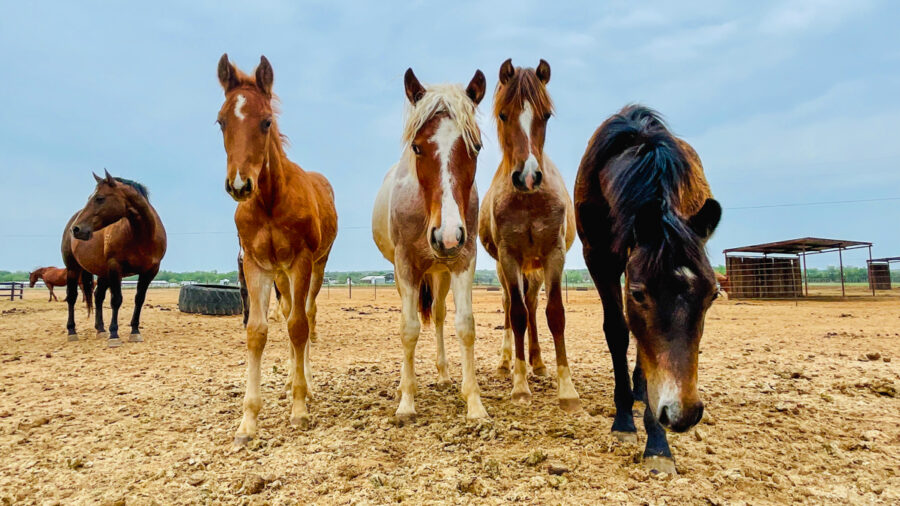
I was washing a couple of my two-year-old roan colts the other day and saw something sort of unusual while I scrubbed them with purple shampoo. Oddly enough, they had clearly defined stripes up and down their barrels.
At first, I wondered if they had leaned against something or been washed in a funny way. But as I got closer and delved deeper, I saw that they were a part of their coat patterns. I had seen this before in horses we’ve started and never gave it much thought, but I wanted to know if there could be something more to all this.
As the color genetics weirdo and research lover that I am, I wanted to figure out just what this phenomenon was and what it meant.
It turns out that these stripes are called “Lines of Blaschko,” and they are a real thing. Horses have them, dogs have them and even people have them. Generally, they are invisible on most species, but due to hyperpigmentation in certain colors and certain genetic epidural mutations in humans, they can be seen at different times on individuals.
These lines were originally discovered in 1901 by Dr. Alfred Blaschko, hence the name. He conducted a study on over 140 individuals and noted skin lesions that followed similar patterns. They are thought to represent the patterns that skin cells follow during embryonic development. In horses, they are not actually a color that can be genetically passed on, but certain colors (gray, roan, and Appaloosas that varnish) may demonstrate Lines of Blaschko vertically throughout their bodies. Often, a horse that comes across as brindle is expressing a heavy amount of pigmentation along this pattern of lines.
These lines are separate from other skin mutations and coat patterns and are not believed to be reflective of health issues. They are not linked to the lymphatic, muscular or nervous system of an individual. They are just something to be noted and, in the case of me and my roan colts, scrubbed, dried and admired.