

A microchipping program initiated by the Louisiana Department of Agriculture and Forestry aims to give horse owners peace of mind, but how does it work, and is it effective?
The Louisiana Department of Agriculture and Forestry has introduced a microchipping program to help deter saddle theft and provide horse owners with a reliable way to track and recover stolen property.
Each microchip links the saddle to its rightful owner. If stolen, a saddle’s microchip is entered into the National Crime Information Center, a database available to law enforcement agencies nationwide. When the microchip is scanned by an officer, they can instantly verify whether the saddle is stolen property, increasing the chances of recovery.
“Installing a microchip gives each saddle an identifier that can be entered into the NCIC,” LDAF officials. “If a saddle is stolen and later recovered, law enforcement can scan the chip, confirm ownership and return it to its rightful owner.”
In 2021, the LDAF received calls from horse owners requesting solutions to saddle theft, sparking the initiative to begin microchipping saddles. Stolen saddles often lacked serial numbers or distinct identifiers, making ownership claims difficult to prove. Typically, owners relied on photos or brand names as proof, but these methods proved unreliable. This made it harder for law enforcement to locate the rightful owner, underscoring the need for a more effective solution: microchipping.
How the Microchipping Process Works
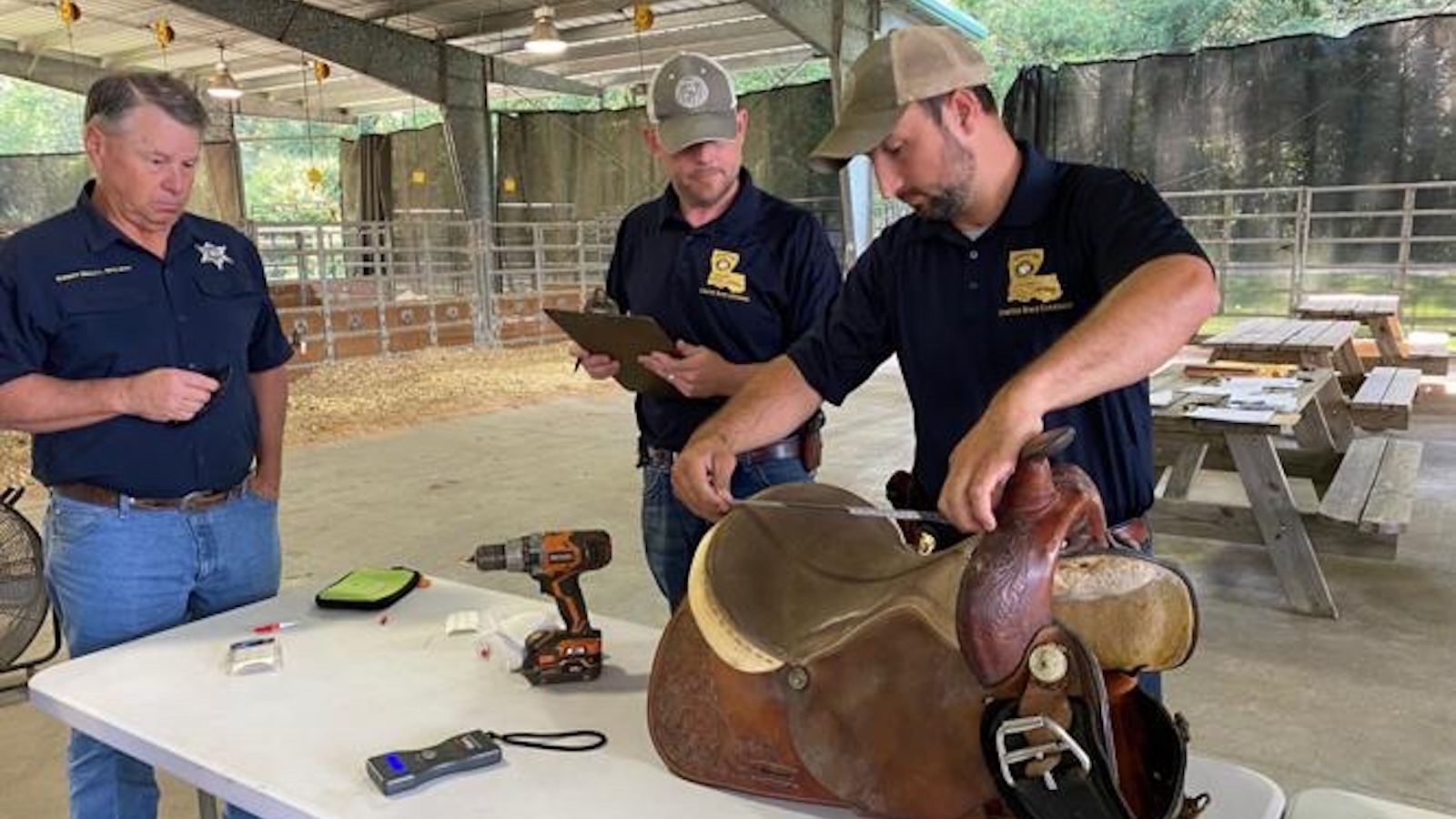
Microchipping saddles is both discreet and effective. First, a small hole is drilled into a hidden part of the saddle where the microchip is placed. Then, the chip is sealed with glue to ensure durability and keep it hidden from potential thieves.
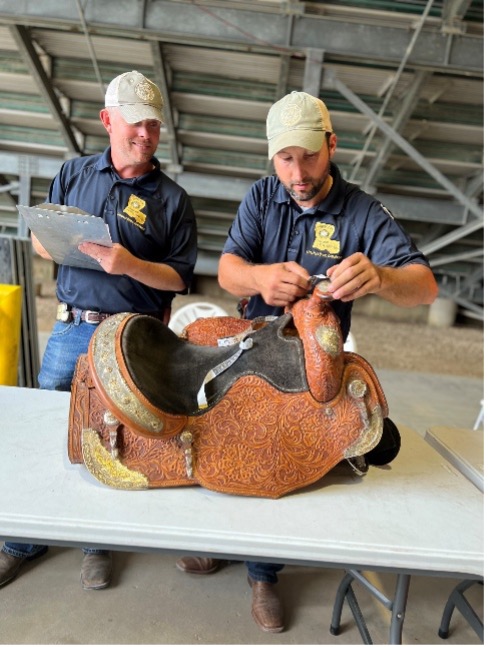
While there has been success in microchipping Western saddles, officials have faced challenges with English-style saddles.
“One challenge is finding a good location on some of the English saddles due to their design and construction,” the department notes. “However, we’ve managed to work around this difficulty and successfully chip both English and Western saddles.”
Why Microchipping Saddles Matters
For many, a saddle is not just a piece of equipment — it is an investment. With saddles often costing hundreds or even thousands of dollars, owners are increasingly willing to take steps to prevent theft.
The LDAF emphasizes the significance of this initiative, not only by installing microchips but also by recording specific details about each saddle.
“Along with the chip, we complete a saddle chip form that includes the seat size, horn height and width, and any other identifying details,” the LDAF explains. “Owners receive a copy for their records, and we file the original forms at LDAF headquarters in Baton Rouge, [Louisiana].” In cases where a saddle owner misplaces their copy, the department can provide a replacement.
Has Microchipping Been Successful?
While the LDAF has not reported significant recovery cases, the program has already proven effective as a deterrent to saddle theft. Having a microchip in a saddle discourages potential criminals because law enforcement can easily trace stolen property.
“The microchips continue to offer Louisiana’s farmers and ranchers an extra layer of protection,” LDAF officials emphasize. “It shows that LDAF brand inspectors are here to enforce the law and keep farm and ranch property safe from theft.”
With the continued rollout of microchipping, Louisiana riders and ranchers are gaining confidence in their ability to safeguard their equipment.