


From the days of the cattle drives to today, cowboy music has evolved with the themes and technology of the era. With so much musical variety now available and fewer people making their living off the land, will this roots-based genre stand the test of time?
A young cowpuncher with his hat tipped back and his spurs a-jingling sings as he drives little doggies up the trail toward Wyoming. A cowboy rides to a rocking-chair rhythm in the evening breeze and the murmur of the cottonwood trees. A bronc buster tries to tame a twisting, sunfishing strawberry roan.
Western music fans recognize these romantic images of cowboys created in the song “Whoopie Ti Yi To, Git Along Little Dogies,” “Don’t Fence Me In,” and “The Strawberry Roan.” Such songs are the commercialized, romanticized offshoot of authentic cowboy music, the frontier folk ballads and occupational songs written and sung by the men riding up the trail during the late 19th-century cattle drives.
As ranching culture and pop culture changed in the 1920s, so did the cowboy image and his music. Silver-screen songs, written by professional songwriters and sung by actors dressed as cowboys, presented romantic images of the West worldwide and elevated a cowboy’s status from that of subordinate laborer to heroic symbol of independence, freedom and the American spirit.
“The notion of a cowboy developed over a period of time,” says Andy Wilkinson, a composer and singer of cowboy folk music from Lubbock, Texas. “‘Cowboy’ used to be a [derogatory] term, and you could be whipped for using it. People like Charlie Goodnight were called cowmen, which had a higher status.”
Today, cowboy music, as well as Western music, continues to chronicle cowboy life of the past and present. As audiences and entertainers within the genres age, performers and producers search for fresh ways to introduce the music to members of a younger demographic, as well as educate them about cowboy music’s origins and role in shaping contemporary cowboy culture.
A Melding of Music
For centuries, laborers in isolated, often-perilous professions, such as sailors, drovers, farmers and slaves, made up poems and songs describing the dangers and harsh realities of their occupations and living conditions. They did it as a form of entertainment and to pass time while performing monotonous tasks.
A mix of African Americans, Native Americans, and immigrants from Mexico and Eastern Europe, the cowboy recited poems and sang for the same reasons.
“It’s well documented that only two out of five cowboys during the late 1800s were white, Anglo-Saxon Protestants,” notes Wilkinson, who is a descendant of Charles Goodnight. “Many were German, Scot and Irish immigrants.”
David Wilkie, founder and lead singer of the Canadian band Cowboy Celtic, has studied Celtic folk songs and their influence on cowboy music for more than 20 years, and during his concerts offers commentary on the cowboy and Celtic connections.
“When Great Britain invaded Scotland, they took cattle off the land and started grazing sheep,” Wilkie explains. “The Scots and Irish no longer had land on which to graze cattle, so they came to America and bought land. Some of the big ranches, such as the Matador, Rocking Chair and XIT ranches [all in Texas], were once Celtic-owned ranches.”
The immigrants brought with them their cultural heritage, including their traditional folk songs. As the cowboys headed north with cattle herds, they created new lyrics that fit their environment and set them to the tune of familiar folk melodies.
“We see a lot of Celtic influence in cowboy music,” explains Wilkie.
The most-documented and popular of these Celtic folk melodies is “The Streets of Laredo,” also known as “The Cowboy’s Lament.” The song traces to a ballad from the British Isles called “The Unfortunate Rake” and an old sailor song called “St. James Infirmary.”

Another example of cultural influence on cowboy songs is “Little Joe the Wrangler.” Written by N. Howard “Jack” Thorpe, who published the first book of cowboy folk songs in 1908, the song is sung to the melody of the hymn “Lily of the Valley.”
In his 1927 book of cowboy songs, title The American Songbag, Carl Sandburg connects the popular cowboy song “Whoopee Ti Yi Yo, Git Along Little Dogies” to Irish origins.
“This widely sung piece also has the smell of saddle leather and long reaches of prairies in it,” Sandburg wrote. “It is plainly of Irish origin, connecting with the lilts and the ballads that begin, ‘As I was a-walking one morning’.”
The first verse of the cowboy version goes like this:
“As I was a-walking one morning for pleasure,
I saw a cowpuncher come riding alone,
His hat was throwed back and his spurs was a-jingling,
And as he approached he was singing this song.
Whoopee ti yi yo, git along little dogies,
It’s your misfortune and none of my own.
Whoopee ti yi yo, git along little dogies,
For you know Wyoming will be your new home.”
Wilkie says the cowboy composer modeled his song after an old Irish ballad that contained the following verse:
“As I was a-walking one evening for pleasure,
Down by the still water I joggled along,
I met an old man making sad lamentation,
And nursing a baby that’s none of his own.
Ee-ay-oh, my laddie, lie easy,
It’s my misfortune and none of your own,
That she leaves me here weeping and rocking the cradle,
Minding a baby that’s none of my own.”
Other songs adapted from Celtic folk music include “The Old Chisholm Trail,” that may have been adapted from the old minstrel song “Uncle Ned.” The old Irish song “Nil Se na La” (It’s Not the Day) has the same melody as the cowboy song “Spanish is the Loving Tongue,” which is based on a Badger Clark poem.
“Early poems are an important part of cowboy music,” says songster Andy Hedges from Lubbock, Texas. “A lot of cowboy songs that became famous started out as poems, such as ‘Tying a Knot in the Devil’s Tail’ and ‘When the Work’s All Done This Fall’.”
During the late 1800s and early 1900s, when cowboy music was being created, there were no musical classifications by genre such as Western, blues or rock ‘n’ roll.
“The cowboy didn’t say he sung cowboy music, just like the black cowboys didn’t say they sung the blues; they were just singing work songs,” explains cowboy singer, songwriter and music historian Don Edwards of Hico, Texas.
“In the early 1900s, while Jack Thorpe was collecting cowboy songs, folklorist Howard Otem was collecting black songs in Appalachia. He found the earliest form of a blues song, which has four phrases. One of the main songs in the cowboy idiom, ‘Poor Lonesome Cowboy,’ is written in that exact form, with three lines and a tag line. ‘The Texas Song’ is written in an identical format. Carl Sandburg refers to the four-phrase song structure as the ‘range rider’s moan, a species of the cowboy blues.'”
Most cowboy songs were not written down, though; they were passed down from person to person orally. However, the first major change in cowboy music came through print. Thorp’s book Songs of the Cowboys, released in 1908, and John A. Lomax’s book Cowboy Songs and Other Frontier Ballads, published two years later, documented the lyrics so anyone could sing the songs.
“Once those songs were in print, you found cowboys with copies of the books in their guitar cases or bedrolls,” says Charlie Seeman, executive director of the Western Folklife Center in Elko, Nevada. “Two things happened — people could learn the songs from print or from person to person. Once the lyrics were in print, they tended to stay the same; they weren’t changing or being omitted when transferred orally from person to person.”
Singing in the Saddle
With advances in recording technology, radio programs and the phonograph in the 1920s, music started being shared aurally versus orally. The recording industry was born, creating genre classification to help market and sell records for profit. Bentley Ball cut the first record of cowboy songs in 1919, recording “Jesse James” and “The Dying Cowboy.” Texas cowboy Carl T. Sprague had the first cowboy hit with his 1925 recording of “When the Work’s All Done This Fall,” which reportedly sold 900,000 copies. Following in Sprague’s footsteps were singers like Jimmie Rodgers and Jules Verne Allen.
“Jimmie Rodgers, who was not a cowboy, unknowingly created cowboy music when he recorded ‘When the Cactus is in Bloom.'” Edwards says. “It was a romantic version of a cowboy song and opened the door for the singing cowboy era.”
As cowboy music evolved, the audiences’ expectations for performers also changed.
“It took the cowboy who was singing in a natural context, whether it was on trail drives or in the bunkhouse, and put him on a record and on a stage, which immediately changed the nature of his performance,” explains Seeman. “He was no longer singing for his friends; he was singing for a commercial audience with higher expectations. The performances and how the singers dressed became more polished.”
Records and radio paved the way for the motion-picture industry, which spawned Western music, an offshoot of cowboy music, and turned actors into singing-cowboy celebrities. Ken Maynard, who was in the 1929 film The Wagon Master, is credited with being the first singing cowboy. It wasn’t long before Maynard was overshadowed by Gene Autry, Tex Ritter, Roy Rogers and other singing silver-screen cowboys.
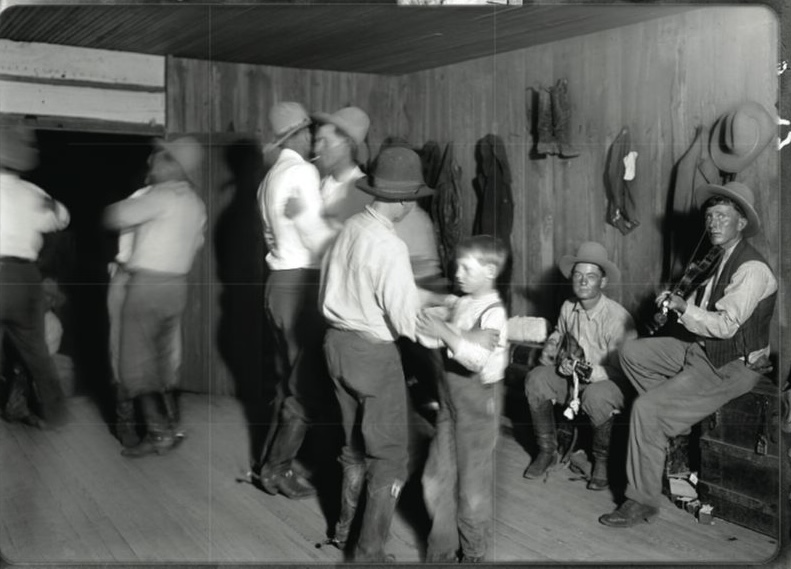
“In the 1930s, the movie stars weren’t real cowboys,” says Wilkinson. “They were actors and performers who dressed up for a part. The songs they sang were not cowboy folk songs. They were songs written by professional songwriters for the movies.”
Rather than describing the hardships of a working cowboy’s life, the movie songs created a much more romantic and mythical image of cowboys and the West. Cowboys were portrayed sitting around the campfire or sitting on their horses and playing guitars while they sang.
The reality was that cowboys riding up the trailer traveled light, folding their belongings into their bedrolls. Space on the wagon was limited, so only small musical instruments were brought along or songs were sung unaccompanied.
“Old-time cowboys didn’t carry guitars with them,” Edwards says. “They might have had guitars back at the bunkhouse, but not on the wagon. Fiddles, banjos, harmonicas and other small instruments were small enough to transport and held up to the trail without much harm.
“Cowboy music also wasn’t sung by a group in harmony. It was one person and one instrument, like the early blues.”
The cowboys sang for fun, camaraderie, and sometimes to soothe the cattle while on night watch. In his accounts of spending 19 years in the late 1800s riding from cow camp to cow camp in New Mexico and Texas gathering authentic cowboy songs, Thorp recalls seeing cowboys singing old hymns, Irish folk ballads and songs they made up. They did not yodel as some people assume.
“I doubt a working cowboy during the time yodeled,” Wilkinson says. “I am not a rancher, but I have been around cattle enough to doubt it would keep them calm. Besides not everyone can yodel, and the vocal technique did not come to America until the late 19th century and was popularized by Jimmie Rodgers.”
Edwards agrees that yodeling was not performed on the cattle drives; however, he notes that cowboys used a similar vocal technique called “howlin’ and hummin.””
Before long, the lone singing cowboy evolved into singing-cowboy trios and quartets such as the Sons of the Pioneers, co-founded by Leonard Slye (whose stage name later became Roy Rogers). The groups melded cowboy and Western music, not sacrificing one for the other.
Bob Nolan and Tim Spencer, two of the original members of the Sons of the Pioneers, became well-known songwriters, producing such Western hits as “Cool Water” and “Tumbling Tumbleweeds.”
“‘Tumbling Tumbleweeds’ was originally written about leaves,” Wilkinson says. “Then it was changed to fit the cowboy world and became a hit. If you read the lyrics, ‘See them tumbling down, pledging their love to the ground,’ you see it really has nothing to do with a tumbleweed.”
Festivals and Folk Revival
Western music’s heyday continued through the 1950s. As with all fads, the Western film and music industry waned as interest in mainstream country and rock ‘n’ roll increased. Cowboy folk music, however, had found a new audience during the Urban Folk Revival starting in the 1940s. Folk artists such as Bob Dylan, Woody Guthrie, Cisco Houston and Pete Seeger all incorporated a few cowboy folk songs into their repertoires.
“You weren’t considered a folk singer if you didn’t have a wide and varied repertoire,” Wilkinson says. “Artists would sing cowboy songs, union songs, sea songs, factory songs and others.”

Former bronc rider and cowboy Glenn Ohrlin and New Yorker Ramblin’ Jack Elliott were among the folk artists keeping cowboy music alive in the 1960s and ’70s at folk festivals throughout the United States, and they continue to do so today.
Born in 1926 in Minneapolis, Minnesota, Ohrlin left home when he was 16 years old to become a buckaroo in Nevada. He is one of the last cowboy singers to have heard traditional cowboy folk music sung in its purest form on the range.
Elliott and Ohrlin are fixtures at the National Cowboy Poetry Gathering, held each January in Elko, Nevada. Founded in 1985, Elko is the first festival dedicated to cowboy poetry and music, and helped create a renaissance in cowboy traditions and raise awareness of agrarian cultures all over the world.
“At the first couple of gatherings, [audience] expectations were different than they are today,” says Seeman. “Many of the poets and singers didn’t consider themselves professional performers; they performed for family and friends, and maybe at local events. They came to Elko and got on the stage, and you could see them get nervous and not know what to do. People favored that authenticity at that time. Over time, however, as more people became interested and the audiences grew, the performers began to polish and professionalize their performances and change acts to fit the stage and audiences.”
Today, more than 150 Western music festivals and cowboy gatherings take place throughout the United States, as well as a few in Canada, and they allow many cowboy and Western performers to make a living singing songs, telling stories and reciting poetry.
Carrying the Torch
Cowboy and Western music niches continue to have a loyal following, but there is concern among poets, musicians and event producers that the audience is aging and not being supplemented by people under 35 years old. The cost of concert tickets, the time of year events are held, lack of awareness of cowboy and Western music, and the rapidly changing ways people discover, obtain and listen to music are factors facing cowboy performers and event producers. The younger generation is also looking for music that relates to their lives and time in the West.

“We insist that young people take what’s given to them rather than inventing something new,” Wilkinson says. “Bob Dylan said it best: ‘Don’t block up the doorways, don’t block up the halls.’ Times are changing, and we’re trying to let them not change, and that’s a mistake.”
Wilkinson frequently writes and performs with Hedges, who at 32 years old is considered by veteran cowboy performers as one of the “keepers of the cowboy music flame.” An avid researcher of music roots, Hedges records traditional folk songs from the cowboy and Great Depression eras, singing lyrics and renditions not commonly known. He also notices a revival in roots-based music, which should include cowboy songs.
“I think a younger crowd would dig [cowboy] music if they knew about it,” he says. “I’d like to see cowboy music continue, but it’s a little neglected in the current roots-based revival. It doesn’t get mentioned as much as the blues and bluegrass.
“I’d like to see more young folks playing traditional folk music, and I hope my work will keep the music alive and help place it in the public’s eye as being part of American folk music, which is where I think it belongs.”
Cowboy festivals and Americana satellite radio stations are still the main places to hear cowboy music. However, technology has changed the way people hear about, buy and listen to music, points out Scott O’Malley, owner of Western Jubilee Recording Company in Colorado Springs, Colorado, the record label of many top cowboy and Western artists such as Don Edwards and Michael Martin Murphey. Social networking and YouTube videos are the key ways young people learn about music and recording artists, and then decide to buy the music. Single-song downloads are more common than buying entire albums. It’s also easy for an artist to record his or her own album and upload it.
“We still put out CDs, and there are some of us who still like having them on our shelves,” O’Malley says. “But we also make sure people can download the music. A lot of those who buy CDs do so at live performances so they can have the performer sign it, and they can take it home as a souvenir.”
Producers of cowboy gatherings are not only trying to draw a younger audience, but also cultivate younger talent to find the kind of things related to ranching culture that would be of interest to young people.
“We’re doing focus groups with younger ranch people to try to find out what we could be doing that would be relevant to them and that would encourage them to want to participate [in the National Cowboy Poetry Gathering] as performers and tradition bearers, and as members of the audience,” says Seeman. “A song from 1910 doesn’t have as much bearing on them as a song like Corb Lund’s songs. They like songs with higher energy. It’s a reflection of pop culture.”
“We also started holding midnight dances at the gathering, and they have become hugely popular with young people. They like to hang out and share experiences with their friends without a bunch of 60-year-olds.”
There is not an absence of fresh talent, however. Acclaimed Canadian recording artist Corb Lund, a protégé of Ian Tyson, and his band The Hurtin’ Albertans, offer a refreshing take on cowboy roots-based music that discusses contemporary topics with a little humor. Well-versed in various musical genres from punk to swing, Lund combines many influences into upbeat, entertaining performances to which younger audiences flock.
Utah artist Brenn Hill was once criticized by purists for having a full band on his albums, but has since become one of the leading singers and songwriters of authentic, contemporary cowboy music. Hill recently produced Wyoming cowgirl and ranch wife Trinity Seely’s self-titled album, which has struck a cord with the buckaroo crowd. California singer-songwriter Adrian, known as the Buckaroogirl, burst into the cowboy genre in 2007 when she was only 15 with her first album, Highway 80. With two other CDs under her belt, now-20-year-old student at Chico State University is booking concert dates from California to Texas.
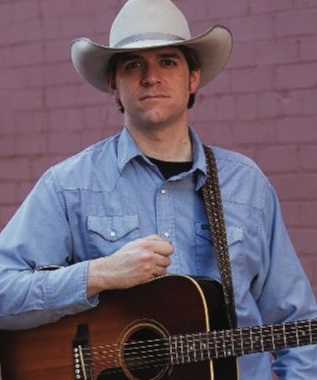
Old-time Texas swing is being carried on by plucky Texas teens Kristyn Harris and Mustang Mikki, and the Quebe Sisters.
Referring to his friend and fellow musician Buck Ramsey, Wilkinson says it’s important that contemporary cowboy music artists accurately reflect cowboy life and have meters and rhythms that fit being horseback.
“It’s important to make an honest appraisal of life,” he says. “Nostalgia is a dangerous thing because it covers up the evils.”
This article was originally published in the January 2013 issue of Western Horseman.


A very good article. Well researched.
Although there are a few contentious issues like Cowboy being a derogatory term. That is unless one is referring to the cow thieves of the revolutionary war. Back east, Cow-boys were raised by Brigadier General Oliver De Lancey, a Loyalist, and were also known as De Lancey’s Brigade or De Lancey’s Volunteers. They were tasked with conducting guerrilla warfare, raiding farms, and stealing cattle to disrupt the Continental Army’s supply lines. These activities earned them a reputation as lawless marauders. In the 1798 Portland Gazette referred to the cow-boys. “This Moll Coggin was the fiend who raifed the Oak boys to rebellion. I was well acquainted with the two cow-boys mentioned by the Noble Lord; they were my tenants , and were certainly endowed with supernatural powers.” Even the 1817 Rhode -Island Republican said ” …but to render them , by representing them infamous to have been cowboys , in plainer English cattle stealers.” In the next column they did not leave out the hyphen and it states “Col. Tallmage represents the captors of Andre to have been cow-boys. These terms were used long before the West’s cattle herders of the vaquero cowboys were realized. All one needs to do is read some of the books of the period or thousands of news paper articles to see the difference. (See Las Vegas daily gazette ([Las Vegas, N.M.]), January 7, 1886).
But the article was about western music and not a history lesson about the origin of the word cowboy or its uses.
I am glad the article mentioned the late great Don Edwards and his contribution to continuing the traditional western music as well as his contribution to the more modern songs labeled western. One of the songs Mr. Edwards wrote and sang pertinent to this excellent article was The Campfire has Gone Out. In that song Mr. Edwards sang “So we put our ideas into words, our words into a song.” Thus the relevance to young cattle men of today.
Today, one does not live the life of a cowboy with any semblance to those of those cowboys of yesterday (used in the context of the new world rancher; a literal translation of Vaquero (vaca-cow) a man who herds cattle). As the article rightly stated, younger ranch people will write and listen to songs that are relevant to them: their ideas and their music. So the music will change except for those who are tradition bearers. Like all folk songs and dances, we hope there will always be those who pay tribute to the comradery, bravery, hard times, and hard work sung about in Western music.
I differ with those who say the music over-romanticized the cowboy. The cowboy was romantic. As stated in the Las Vegas daily gazette ([Las Vegas, N.M.]), January 7, 1886: “The real cowboy was the most generous and whole- souled fellow in the world. Any stranger was welcome to share with him all that he possessed. He worked faithfully for his employer, and no work was too hard nor no exposure too great for him. He always tried to do his duty and serve the man that he worked for to the best of his ability. No difference how dark the night nor how severe the weather, he was at all times ready to leave his bed and look after his employer’s cattle when the occasion required it.” What is not romantic about courage, self-sufficiency, optimism, duty, and heart?
Jennifer Denison did a great job writing a refreshing look at our western music. I wonder where it will go from here?