
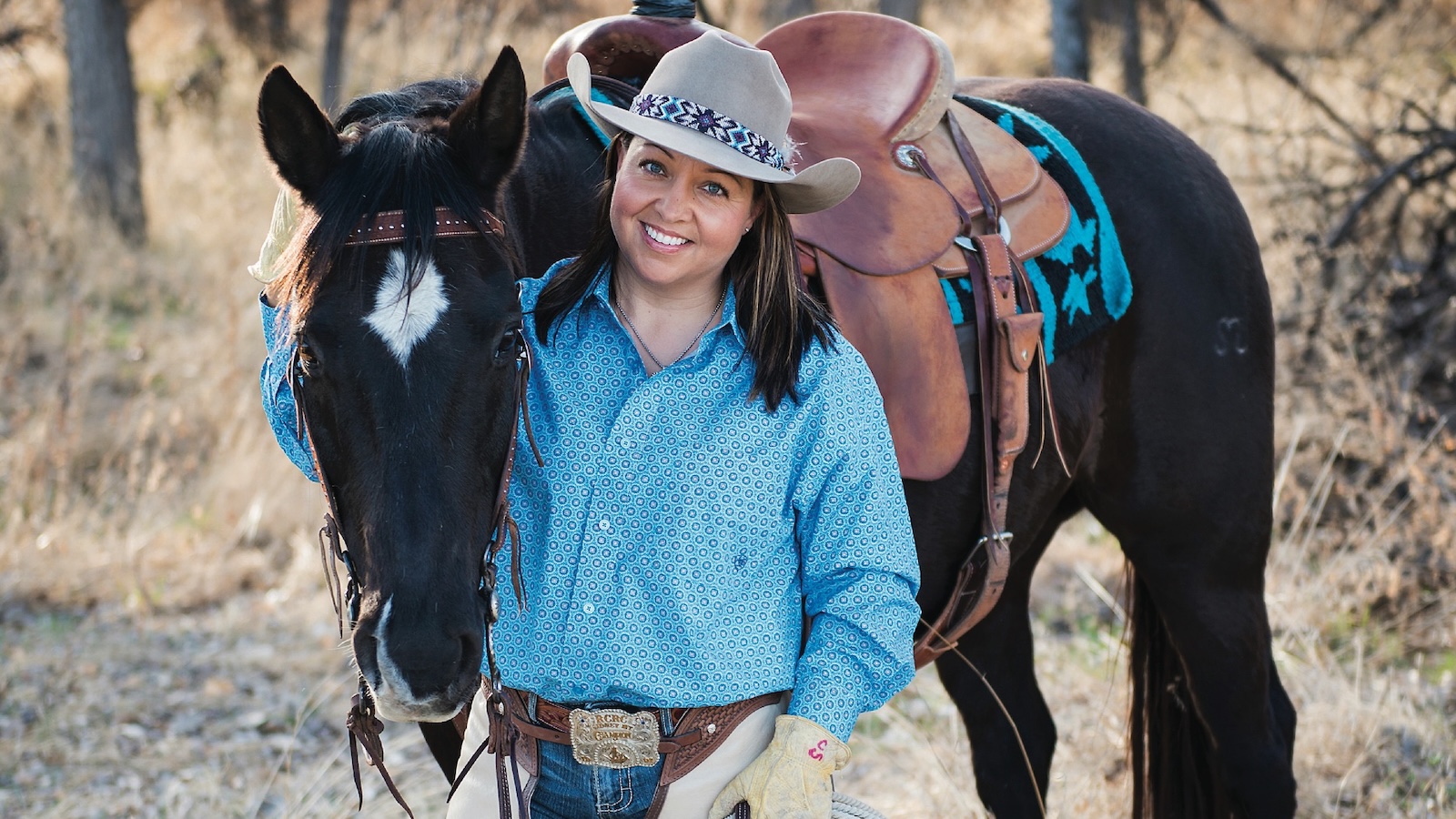
This South Dakota rancher ditched skyscrapers and bright city lights, returning home to raise her son, cattle, and awareness for the cowboy lifestyle.
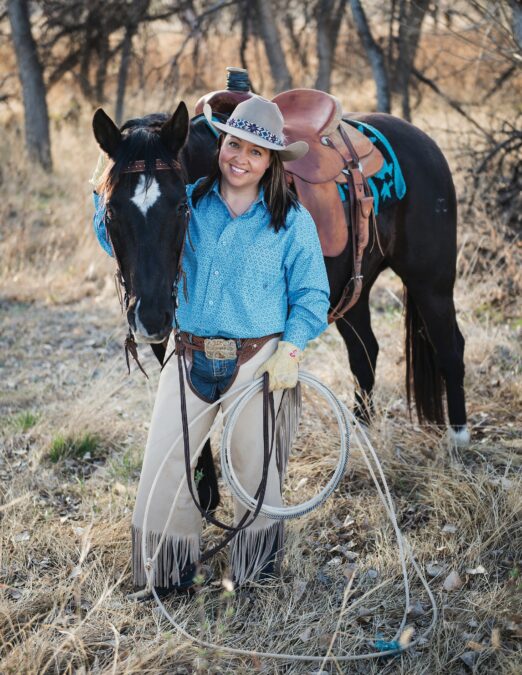
To appreciate home, Cheyenne Wilson had to leave her family’s ranch and begin a difficult yet enlightening journey. A fifth-generation rancher, Wilson got a wild hair — several, in fact — that drew her to city life in places like Minneapolis, Minnesota, and Los Angelos, California, to pursue a career in retail when she was younger. But between each destination, the part-Lakota Sioux cowgirl always returned to the ranch to quench her need for fresh air and family.
Now she and her husband, Shane, are raising their 5-year-old son, Stone, on the Pine Ridge Indian Reservation in South Dakota. They live near her parents, Cliff and Lila Glade. They also run Black Angus-cross cattle.
Though Wilson and her father weren’t raised on the reservation, both are proud of their heritage. Wilson writes a popular blog, thenativecowgirl.com, in which she shares recipes, poetry and ranching tales to explain her roles as a wife, mother and daughter.
I was born in ’73 and was riding a horse before I could walk. When I was 9 years old, I got to run barrels on my mom’s NFR horse. That’s where I started, so it was hard to come down from that level of horse. Mom trained several other horses that I rode to win three different state championships in high school.
I was a very difficult child. I was always convinced the grass was greener on the other side. People would tell me things about city life, but until I actually experienced it, I never would have believed them.
We’d go on 30-mile cattle drives. I remember being so cold I thought my feet were going to fall off. I think part of that drove me to the city. But when I got to the city I realized life can be hard everywhere.
I had a full-ride rodeo scholarship, but I was more interested in partying than learning or rodeoing, for that matter. I was not focused at all.
When I finally grew up, which took until I was about 30, [Shane and I] settled down and moved here. Mom and Dad said if we were serious about getting into ranching, they would help up. Without that, we wouldn’t be where we’re at now. We’ve built what we have together.
Ranching is a tough life, but it’s not that tough when you look at other things people are going through. The poverty, child abuse, murder rates, and things like that we don’t even fathom out here. We worry about gumbo [mud] and whether we have electricity and water.
“I’m one of those people who if you tell me the water is hot, I still have to test it.”
My dad is all cowboy. He and my mom worked hard for what they have. They both have a very good work ethic and I’m grateful because I learned that from them.
Being Indian and a female rancher is a big deal to me because together they don’t exist very often. I don’t think of being Indian as being a minority. It’s not a negative thing in my mind. It is something I am really proud of.
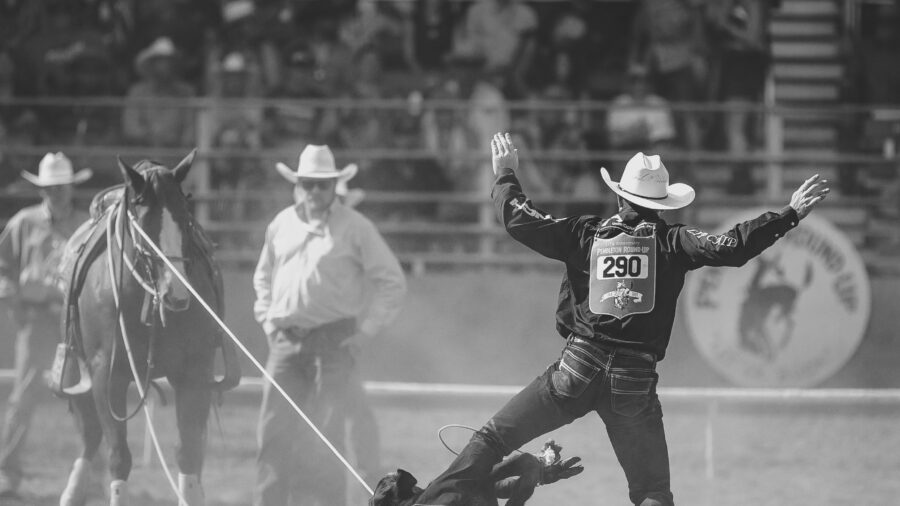
Rodeo is always in your blood, no matter what. It’s what we do for fun, socialization, and developing our horsemanship skills.
I don’t wear a belt buckle when I compete. My husband just won a couple of buckles over the last two years, and he said I could wear one [of his]. To me, that’s sacrilegious. I’ve won more than 40 buckles, but they’re all ’91 and older. The last buckle I won was my breakaway roping state championship buckle. I don’t plan to wear a buckle in the arena again until I win a new one.
My favorite spot on the ranch is in our calving pasture. I love it because I’m an early riser. There is a ridge, and when you get up on it you can see the buttes. It’s a good thinking spot, too.
I love horses, so I have some dragon tattoos. When I was little I read a mythology story about dragons. It alluded that they were the first horses. That stuck with me.
In my stories and poems [on my blog], I try to put a bunch of gratitude back toward my parents and my grandparents, because they’re the ones who instilled the values and beliefs in me.
This article was originally published in the August 2015 issue of Western Horseman written by Katie Frank and photograph by Tanna White.