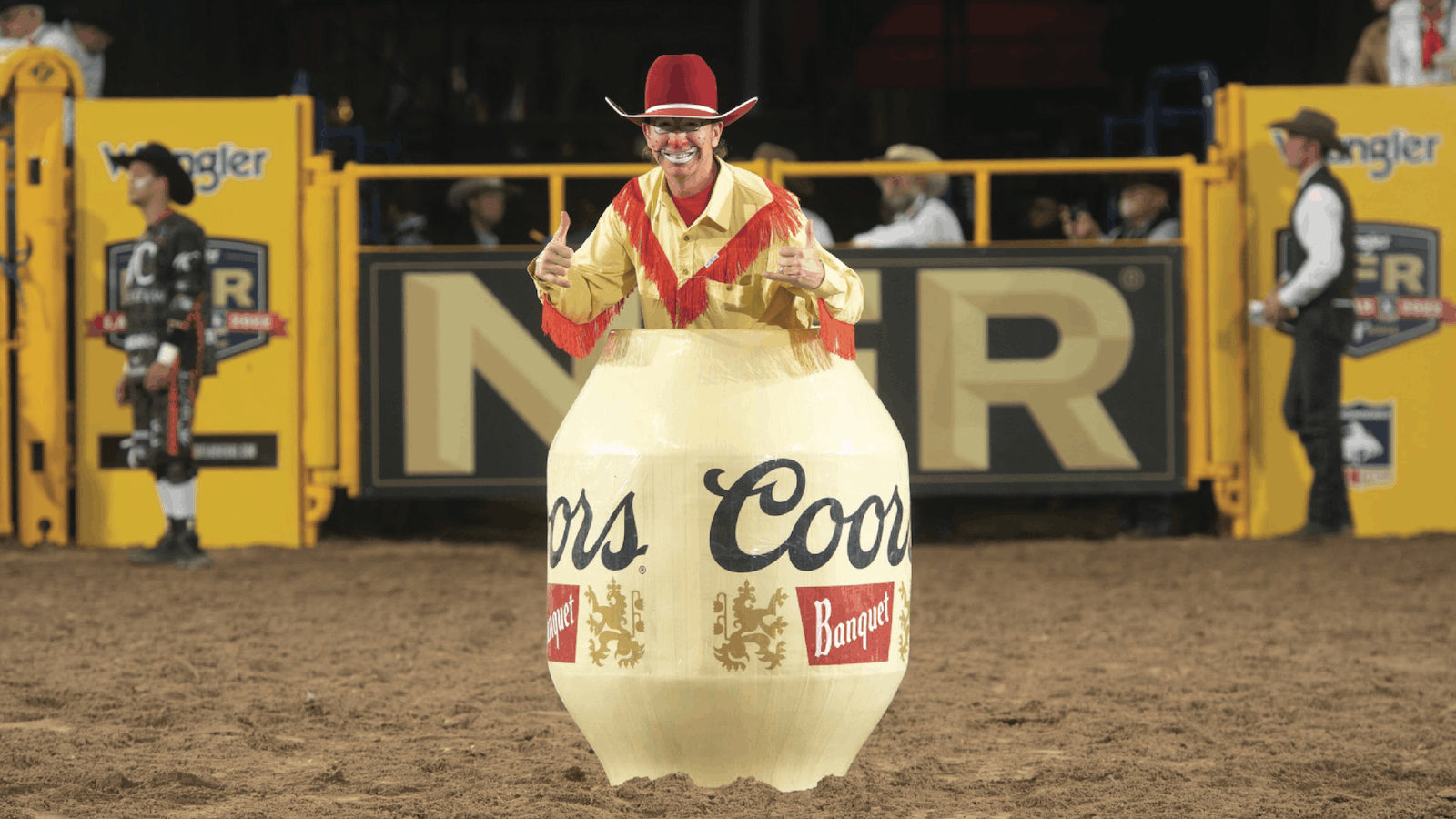
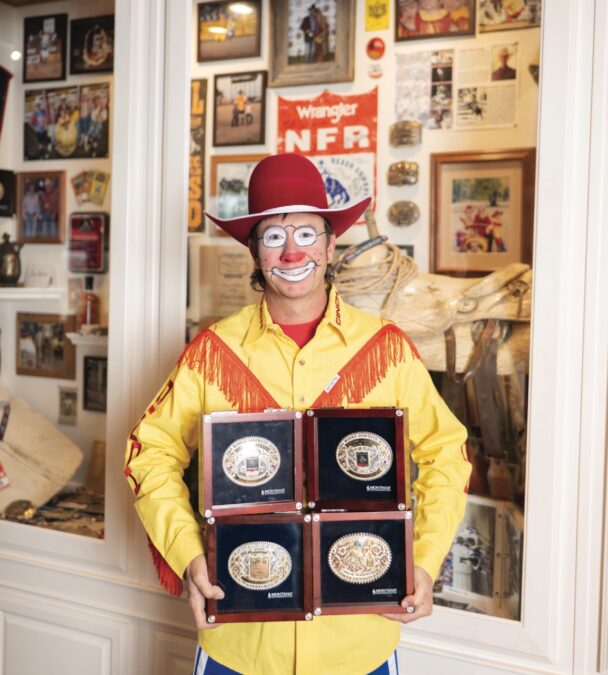
With his quick wit and comedic performances, eight-time Wrangler National Finals Rodeo barrelman and 2022 Clown of the Year, John Harrison, is a fan-favorite rodeo clown and barrelman who is a true ambassador for the sport.
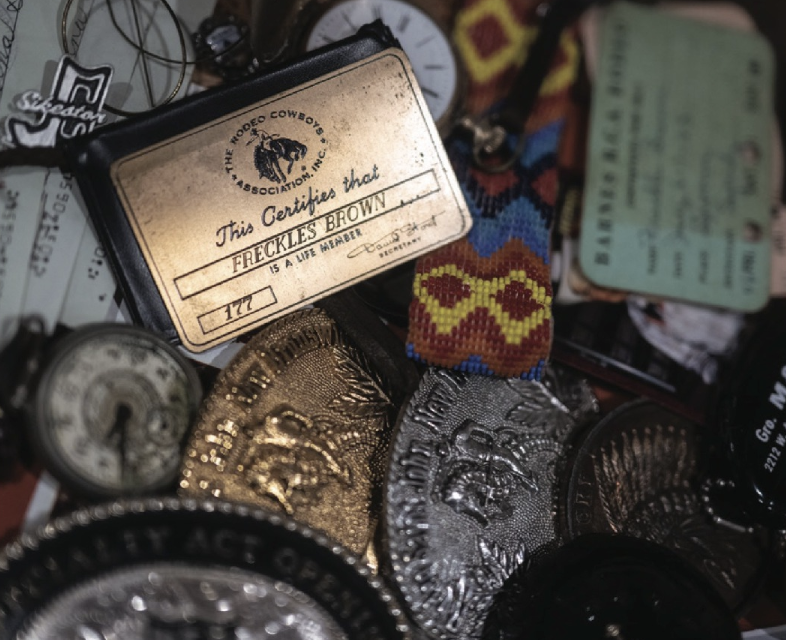
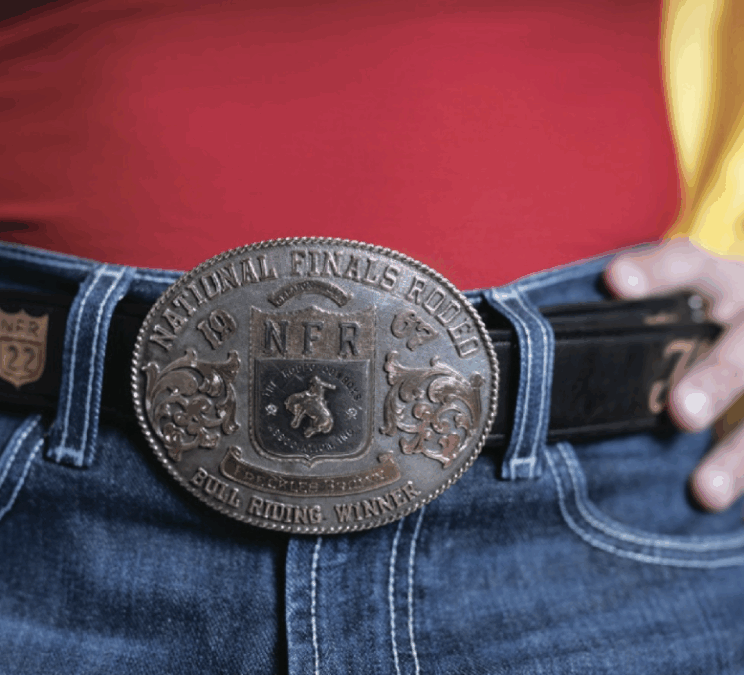
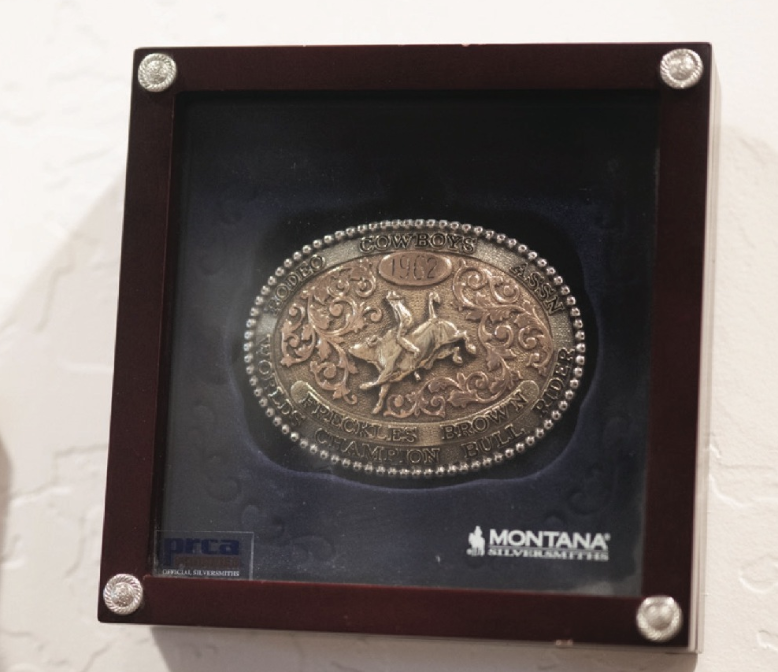
Roping and riding horses is fun, but hanging upside down on a horse — that’s thrilling, says Oklahoma-based Professional Rodeo Cowboys Association rodeo clown John Harrison. John grew up surrounded by rodeo performers thanks to his late grandfather — the rodeo legend Freckles Brown. Brown was the 1962 world champion bull rider and rode Tornado, the “unrideable” bull, a subject of Western music songs.
Rodeo clowns and performers frequented the family ranch in Soper, Oklahoma, but John’s favorites were the trick riders. At age 6, Nevada trick rider Bonnie Williams gave John his first lesson on his grandfather’s front lawn. But it would be almost a decade before he capitalized on his passion for trick riding — specifically Roman riding. In the interim, his father taught him roping tricks, which he performed at 4-H and other events before combining trick roping and riding into an act.
In 1999, John picked up his PRCA card as a trick rider, Roman rider and trick roper. He bought a wagon team and quickly learned that driving horses don’t neck rein when you’re standing high on their backs. After many wrecks, his mom found a set of horses in California. So, he sold several calves to buy a truck, a bumper pull trailer and the horses.
“It was in the ’90s, and the horses were $5,000 apiece. My dad about fell over because he couldn’t believe I’d paid $10,000 for the pair,” John says. “That started my speciality act as a Roman rider and trick rider.”
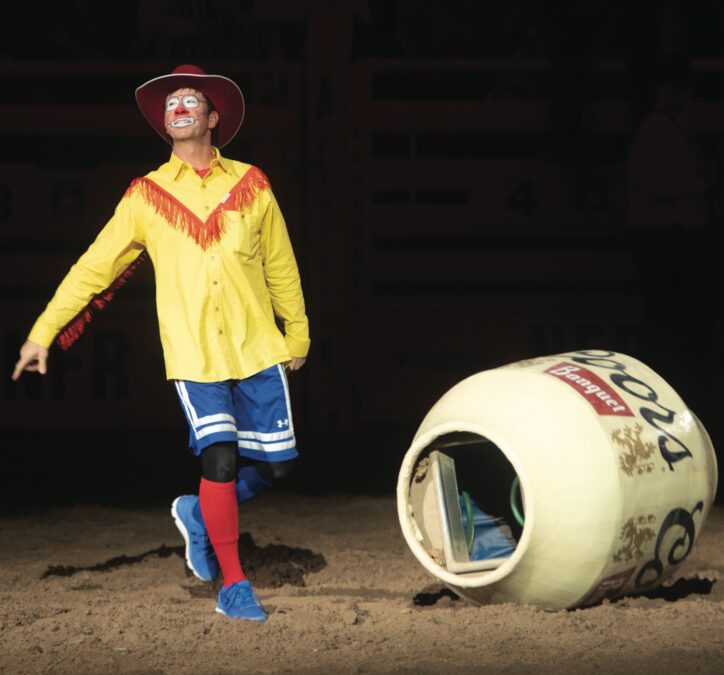
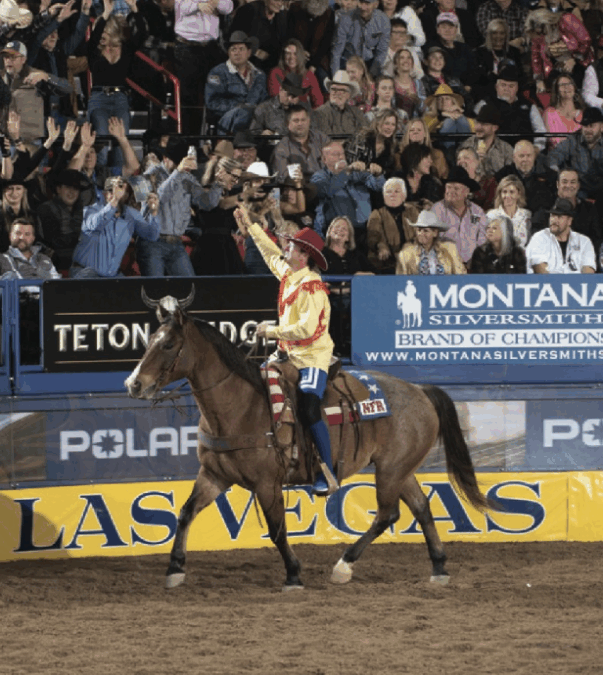
His first big break came at the Dubuque, Iowa, rodeo. When the clown failed to show up, Dave Moorehead told John, “he was up.” Harrison then went on to perform at rodeos with five-time National Finals Rodeo announcer Roger Mooney.
“[Roger] would set up the joke and let me tell the punch line. I did a few rodeos with him like this,” John recalls. “In 2001, when I was 23, I got hired in my first real rodeo job, and he wasn’t the announcer. I learned I sucked and needed to start over.”
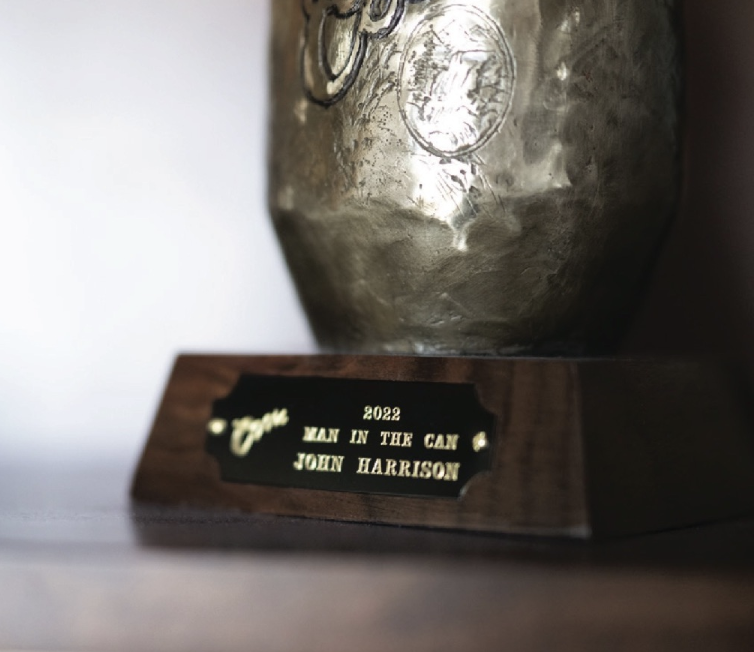
John’s wife, Carla, disputes that he was that terrible, but he worked diligently to perfect his craft, which has paid off. John has been named NFR barrelman eight times. In 2022, he won the PRCA’s “Triple Crown,” winning three year-end awards as the Comedy Act of the Year for the seventh time, Coors Man in the Can for the fifth time and for the first time in his career — Clown of the Year.
Outside the arena, Carla says John has a “pestering,” funny personality with an innate talent for off-the-cuff comedy. By watching the crowd, he finds openings to draw them into the act. For example, when he sees a person walk down to the front row late or that someone is on their cell phone, they become his target.
“His specialty is the unrehearsed walk-and-talk comedy,” Carla says. “Nothing is canned. He’s horrible at telling jokes, but the off-the-cuff comedy comes so naturally to him.”
Crowd Favorite
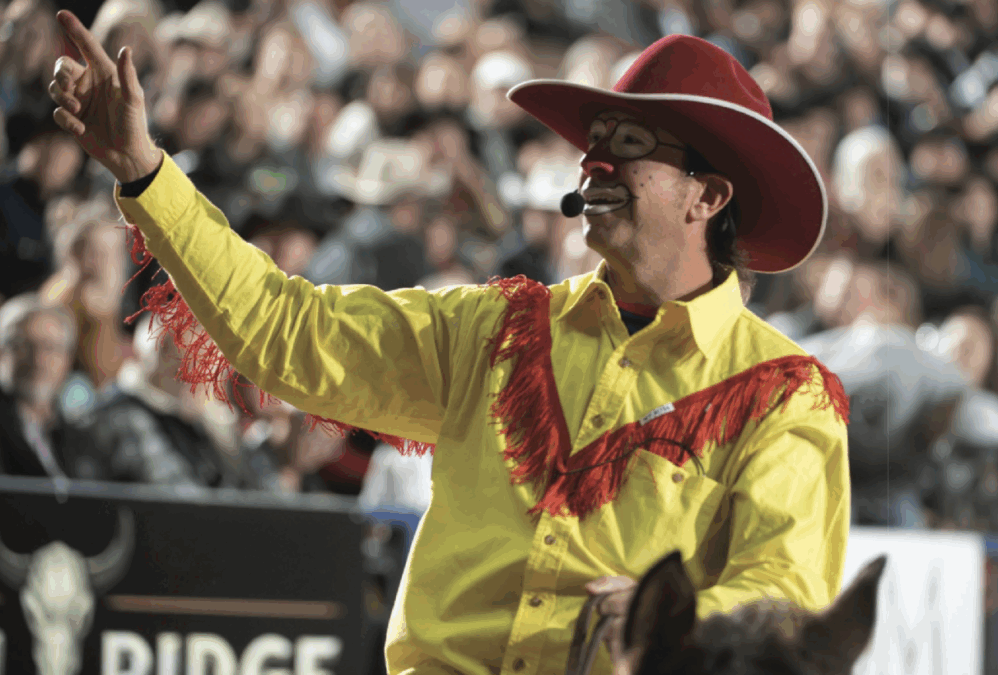
Dressed in his signature yellow shirt with red fringe topped off with the red cowboy hat, John is most well-known for his comedy trick riding act. The act starts with the announcer building up an appearance by a world championship trick rider from Sao Paulo, Brazil, while John stands in the arena holding the trick riding tape.
Come to find out, the trick rider doesn’t show up. Through the announcer’s banter, it comes out that John was supposed to pick him up from the airport and forgot, so now he must take his place. John gets on the horse, pretending he doesn’t know what to do. The announcer describes the trick, and John takes off at a run doing everything you’re not supposed to do on a horse. Then, in the last lap, he performs a real trick riding run.
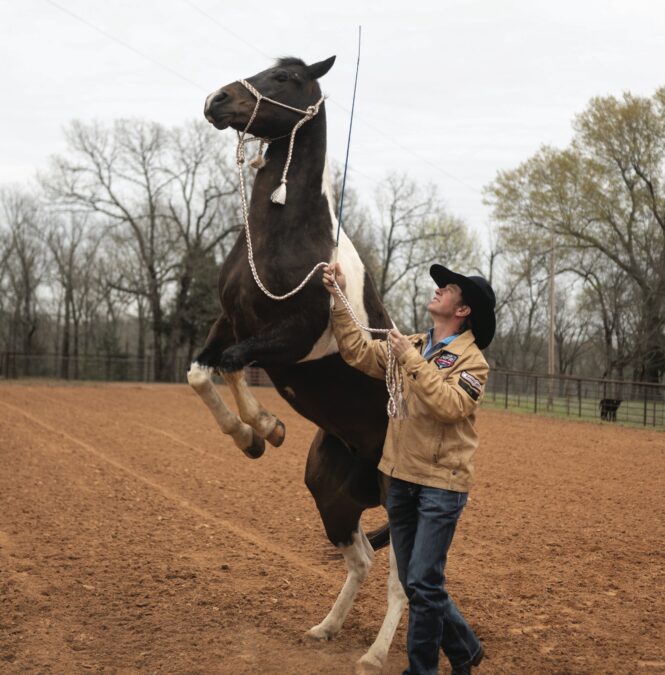
He considers this his strongest act, and one that started with a Sammy Andrews rodeo in Belton, Texas. They hired him to perform two or three acts, but he didn’t have enough prepared. He knew that well-known rodeo clown and barrelman Keith Isley retired a trick riding act because his knees couldn’t take the vaulting.
“I called him and asked if I could do it, and he’s like, ‘Yeah.’ That act opened a lot of doors for me and helped me get a lot of good rodeos and contracts,” he says. “I owe a lot to Keith for letting a young kid take and use that act.”
As much as John loved performing stunts, he quickly realized that all rodeos have bull riding and must hire a clown, but that not every event hires a specialty act. If he was to have a career in the industry, he needed to transition to comedy, so he added barrelman to his PRCA card.
“When you get hit by the bull, it’s like a car getting hit at a stop light, but I learned from older barrelmen about the right way to brace myself in the barrel, so I don’t get whiplash or sore,” he says. “The bullfighters play a great role. They break down the bull and always talk to me about how close it is.”
Rodeo Family
Family got John into rodeo, and it remains integral to his continued success. He and his team are affectionately known as “The Clown Family” among rodeo fans and professionals. He is rarely at a rodeo without Carla and their children, Addison, 15; Cazwell, 13; and Charlee, 7.
“Family on the road means a lot to me. If we leave for summer, they travel with me in the horse trailer with living quarters that are all set up,” he says. “I am not going to say it doesn’t get tight after 90 days in an 8-foot wide by 15-foot living quarters trailer, but it is so much fun, and my kids are blessed to see things other kids in their school and across the country don’t get to see.”
He also credits his family with making it possible to travel from one rodeo to the next to pursue his career. While he’s traveling, his dad cares for the ranch, which includes 200 cow-calf pairs, and puts up all the hay each summer.
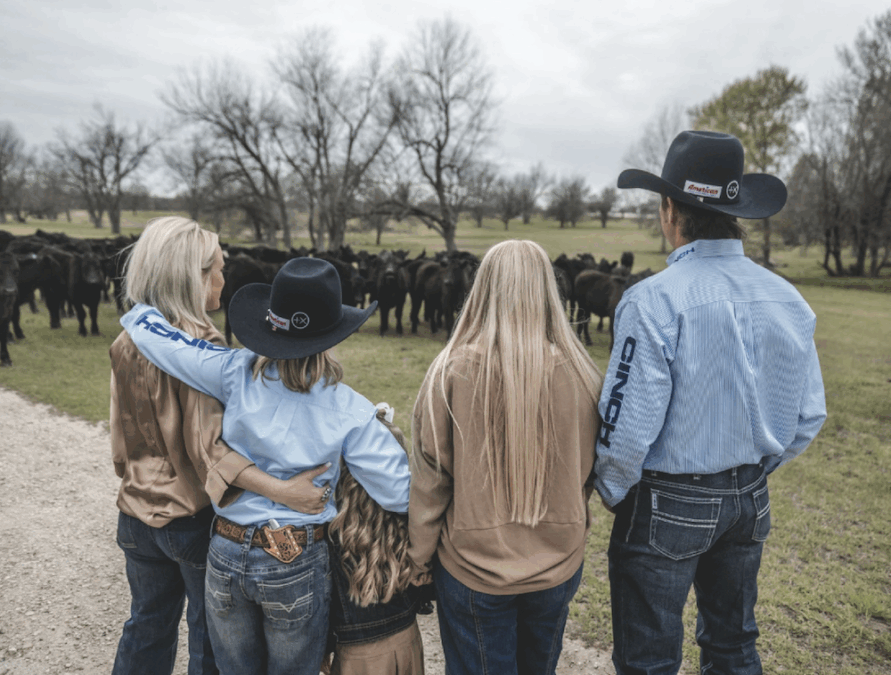
Carla is responsible for the behind-the-scenes details that allow performances to run smoothly. She does much of the driving including 14-hour overnight drives through major metropolitan and desolate rural areas with their children and three horses, to get from one rodeo to the next. She also warms up and cools out the horses while managing her career as a high-end commercial auctioneer, managing real estate rentals and the family-owned liquor store.
“I can give her my sign language signals, and she knows what I mean — those are things you can’t teach others,” John says. “I couldn’t do it without her.”
Family is more than blood, and John believes rodeo is an extended family. Six months may slip by between seeing friends, but instantly pick up as if time hasn’t passed. In 2014, the couple experienced how committed the rodeo family is after losing their daughter Billie at just 17 months old. John was preparing the family for a rodeo trip while Carla was in California caring for her mom with cancer.
He noticed Billie wasn’t feeling well and took her to the doctor, who diagnosed it as a simple virus. Despite multiple trips to the pediatrician, she wasn’t improving, and John told Carla he thought she was too sick to make the trip. Carla flew home, and the couple learned Billie was in kidney failure.
“Within days, hundreds of rodeo people poured into our house and supported us in every way during the worst time in our lives,” John says. “We wouldn’t have made it without our faith and their support. To this day, friends still check in on us, and when someone else’s child is sick, we are there for them as well.”
Rodeo Road
Simply getting to a rodeo can sometimes turn into a comedy act. The couple previously hauled an old roadster car behind the trailer. The bearings frequently broke, and half the time, it wouldn’t start or stop in his act that revolved around teasing rodeo queens.
“Rodeo queens are great ambassadors of our sport, but every once in a while, there was one or two that would give it a bad name,” John says. “So, I put together this act where I’d ride out in the car dressed as a rodeo queen and make jokes.”
The act concluded with John’s main mount, Paint Me Lonesome, affectionately known and “Gus,” jumping over the car. He performed the act for 15 years, and it gained as much notoriety outside the arena as in it.
“When we were traveling, sometimes people would come up alongside us and give us a thumbs up because it was a neat-looking car. Other times, they’d be waiving at us to pull over because we were losing the car,” Carla says.
Traveling nearly 40,000 miles to 40 rodeos across the country annually with three horses can sometimes become a comedy of errors, like when the family shut down the interstate between Houston, Texas, and San Antonio because of a trailer fire. Then there was the time John flew to Alaska, and while Carla was driving the rig between Cody, Wyoming, and Colorado, the trailer broke down.
“We’d been having all sorts of problems with the trailer, and I told him I didn’t want to break down with the kids,” Carla recalls. “Of course, it happened, so before I’d made it to the rodeo, we’d bought a new trailer.”
Then there are the unscripted moments in the rodeo arena that bring unexpected laughs. When John first bought Gus, who’s now 27, the then 2-year-old gelding bucked him off in their first performance and three subsequent grand entry parades. The tall paint is a showman himself — he’ll kick in the middle of a comedy act and urinate upon entering the arena — setting up the opportunity for a joke about stage fright.
“God gives you one good dog and one good horse,” John says. “Gus is that horse, and when he passes, he’ll be buried on the ranch in the family cemetery beside use.”
Having performed at nearly 750 rodeos in his career, John is hesitant to name a favorite — each is unique and represents great memories. However, he admits a family favorite is the Ogden, Utah, rodeo, and his personal pick is the NFR because of the prestige it holds as a voted-on role. But above all else, it’s bringing an escape from everyday life that keeps him performing.
“I love making people laugh. Everybody’s got problems; maybe it’s financial, health or relationships,” he says. “But for two hours, a person can come to the rodeo and get away from it all. It means a lot to me to bring a smile to their face and make them feel good despite those problems.”
This article was originally published in the June 2023 issue of Western Horseman.