
There’s a little ranch in the Trans-Pecos region of Texas that I was invited to some years back for a spring gather. It’s truly a wild place to see, boasting rimrock, cat’s-claw, and lots of ups and downs, with all of it sprawled along the Mexican border. The little adobe camp and pens we used sat in the center of the mountain basin. There were high rims on almost all sides, with the best trails leading in and out, having been made by cattle, aoudad and other border critters hunting water. It’s a beautiful and dangerous place, with little to no moisture, rough ground and and rougher vegetation. Every last thing in that country has spines on it, all of it.
The outfit was nearly fenced in naturally, with rimrock borders to most sides. One day, you’d gather to the south, the next, to the north, bringing everything back to headquarters, and any direction you went was up. Corriente and longhorn cattle scattered the outfit. They weren’t your typical tame cattle, but not wild either. They were just a little tougher and stringier due to the conditions. You could see them and make your way to them, but they were ghosts and knew how to float around in that country pretty easily. Meanwhile, you’d be picking deer trails and debating, “Just how far down is that drop?” And right when you’d gotten to where you’d seen them last, they’d be almost in your old spot, looking back.
From the top (or as high as a hand could get without the use of some climbing gear), you could look south and see her yucca-covered hillsides, alkali flats, crest after crest of rock and Mexico.
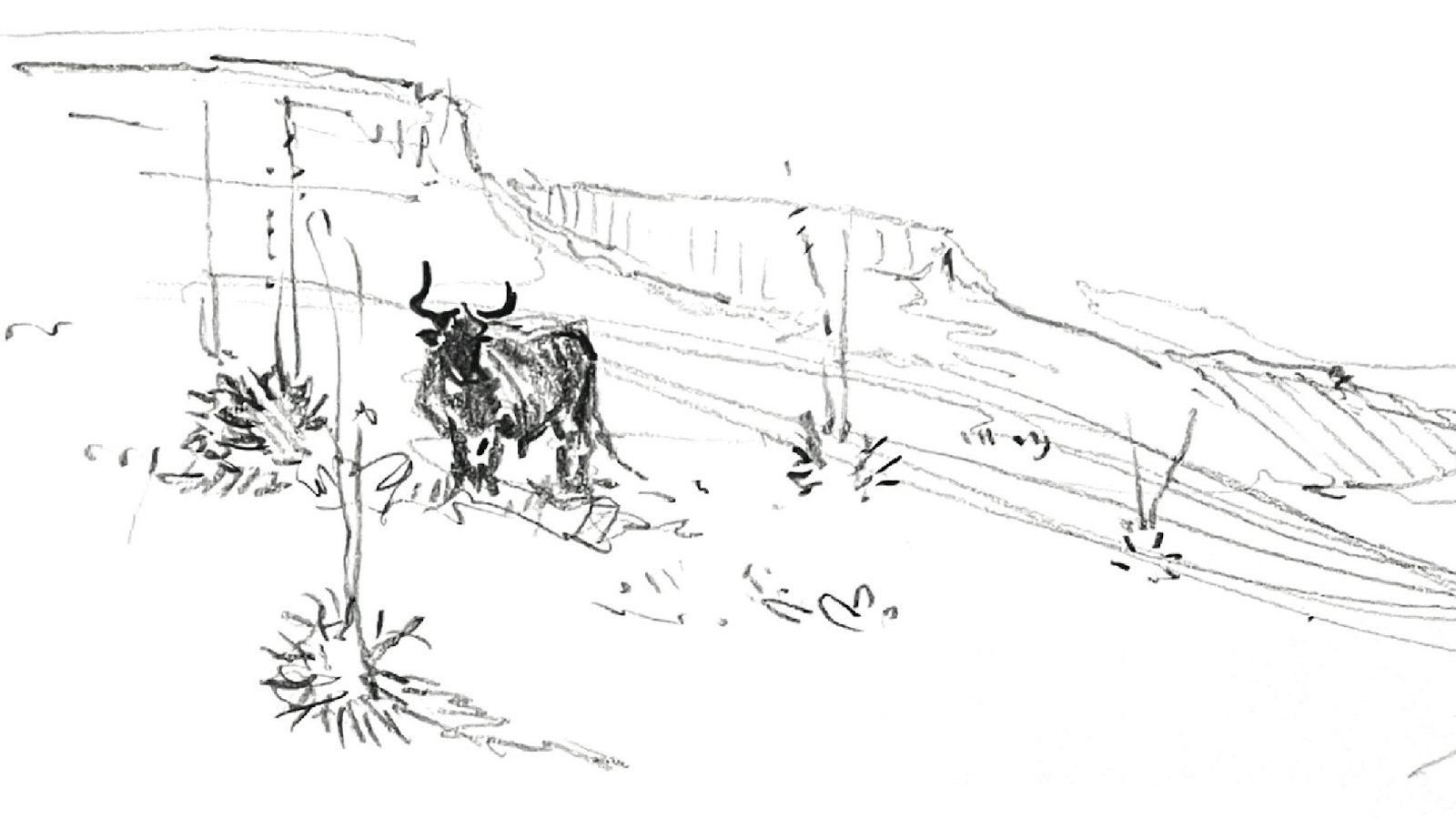
During the works, I found a yearling bull still on his ma just below the rim. He was a dark brindle bull with a mule nose, and I’d guess by the way he looked at me and my horse that I was his first human encounter. He took it well and wore my rope all the way back to headquarters, figuring out how to walk on a leash about halfway back, almost mannerly. I guess between the elevation change and the conversation home, I grew kind of fond of the little bull. I made a point to talk to the ranch owner before we cut and shipped everything.
He’s got a little age on him now and looks more like the prehistoric fighting bulls of Spain than he does a little West Texas Corriente. When I check cattle, he’s still one of the first to come up to get his rations. He even lets me scratch on him from time to time. I often wonder if he misses that wild country that he was born in.
This article was originally published in the May 2024 issue of Western Horseman.