
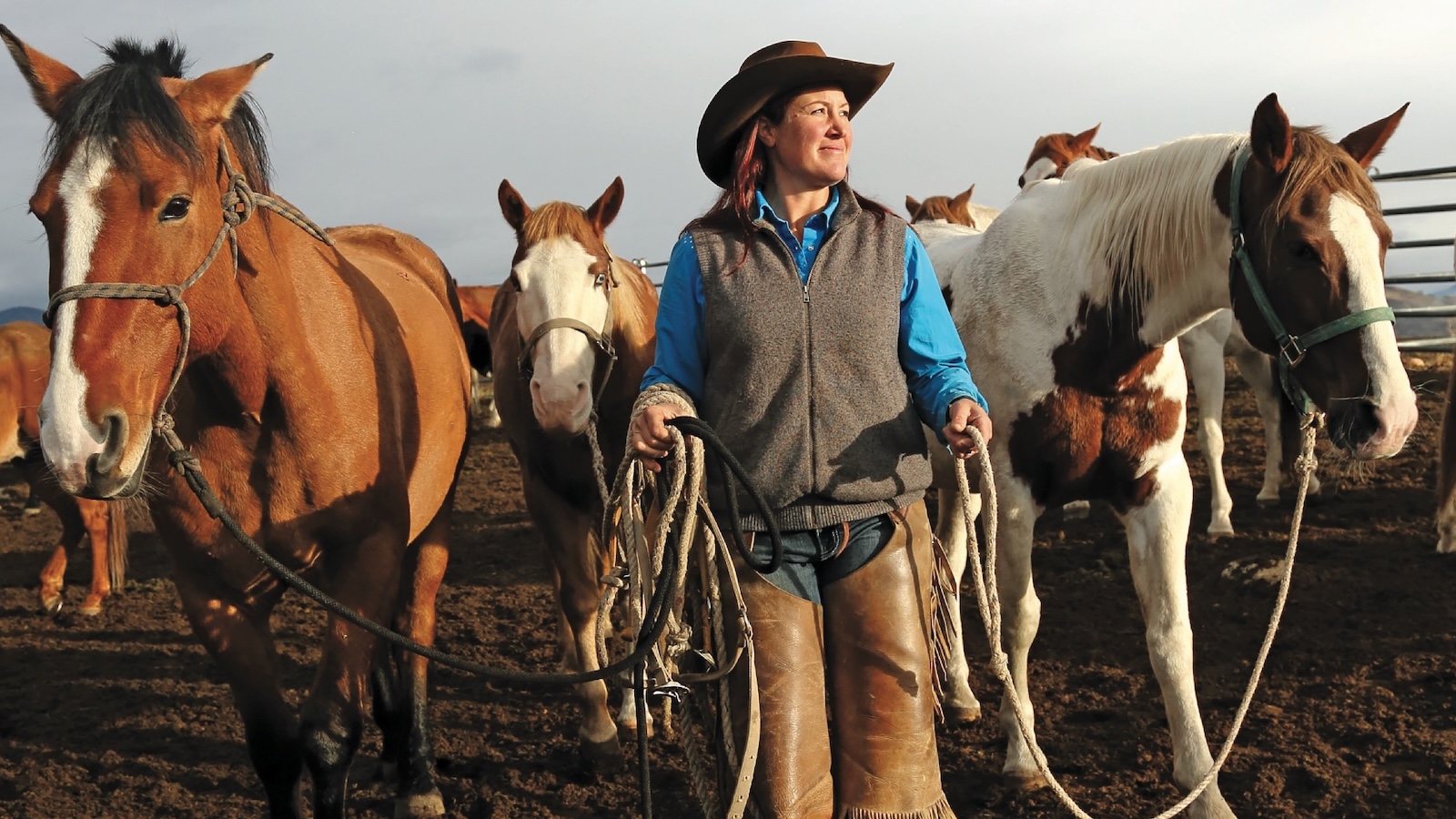
This Washington guide keeps her wits when riding in the mountains of the Methow Valley, and balances sensitivity and grit to create the right horses for her program.
Debra Schrock and her husband, John, own and operate JD Outfitters, which leads guest rides at Sun Mountain Lodge in Wintrhop, Washington. Her strong work ethic and attention to detail comes from years of experience packing in the mountains, training horses and working at an equine rehabilitation center.
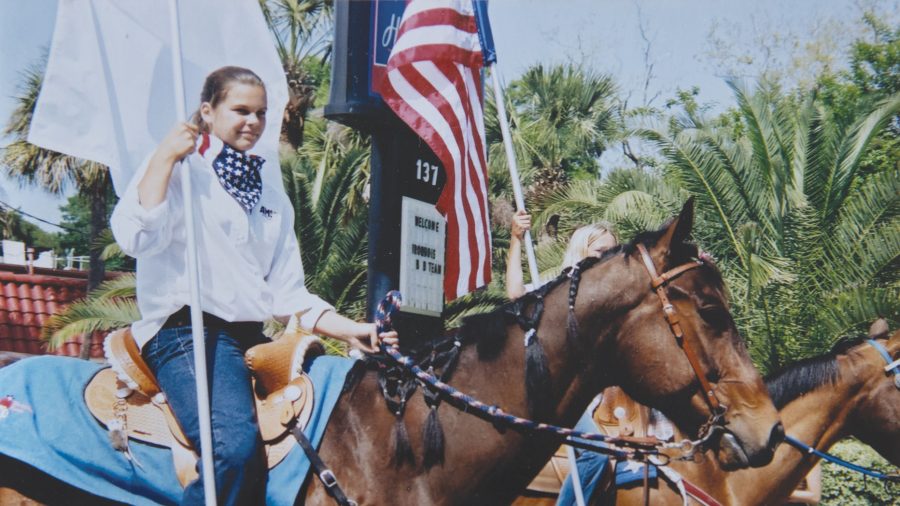
As a young girl, Schrock, better known as “Red,” was homeschooled and immersed in her local 4-H chapter. By age 16 she had graduated high school, and was attending community college and working at a veterinary clinic. Her passion for training horses blossomed after a friend suggested working at a youth camp riding horses, which were provided by local rancher Claude Miller. Later, she went to work for Miller, who at the time also was a horse operations manager at a nearby mountaintop resort. After three seasons wrangling for Miller and packing in the off-season, she took a break to work at an equine rehabilitation center until she was called back by Miller to take over the concession.
With a close-knit community behind her, Schrock and her husband bought the outfit in 2011 and haven’t looked back. They own 45 head of horses, including 25 saddle horses, 12 draft horses and three mules. In the summer she leads private and group rides up to five times a day, six days a week. The health of her horses is paramount to Schrock, and is paralleled only by the safety of her guests.
4-H saved my life. My parents never had horses, but our neighbors did. My parents said if you want to do stuff with horses, you have to earn it. I borrowed every horse within a two-mile radius.
I’ve always been pretty physical and strong. Claude [Miller] taught me how to use my body to pull the manties tight when we packed. He said if you pack long enough, there comes a day when you wonder why int he world you do it. I say I’ve packed just enough to get myself into trouble.
When I watch my guests, there are a million details I look for. Not only do I want them to have a good time, but it also needs to be as safe as possible. Customer service would be No. 1, but safety will always override it.
I try not to have favorite horses. Guests always ask me if I can remember all their names. I say “I better know all their names — I’m putting you on them!”
The wildflowers in the mountains are gorgeous. The Indian paintbrushes are huge. When you’re having a good day and your packs are riding well and your mules are doing awesome, you can’t compare to that kind of office.
I look for horses to try and do the right thing. We take a lot of spoiled horses up here and show them they get steady miles and work every day. I can bring new horses up here, tie them into a string, and they learn to stay tied because they learn to take their breaks. They learn there’s no point in getting excited because they might go again.
“I’m not quite as competitive with the boys as I used to be. I’m getting better.”
I have the tendency to try and figure things out. At the ranch I figured out how strong mentally and physically a horse could be. At the rehab center I figured out how fragile they could be. It’s like a puzzle. Does this horse need to go to the top of a mountain three days in a row? Or does he need to have his body checked because he’s sore?
This job has made me step up and be a good leader. I’m naturally a good second-in-command. I tend to be a bit wishy-washy on decisions.
It took a long time to get more self-confidence. I’ve had amazing teachers, whether at the veterinary office, the rehab center or working on the ranch, but you have to be your own person.
Most ranchers seem so practical about life and death. I understand that mentally, but I get so attached to the stock, and they become my kids and coworkers. People say they’re just a horse, but they’re more than that.
My hair has always been red. When I worked for the ranch. I was basically the only girl around a bunch of cowboys, and I’ve always been really gullible. The cowboys found great humor in embarrassing me, so I would always turn 10 shades of red. Between my hair and the fact that I get embarrassed easily, they called me Red.
I’m allowing my feminine side to show more. It doesn’t mean that you’re weaker. It’s okay to have a softer side and let your hair down occasionally.
This article was written by Katie Frank and photographed by Molly Morrow. This article was originally published in the October 2015 issue of Western Horseman.