
Last fall, the Equine Herpesvirus outbreak threatened to devastate the horse industry during the most pivotal season of the year. Some wonder if social media played a role in containing the virus in a matter of weeks.
Britta Strain felt helpless watching her good breakaway horse crumple to the ground. The bay mare named “Eleanor” had been Strain’s top rodeo horse through high school, college and into these first few years in Women’s Professional Rodeo Association competition.
“At first I thought she was colicking, and then she started having strokes,” recalls Strain of her Quarter Horse, registered name Sandy Black Spade 10. “At this point, I didn’t even know EHV was a thing. I was so in the dark about what was happening. It’s the most helpless I’ve ever felt.”
With a pre-vet degree from Texas A&M University, Strain did everything she knew how to do while waiting for the veterinarian, who hustled to her barn in Poolville, Texas, and tried to diagnose and treat the horse. Nothing worked, and at 3 a.m., Strain made the difficult call to euthanize Eleanor.
By sunrise on November 19, Strain had learned that the neurological strain of Equine Herpesvirus was the likely cause. She also noticed her other horse, Golden Cloud, slightly dragging a hind foot, and within an hour, she was hauling the palomino barrel horse to Louisiana State University, the only veterinary clinic that would admit her mare.
Strain had competed on both horses at the WPRA World Finals in Waco, Texas, November 5-9. As she rushed her horse to Baton Rouge, Louisiana, on November 19, the Texas Department of Agriculture issued an official alert about the outbreak of EHV that originated at the event in Waco. The highly contagious EHV-1 can manifest as a respiratory disease or as a neurological ailment, known as Equine Herpes Myeloencephalopathy.
Hundreds of horses like Strain’s had competed at the WPRA Finals and were hauled to other locations before some of them began showing symptoms. The Oklahoma Department of Agriculture, Food and Forestry had announced on November 18 via social media that the Oklahoma State Veterinarian was monitoring the possible exposure to EHM at the Barrel Futurities of America World Championships, a Guthrie, Oklahoma, event that had begun three days prior.
Strain posted the news of Eleanor and Golden Cloud to her Facebook page, doing her best to inform fellow competitors about where her horses had been, what their symptoms were and how she had diligently quarantined her other horses at home.
“I posted it because I knew people needed to know how serious it was,” Strain says.
WORST TIME FOR AN OUTBREAK
As news spread, and with many championship equine events still scheduled on the 2025 calendar, the industry braced for a crippling outbreak at a time when so many horse owners, competitors, breeders and other professionals count on their biggest paychecks.
“It was absolutely the worst time of year for this to happen,” recalls Jay Winborn, executive director of the National Cutting Horse Association. “My initial reaction was, ‘This is like COVID hitting the horse community.’ It doesn’t matter who you are — a trainer, exhibitor, someone with sale horses, show contract staff or trade show vendors — this could devastate everyone. If you have to pull the plug on your event, then it’s lights out, and you don’t know when or if you’re going to make it up.”
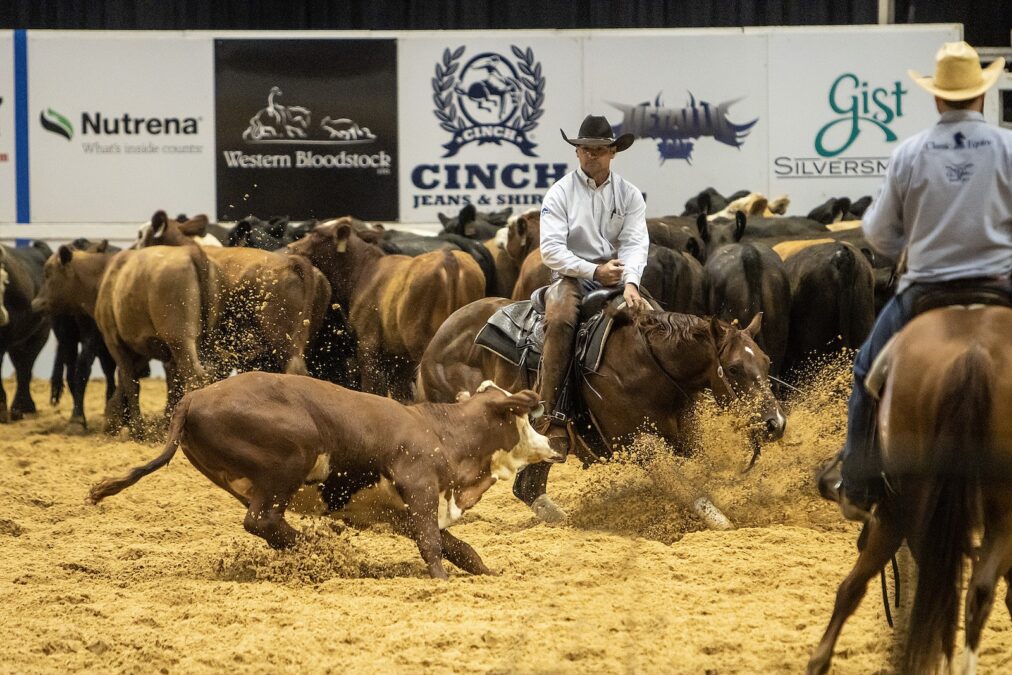
Winborn and his association were already in full swing with their most prestigious event of the year, the National Cutting Horse Association Futurity, held in Fort Worth, Texas — 90 miles from Waco. The event typically attracts more than 700 entries and welcomes hundreds of additional horses for its World Finals and elite horse sales.
With much consideration, NCHA decided to continue its show.
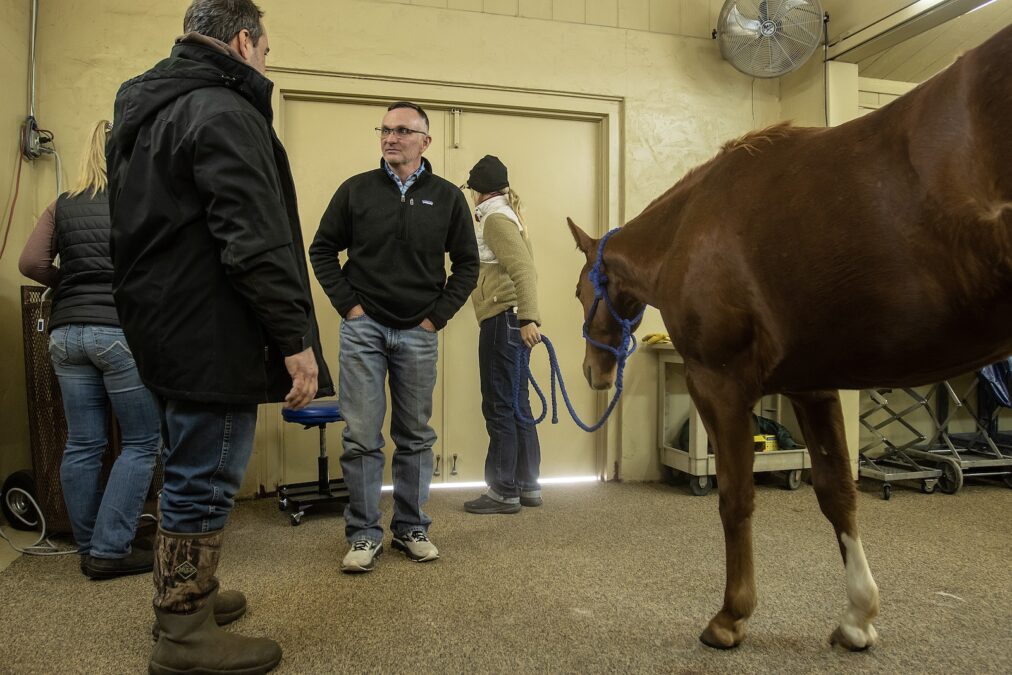
“It’s so hard to figure out what to do, and you have to think about the public’s perception as well,” Winborn says. “But we gave people assurances that our show was a safe place to be. We purchased probably 10,000 gallons of vegetable-grade disinfectant, and every night, we would spray all the stall areas, wash racks and any places that were trafficked by horses. We also bought 3,000 thermometers and handed them out to contestants.”
NCHA required horses to have current health papers and increased the number of on-site veterinarians. Show organizers also felt that the chances of cutting horses having come into contact with barrel or breakaway horses were relatively slim.
Conversely, the BFA World Championships were canceled on November 18, in the middle of the eight-day event. Show organizers made the decision understanding the likelihood some BFA horses were exposed to barrel horses that competed in Waco.
In the seven days that followed, the Equine Disease Communication Center reported more than a dozen confirmed cases of the respiratory form of EHV. More troubling, the EDCC posted 34 cases of EHM, and four had been euthanized. Those cases, originating in Waco, had already spread to Colorado, Louisiana, New Mexico and Oklahoma.
Justin High, DVM, of Reata Equine Hospital veterinary clinic in Weatherford, Texas, remembers a level of frenzy he hadn’t seen since EHV broke out in the cutting horse industry in 2011.
“That major outbreak happened quite a while ago,” Dr. High recalls. “I thought, ‘Horse people travel so much more now than they did then. So, this thing can blow up so much faster and worse than what it did last time.’ At the clinic, we were ‘temping’ everything that came off the trailer, and we were trying to do as much farm work [as opposed to clinical appointments] as we could.”
SOCIAL MEDIA FRENZY
One thing that blew up faster than the virus itself was social media. Immediately, users on platforms such as Facebook, Instagram, TikTok and X began posting feverish reports about EHV and EHM. Viral videos showed affected horses with runny noses, lethargic behavior and wobbly back legs. Most posts, whether made by veterinarians, health organizations, horse owners or reckless bystanders, attracted countless comments that ran the gamut from prayer-hand emojis to paragraphs criticizing horse owners and show organizers.
Social media criticism added weight to decisions that show officials had to make. And plenty of unsubstantiated information that was circulated online tainted public perception.
“I saw various posts of people talking about horses dying in the hundreds,” says Billy Smith, commissioner of the National Reining Horse Association. “That’s not very helpful. I think it created a disproportionate amount of fear, for sure.”
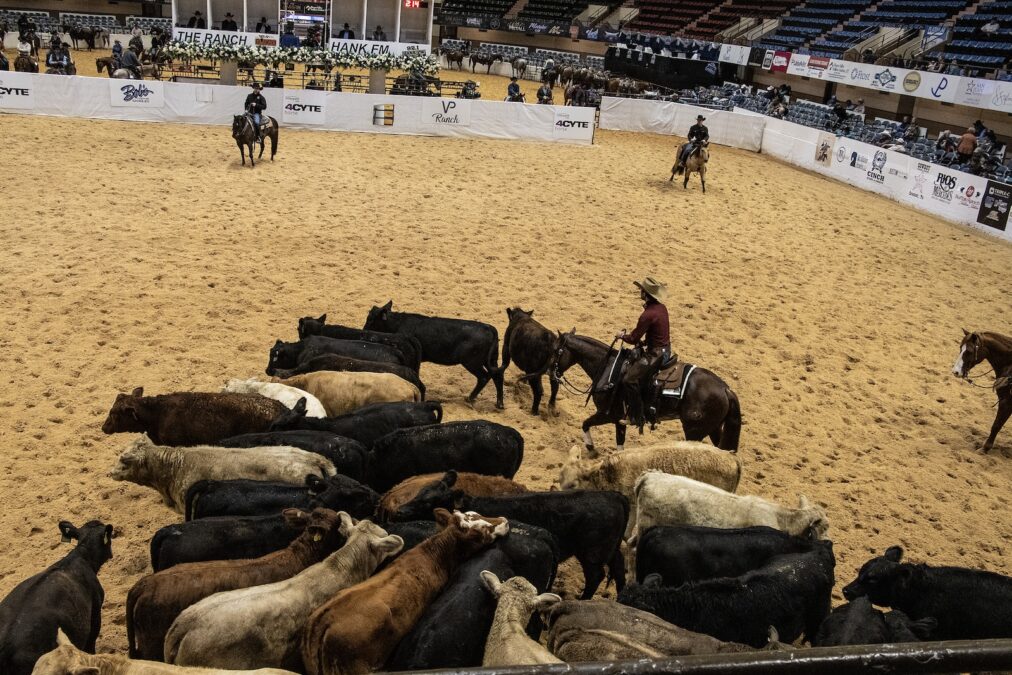
Smith watched many late-November and early-December horse shows and rodeos cancel or postpone their events, knowing that their schedules conflicted with the 14-day recommended quarantine of horses exposed to EHV. The NRHA Futurity was set to begin in Oklahoma City on November 24, just a few days after the conclusion of the American Quarter Horse Association World Show, held for three weeks in the same facility. Smith says that out of precaution, NRHA postponed its premier event by five days and eliminated the North American Affiliate Championships, which typically run concurrently with the NRHA Futurity. That essentially cut the number of on-site horses in half, limiting it to about 700 3-year-olds.
“We were pretty certain that most of these young futurity horses hadn’t been off their ranch or training facility in about 30 days,” Smith says. “Plus, they’re not usually stalled or kept in areas where you might have a collection of ropers or barrel racers. Of course, we ran our decision by the State Veterinarian in Oklahoma and in Texas. We got a fairly high level of confidence that we could safely host the Futurity if we spent extra days cleaning the facility in Oklahoma City. And Oklahoma Fair Park was very responsive in cleaning and spraying down the entire facility three or four times before the show.”
Like many shows, NRHA also imposed strict biosecurity protocols, such as requiring health papers, daily disinfecting, limiting equine traffic and taking the temperature of all incoming horses. The association also went forward with its annual futurity sale, but rather than watching consigned horses enter the sale ring, buyers bid on consignments exhibited on video.
Premier horse sales also take place in the fall, and Steve Friskup worked as the auctioneer for three of them. He says the Riata Showcase Horse Sale in Las Vegas, Nevada, and the NCHA Futurity Sales, both held in early December, experienced comparable results with 2024. However, the Levelland Horse Sale in Levelland, Texas, held November 21-22, took a significant hit, with 90 of its 250 consignments pulling out. Friskup recognizes that despite implementing many biosecurity measures and staying in contact with the Texas Animal Health Commission, the sale suffered from unfortunate timing. Although he respects the severity of the disease and understands why some consignors bowed out, he was clearly frustrated by the online vitriol.
“I think there were some precautions that needed to be taken, and I think the seriousness of the virus was for real,” Friskup says. “But I think there was a lot of drama and a lot of conversation created because of social media. We had Facebook bullies running their mouth about what we should do, and they had zero experience at this. If your horse is having some nasal discharge, yes, just keep him at home. But for someone to wake up one day and announce that if you load your horse in a trailer today, you’re the devil himself. No, probably not.”
At the same time, social media also played a role in spreading awareness. Veterinarians, state animal health officials and industry associations used their platforms to share real-time updates on confirmed cases, quarantine guidance and biosecurity recommendations. For many horse owners, social media posts were the first indication that precautions might be necessary.
WHAT HAPPENS IN VEGAS
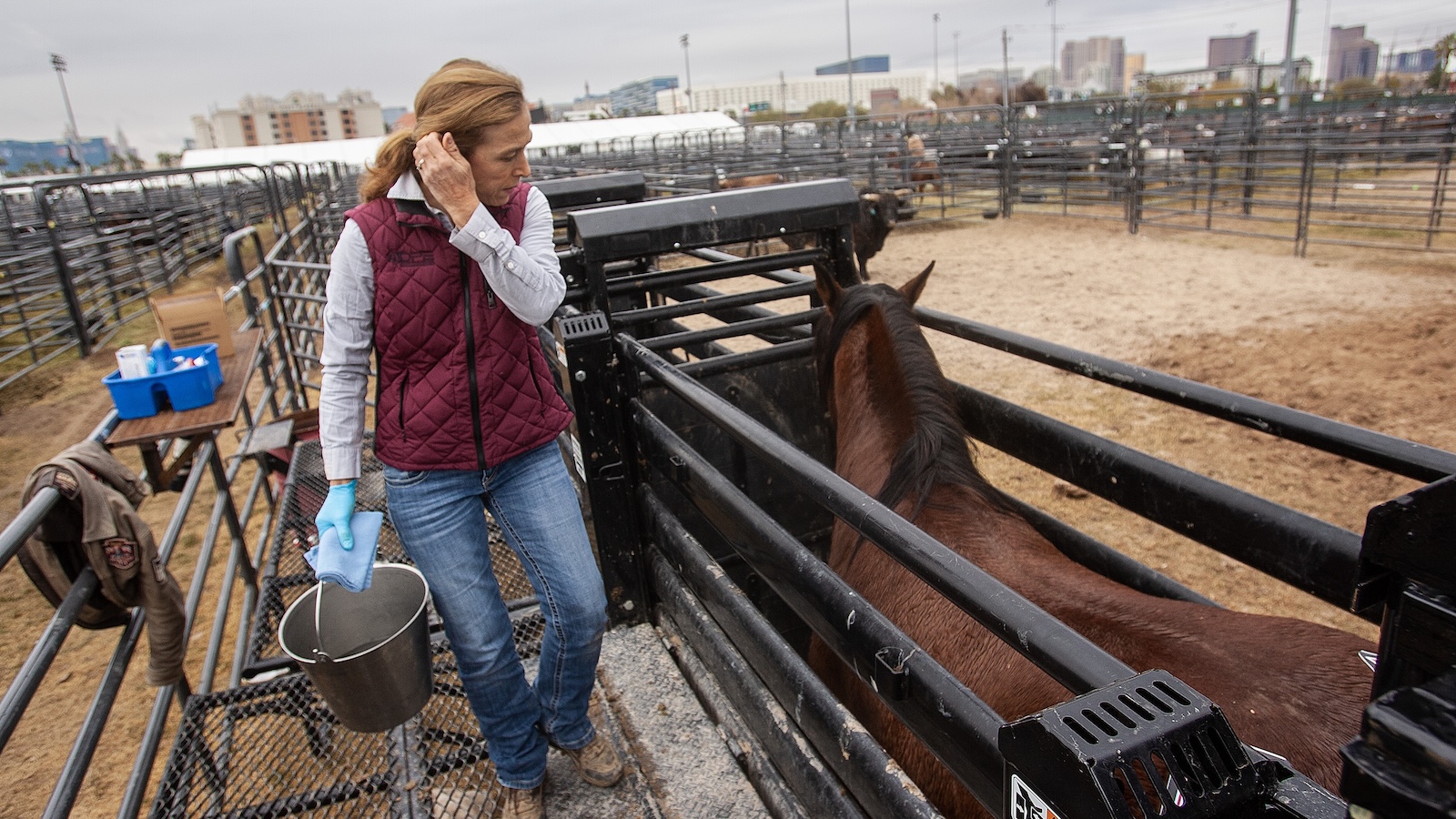
Another premier event sitting in the crosshairs of the EHV outbreak was the Wrangler National Finals Rodeo in Las Vegas. Accompanied by the World Series of Team Roping Finale, the Junior NFR and the National Finals Breakaway Roping, the city is saturated with thousands of horses from all over the nation in early December every year. Leslie Schur, DVM, who has worked as a leading veterinarian at the NFR since 1996, says preventing the spread of EHV in her town looked to be a daunting task.
“It caused quite a bit of stress, as you can imagine, with the amount of activities and the investment put into the NFR and the events that go alongside it,” Dr. Schur says. “And the virus was confirmed within the disciplines of horses that were coming here. I’m not sure there is a larger co-mingling of horses in a small area in the entire country than what happens here in December. The saving grace for us was that we had three weeks before anything was starting. So, we were immediately trying to be proactive on how to proceed.”
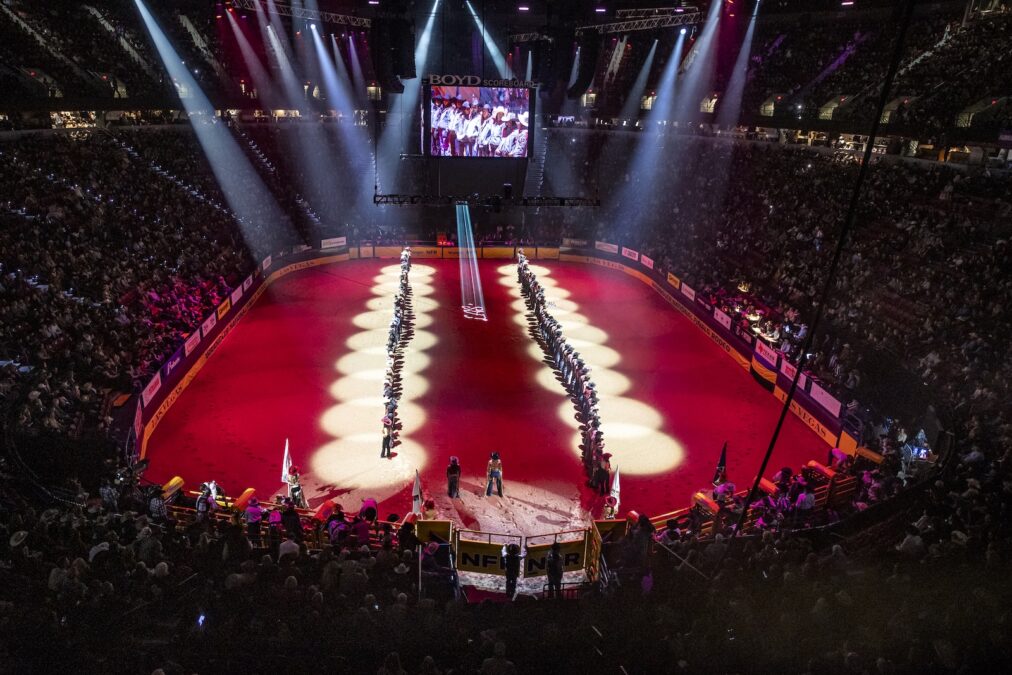
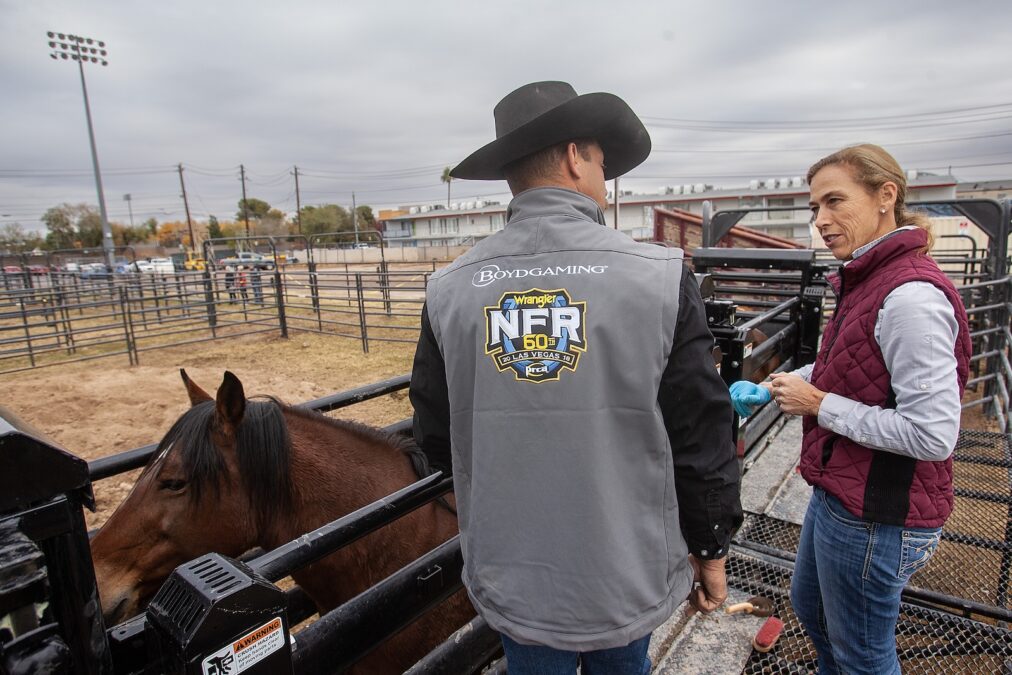
Schur had already initiated a requirement for all NFR horses to be vaccinated back in 2022. To that, she and her staff stepped up biosecurity protocols, including requiring health papers and temperature logs from the previous 10 days, checking the temperature of incoming horses, frequently disinfecting areas trafficked by horses, restricting movement on and off the premises, and enforcing several other measures. One noticeable change was requiring rodeo contestants to make their entrance afoot, not horseback, during the grand entry, limiting the number of horses on the grounds.
Although the NFR Breakaway Roping was postponed and moved to Fort Worth, the NFR, Junior NFR and World Series of Team Roping carried on.
“Everyone really was great about abiding by the restrictions that were made, and thankfully, we got through everything unscathed,” Schur says. “We had a fever-free NFR — other than one horse that came in with a fever, unrelated to EHV — that left the property and was treated at our hospital [near Las Vegas]. We didn’t have a sick horse. But I held my breath for a few weeks after the Finals because even though we got through it, you still worry that [the virus] might break out from your event. But it didn’t.”
Similarly, NCHA and NRHA didn’t confirm any cases of EHM. According to Winborn, less than a handful of exhibitors withdrew from the NCHA Futurity, and the event reached its usual standards with more than $5 million in purse money. The NRHA Futurity awarded a record purse of nearly $4 million. The NFR payed out a record $13.5 million to contestants, and the World Series of Team Roping awarded $17.7 million, down a couple million from 2024 but on par with 2023.
NOT A CANCEL CULTURE
As of January 1, the total number of EHM cases stemming from Waco, according to the EDCC, was about 60, with five deaths. What seemed to be a monster of a problem in late November was quickly reduced to a relatively brief disruption in the Western horse industry. While some wonder if the EHV outbreak was an overblown media frenzy, both High and Schur believe the heightened attention it received helped squelch the problem. And they agree that social media played an important role in getting horse people to realize the severity of the situation.
“That’s the double-edged sword of social media,” High says. “You don’t get to silence the misinformation. But there was enough correct, scientific information put out right off the bat, and then people followed up with it. There were posts from the Texas Animal Health Commission, and there were veterinarians who were treating the horses and giving first-hand updates on social media. In this instance, social media was a big positive in controlling things. If everybody had taken more of a nonchalant approach, there would’ve been many more dead horses. So, this became a very small ripple in the pond compared to what it could’ve been.”
Schur says the response by horse owners was impressive.
“This virus will probably raise its ugly head again, and the single most important thing to do is take it seriously and stay home,” Schur says. “If everybody stays put and doesn’t keep moving around, then the virus usually burns itself out. I think, all-in-all, everyone was very vigilant in their biosecurity and in their quarantines, and that’s what allowed us to get it to burn out.”
Friskup, who posts a daily devotional on Facebook, says social media certainly defines American culture today. However, he believes it doesn’t affect most horse people as profoundly as it does other groups.
“Unfortunately, we live in kind of a cancel-culture society,” Friskup says. “But the Western world is not cut that way. Yes, there were some who hit the panic button, and some of them did it rightfully so. But overall, we’re not motivated by fear or operate in blind ignorance, and we don’t let other people think for us. We’re always going forward and do what we do because we love it. None of it’s easy, but that’s who we are.”
Strain’s palomino, Golden Cloud, eventually pulled through and fully recovered. A few months later, Strain was searching intently for another breakaway horse.
“It hurts my heart to have to look for another one,” Strain says. “But I think the only way to honor Eleanor is to get on another one because she’s what got me here to begin with. I think when you’re in the horse business, you sign up to get your heart broken. One way or another, you’re not going to see your animals live forever. So, we’re used to it, and we know there’s no other way but forward.”
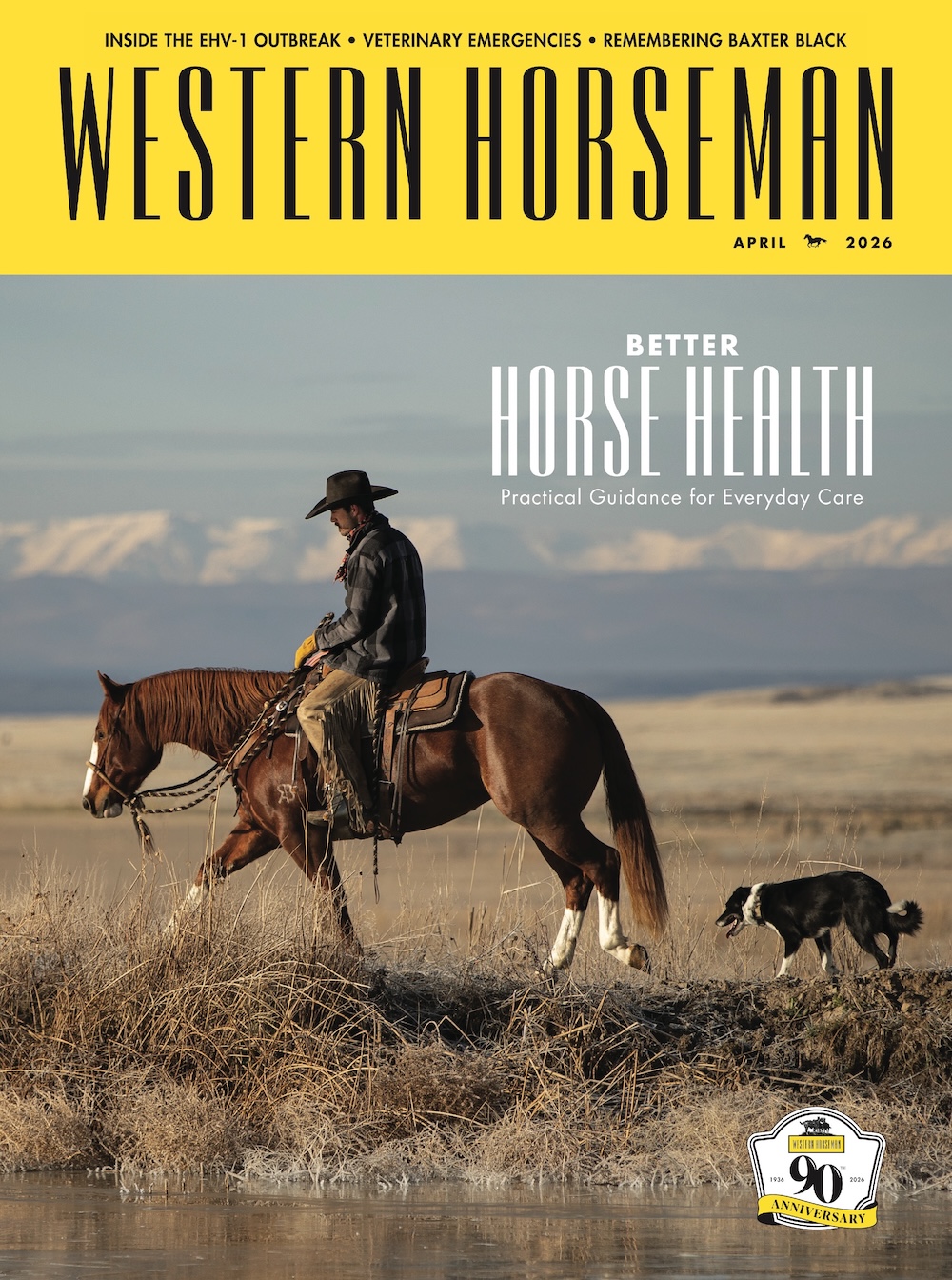
This article was originally published in the April 2026 issue of Western Horseman brought to you by Martin Saddlery.