
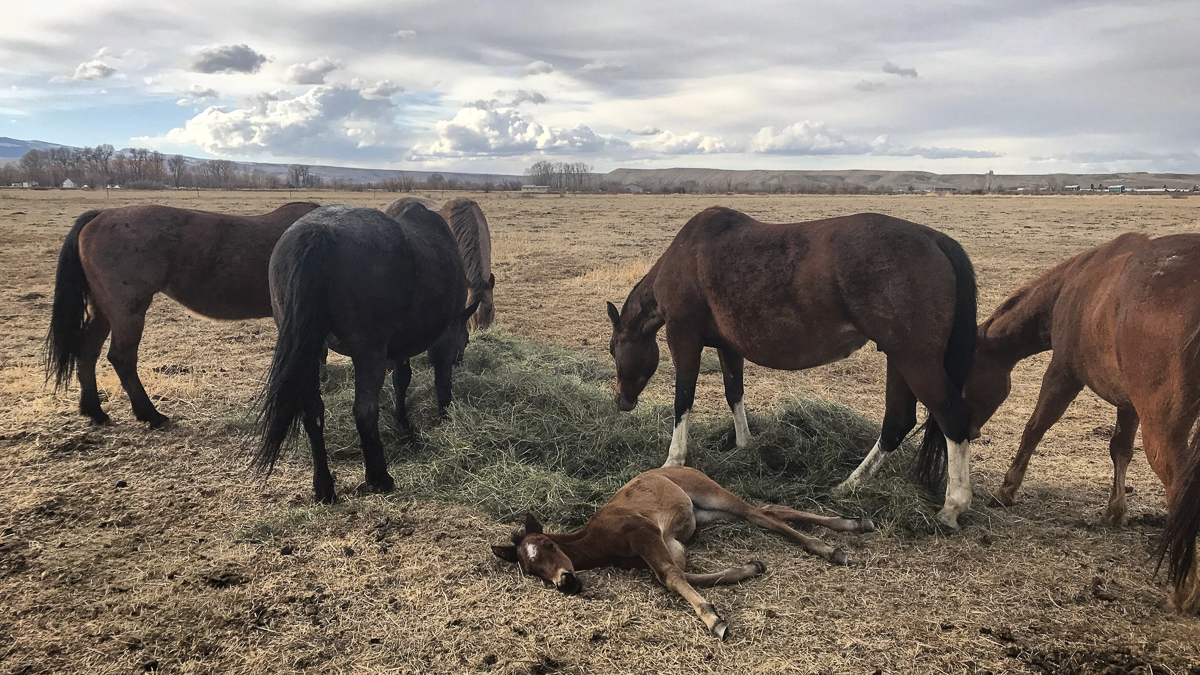
The Hancock line is hotly debated in Quarter Horse circles, but Jerry Jeppson made me a true believer.
I have never understood the tendency towards breed- or bloodline-based slander. Whether it’s horses, dogs or cattle, it seems folks have always found a way to create narratives around what they don’t like. While I have certainly ridden my share of horses across a number of disciplines and undoubtedly have my preferences, I believe they are exactly that — preferences. And while there are certain breeds you will never see me go to work on or even willingly throw a leg over, I refuse to slander breeds or bloodlines because, at the end of the day, it’s just my personal predilection. No need to yuck anyone else’s yum; we horse-folk take such things a bit personally. But happen into any working ranch or cow horse internet group and amongst the opinions being fired off with lightning speed, you will see one phrase repeated more than any other: “NO HANCOCKS.”
There was a time I couldn’t have told you what a “Hancock-bred” horse was. That is, until a grade gelding came along and changed my life. “Rooster” stands about 15.3 hands and is as good-looking as he was well-conformed. He is seal brown with a lightning bolt-shaped star on his forehead, a snip and one white sock on his left hind. He was fast, he was brave, and he went everywhere with a confident swing in his reins — with purpose. I was pretty into cow horse lines at the time, mostly partial to anything Peppy and Smart Little Lena. Rooster was different, unlike anything I’d seen or ridden, but he was grade and purchased at auction, so I never knew much about his lines or origin other than he was a Texas-raised ranch and rope horse.
One day, I happened across a sale ad for a horse that looked identical to him, except for being a slightly more exotic bay roan. There at the top of the ad was a line I’d never seen before: “Hancock-bred gelding.” That line would send me on one of the more impactful goose chases of my life, ultimately leading me to Jerry Jeppson.
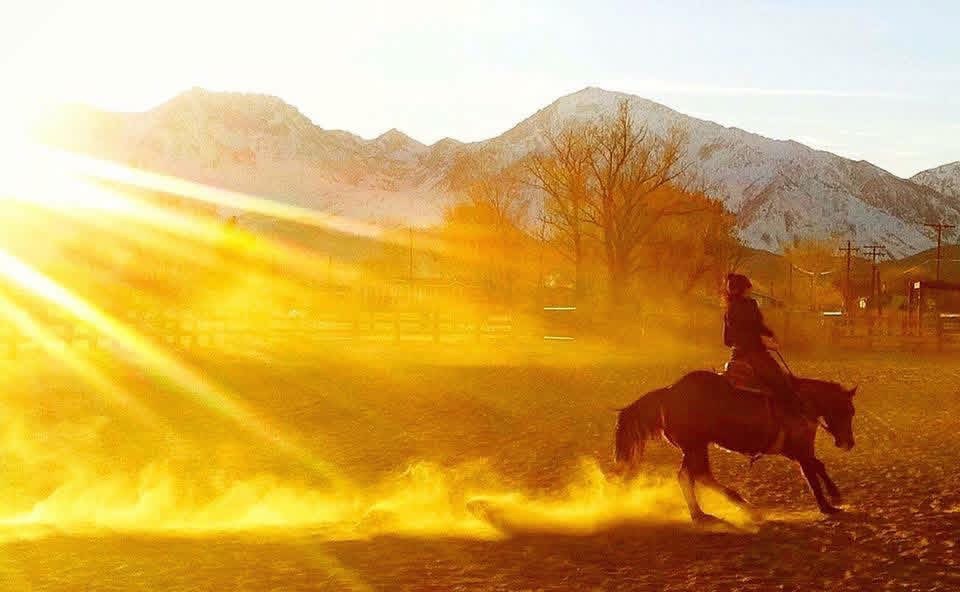
The Hancock rabbit hole took me, relatively quickly, to a photo of the late, great Blue Apache Hancock — a beast of a horse Jeppson had purchased as a weanling from the Broken Bones program. “Apache” was a solid blue roan, stood 16.1 hands, and weighed about 1,600 pounds. He reminded me of the warmbloods and Appendix crosses I rode as a kid, but shorter coupled and stouter — akin to the half and quarter draft crosses we packed on, but sportier — and a far cry from my beloved little cowbred cutters.
My first call to Jerry Jeppson lasted over an hour and a half. He was an encyclopedia of the bloodlines, extended pedigrees, temperaments, conformation, and athletic abilities of every horse he’d ever come into contact with — one of his signature traits. We talked horses, we talked cowboying, we talked packing — there was very little we didn’t cover. Over the course of the next two years, Jerry Jeppson would become one of my closest friends, and Apache, one of my favorite horses.
Jeppson cut his teeth on the famous M.C. Ranch in Oregon as an 18-year-old. old, fresh out of high school. His description of that experience was identical to just about every cowboy of his generation I’ve met who has worked on the big outfits. It went something like, “Boy, I really thought I knew something about horses until I went there. Figured out quickly how much I didn’t know. I got my a– kicked…But I learned.”
Jeppson had been around. He had served our country in Vietnam, cowboyed all over, owned an outfitting business in Idaho, and finally settled in Crowheart, Wyoming, to continue breeding horses. Jeppson could recall in great detail every horse he had ever owned or ridden — and he had ridden plenty. It could be argued that he’s thrown a leg over more of the most significant stallions in the Hancock pantheon than anyone else alive. He’d also made a habit of starting just about every horse he’d owned. With a breeding career that spanned several decades and a mare band that maxed out around 120 mares at its height, he’d topped a lot of horses. This gave him firsthand knowledge of his animals and allowed him to make decisions based on what he wanted in a horse: intelligence, good bone and feet, proper conformation, a deep heart girth and strong hip, a kind disposition, a quiet mind coupled with enough “juice” to be an exceptional athlete, and, hopefully, a pretty head and clean throat latch.
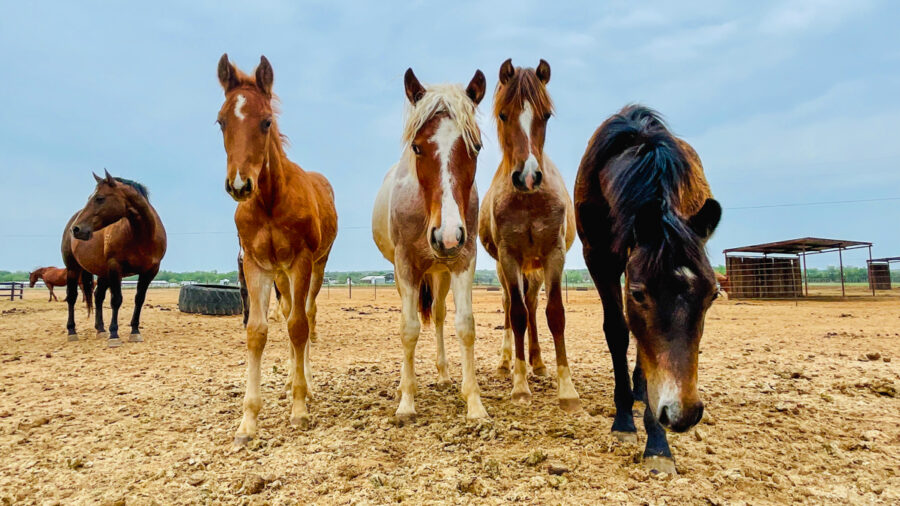
The more Hancocks I met, the more certain I grew of Rooster’s lineage. And while I knew I loved Jerry’s horses, I didn’t realize for some time how unique they were — that is, until Jerry went through some very serious health struggles. I helped carry his program for several years. That included transporting the two lovely stallions that remained after Apache’s death, Blue Venture Hancock and Crowheart Roan, back and forth between Kansas and Wyoming. I also gave his older mares a soft place to land when the Wyoming winters became too much for them and loose-herded trailer loads of colts to bring home, halterbreak and/or start, and sell twice a year for “the old man.”
After spending quite a bit of time up close with his animals and seeing the consistency in their temperament, mind, heart, try and ability, I became more than certain of their uniqueness. Never had I seen a program with such an even set of pens of colts year after year and never had I seen a breeder successfully create horses with such quiet minds, so much life and a love of going to work. So, I decided to build on the couple I owned and gather as many more as I could to continue my friend’s legacy before his imminent retirement, a thought I hated.
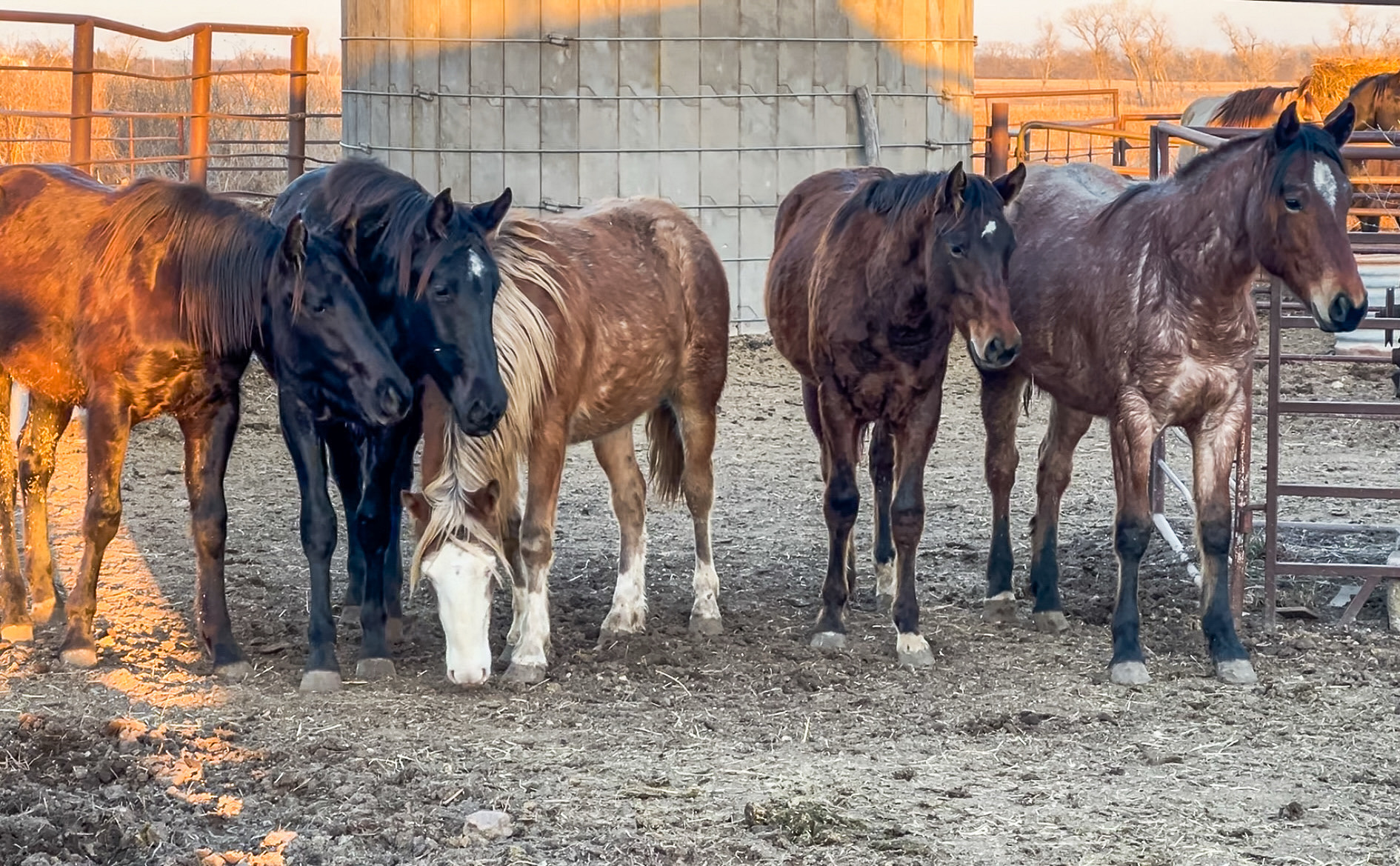
The magic Jerry Jeppson put into those horses may never be completely replicated. He was not a perfect man by any stretch, but no one made horses quite like him. Our adventures together, our highs and lows, our shared experience of raising horses as a team for seven or eight years — those are treasures I’ll never let slip away. The Hancock haters can say what they will, but it’s a shame they’ve never gotten to experience the things I have, like the partnership of a good Hancock horse and the knowledge of Jerry Jeppson.
Rooster is still kicking these days. He’s 28 years young and pretty spry yet. He’s out in the view of the house, where I can see him, babysitting my weanlings, while the sons of Apache and Crowheart Roan look on from the next turnout. Jeppson hasn’t given up the ghost either. He’s retired now, too, but reliably running amok in the Wind River Range of Wyoming. Neither he nor Rooster will last forever, but if I am intentional, their legacies will. Maybe they don’t fit the mold — the horse, the bloodline, the man — but neither do I, and maybe that’s why it all works. But considering the countless ranch and performance buyers I’ve met that can’t stop talking about how great these horses are, I don’t think I’m alone. As for me and my house, we will ride Hancocks — and I wouldn’t have it any other way.