
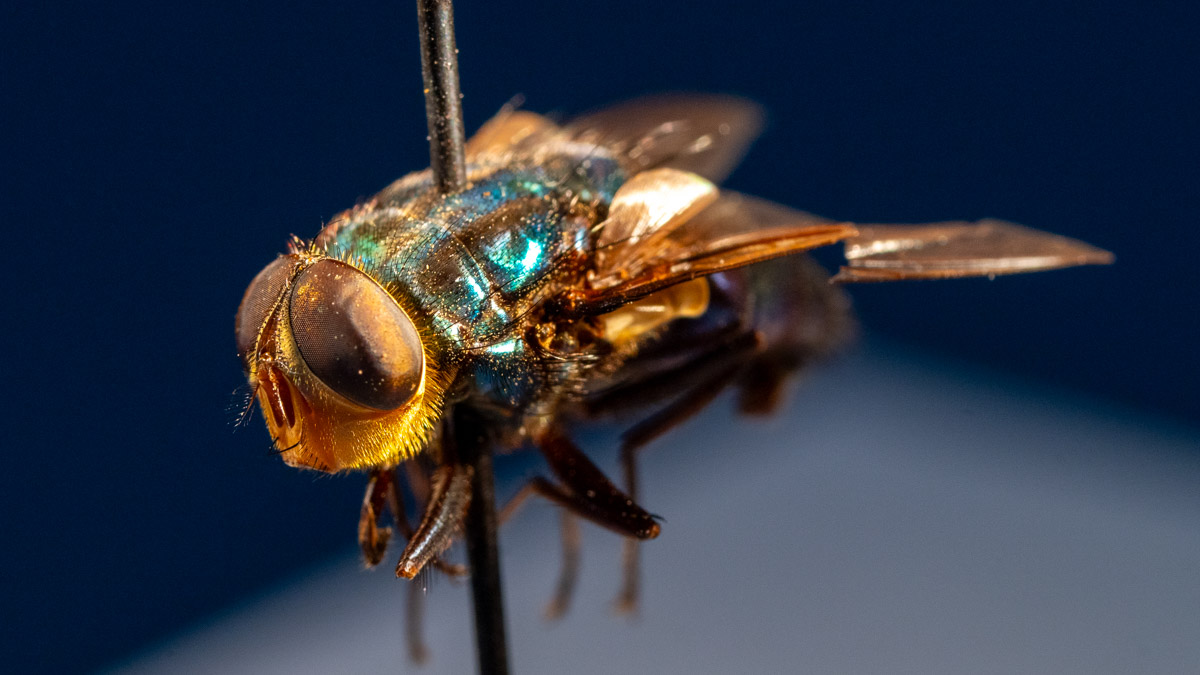
With New World screwworm now detected in Texas, the U.S. Department of Agriculture continues to suspend imports of live cattle, horses and bison from Mexico as officials work to prevent further spread of the destructive parasite.
The threat of plummeting cattle prices and the halt of imports aren’t the only concerns the New World screwworm brings. While the recommendation has always been to perform management practices, such as ear tagging, dehorning and castration during periods of low fly activity, NWS has forced some cattle ranchers to reevaluate their current protocols surrounding these procedures. NWS has also prompted some ranchers to increase their surveillance for the presence of wounds, regardless of the cause, because prioritizing early treatment and continuous care of wounds until they are fully mended does more than promote healing; it also deters female flies from laying their eggs in the wound.
NWS History
First, a little history lesson from Phillip Kaufman, Ph.D., a professor and head of the entomology department at Texas A&M University’s College of Agriculture and Life Sciences.
“The original eradication date for [New World screwworms] in the U.S. was 1966,” Dr. Kaufman says. “The USDA had a 50-mile barrier along the Rio Grande, and it regularly crossed that. So, although we say it was eradicated, there were recurring cases through the early 1970s. At that time, they realized they were never going to get fully rid of the screwworm until they moved the barrier further and further south.”
Kaufman explains that there were still cases, even though the barrier was expanded some 300 miles, so a partnership was formed with Mexico to eradicate it to an isthmus of the country located just above where the Yucatan Peninsula attaches.
“The original plan was to get it down to there because it was the skinniest part of Mexico, east to west-wise,” Kaufman clarifies. “Once they realized the progress they had made, they decided to work with Central American countries.”
He says these countries were brought into a coalition, and the decision was made to eradicate it down to the Panama Canal and to use the Darien Gap, which at that time was an impenetrable forest, as the barrier.
“The program morphed as it went,” Kaufman says. “It took about 30 years to get it all the way to Panama and to establish that zone.”
Starting in 2023, tracking measures detected an increase in the number of NWS cases in Panama. By November of 2024, concern began to grow as increased case numbers were also detected in Costa Rica, very southern Mexico, Nicaragua and other Central American countries.
NWS Explained
Oldtimers may recall hearing about or even seeing the Primary Screwworm, so named because it was the primary one that would lay eggs in wounds.
“They changed the name at some point to the New World screwworm because there are fly species in other parts of the world that have the same behavior,” Kaufman elaborates.
So, why the worry?
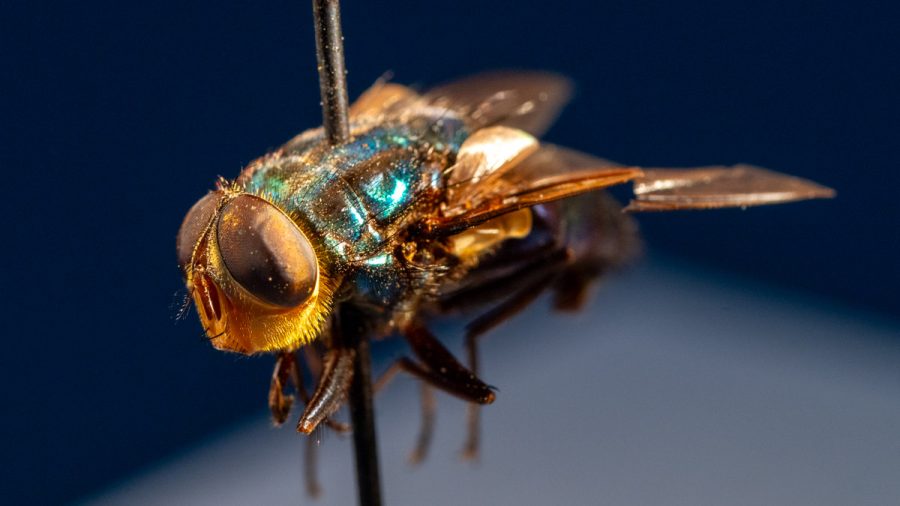
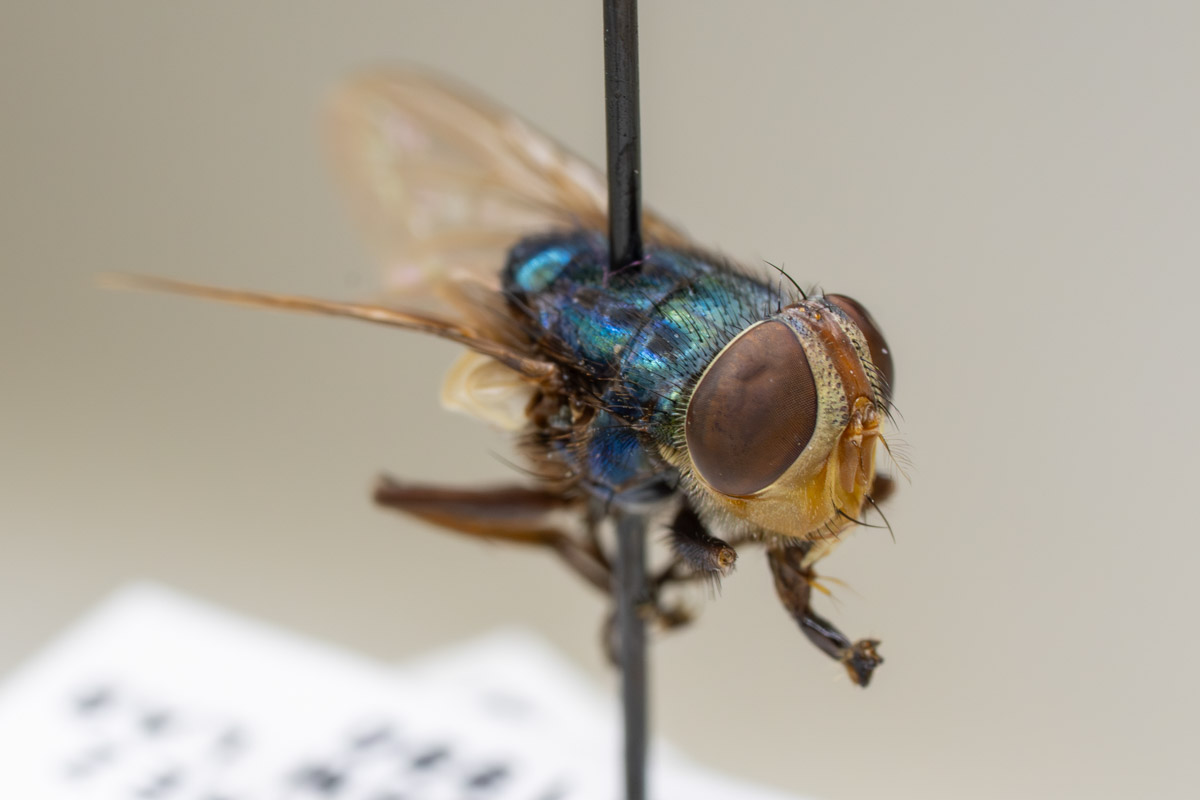
“It’s a blow fly, just like a lot of the other blow flies we have around that we normally see on dead animals,” Kaufman says. “But this is the only fly in the Western Hemisphere, and it’s a native fly to the Western Hemisphere, that will initiate what we call myiasis, or the condition of living maggots infesting a living animal.”
The NWS female fly will only lay her eggs in a living host, and that host must have a wound.
“They have to have an opening in the skin,” Kaufman explains. “All other blow flies will not preferentially lay into just an open wound. They need to have rotting tissue to stimulate them to lay their eggs.”
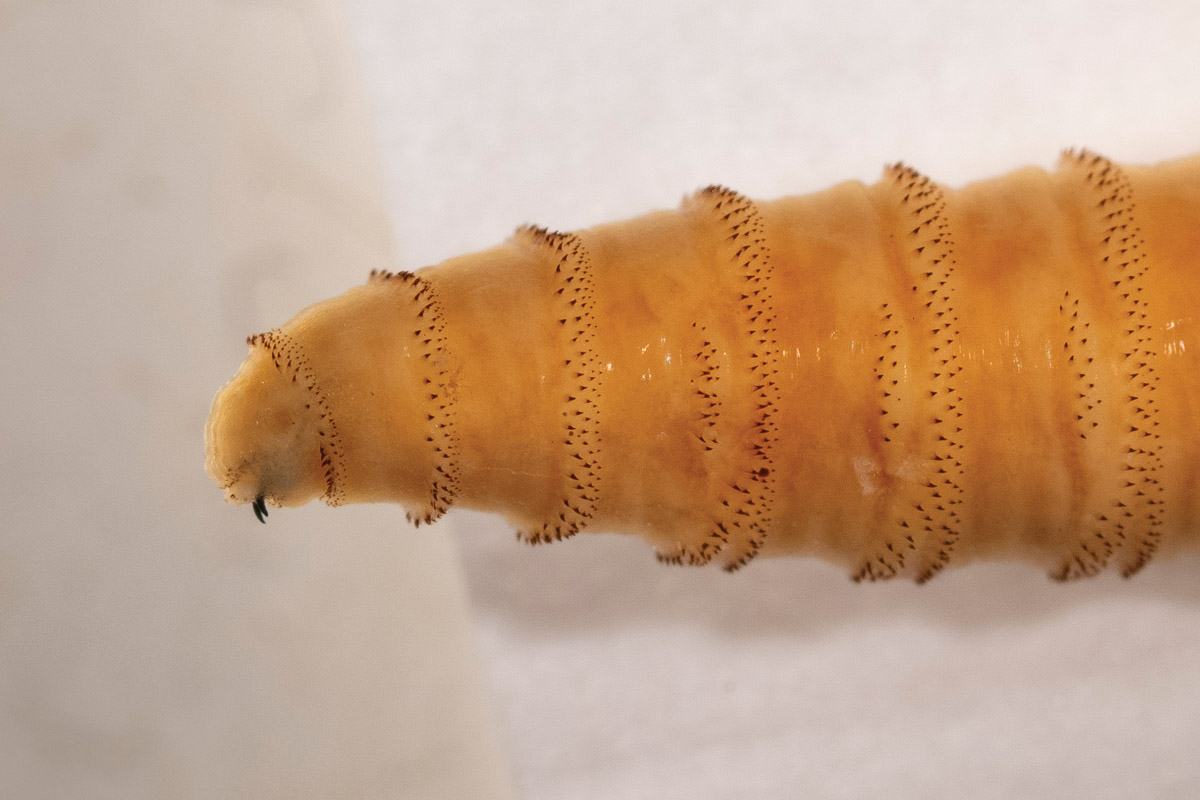
He says that the female NWS will lay a a couple hundred eggs in a wound, which then grows bigger and bigger as they move into living tissue and leave behind bacteria and tissue rot that allow other blow flies to lay their eggs in the wound.
“A wound that has maggots in it could have both NWS and other blow flies in it,” he says. “This fly just keeps expanding the wound, and the larvae get bigger as they age, which typically will result in the death of the animal when the wound gets so large or the larvae damage critical tissues.”
Prevention
Justifiably, livestock producers have raised questions as to the prevention of NWS.
“There are no vaccinations,” Kaufman says. “It’s managed through a program we call integrated pest management, or IPM. That’s using multiple techniques to knock a population down.”
Kaufman says the goal with most insects is not to eradicate them but to bring them to a level that is tolerable or doesn’t cause economic damage. However, with NWS, the goal is to get rid of them. The same principles of IPM apply.
“You don’t just use one technique to get rid of it,” Kaufman says. “You use a bunch of them, each knocking out a part of the population. Ultimately, the sterile insect technique is what’s used to fully get rid of the population.”
An informational brochure produced by the USDA’s Animal and Plant Health Inspection Service, “Eradicating New World Screwworm with Sterile Insect Technique,” states, “SIT uses gamma radiation to irradiate NWS pupae and create sterile male flies.”
The brochure says “this practice does not impact the male flies’ longevity, searching behavior or mating ability. When produced and released in mass, sterile male flies mate with wild female flies, laying unfertilized eggs. Since female NWS flies normally mate only once, the NWS population progressively reduces and is, ultimately, eradicated.”
The SIT is safe. Its only drawback is that once the sterile insects have been released, it is no longer possible to monitor for the adult flies because the traps are just as effective at capturing the wild flies as they are the sterile ones.
Another part of the overall IPM strategy, Kaufman says, is monitoring. He notes that adult fly surveillance traps are one part of monitoring, and this is done when a new case is identified on an animal and before SIT is implemented in an area.
“They have a lure that they can use in the traps that is highly attractive to that particular fly, but it also attracts other blow flies,” Kaufman says. “The lure is called a Swormlure, and it’s a mixture of 10 or more volatile chemicals that give off odors that are attractive to the, mostly female but also some male, flies.”
When a case has been identified, a massive release of sterile insects is completed.
Another part of monitoring is self-reporting.
“People have to be willing to report that they found it or found something that they think is it,” Kaufman says. “The primary way we do that, with both domestic and wild animals, is if you encounter a living animal that has maggots in it, you call a veterinarian, and they will remove the maggots.”
Veterinarians are required by law to submit those maggots to the USDA APHIS. Kaufman elaborates that checking and rechecking animals, particularly those with open wounds, is critical to this process. If the pest is positively identified, appropriate strategies will be implemented.
Because the fly can get into any mammal, Kaufman urges producers to monitor their animals for signs of infestation. He says these signs can include changes in behavior or the smell of rotting flesh.
“On the cattle side, certain management techniques, such as castration, dehorning and ear tagging, create wounds hospitable to the NWS,” Kaufman explains. The umbilicus of newborn calves and cows that have recently given birth can also create perfect sites for the female fly to lay her eggs. He adds that encounters with barbed wire fencing can also create wounds with an ideal environment.
“If you know the flies are in your area or anywhere close, you need to monitor wound sites until they are fully healed and watch those animals closely,” Kaufman says.
Treatment
Owners of animals who do become infested with NWS should contact their veterinarians, who will typically complete a thorough cleaning of the wound. This may include a process as simple as flushing the wound, but it may also include a much deeper cleansing depending on how deeply the insects have burrowed. Once the wound has been cleaned, it is treated for any bacterial infection, then it is stitched and/or covered so that it does not become re-infested. Monitoring the wound until it is completely healed is a critical part of the process. There is a high rate of recovery for those infestations that are caught and treated early.
Kaufman explains that, while NWS is not contagious, the most significant challenges are when the NWS’ eggs are laid in areas such as an abdominal wound and the insects burrow deeply into it, sometimes going directly into the gut.
“In those cases, we’ve got a sepsis situation,” Kaufman says.
The NWS has also caused death in cases where it has damaged blood vessels, causing the animal to bleed out or, in other cases, has reached the animal’s brain.
At the time of publication, no products have been approved by federal or state agencies for NWS treatment. Federal, state, university and industry groups are actively seeking new materials that can be used safely and effectively to treat for NWS, and as they become available, treatment plans will be updated.
Learning More and Helping Out
Not unlike other major universities, Texas A&M AgriLife is doing its part to educate the public about NWS. One way they do this is by uploading webinars on the subject to their YouTube channel, @AgLifeSciences. Texas A&M and others also maintain an email address specifically for submitting photos of suspected NWS. Texas A&M’s address is [email protected]. Those interested can also sign up for email briefs from the USDA’s APHIS by going to www.aphis.usda.gov.
This article was originally published in the November 2025 issue of Western Horseman. For recent information surrounding NWS, please visit New World Screwworm: What You Need to Know.