

Being a mom to two young sons is the most important job right now for this California horsewoman. But she still likes to start colts, work cattle and show cow horses.
The Prunty family has a long history of ranching and raising horses — from broncs to cow horses — in Elko County, Nevada. Growing up in that environment, it is only natural that Kyla Prunty Rianda would build her life around horses.
After high school she attended Great Basin Community College in Elko for two years. Then she worked on the YP Ranch in Tuscarora, Nevada, before going to California Polytechnic University, where she graduated with a degree in animal science. While starting colts for the Twisselman family in California, she met horseman and clinician Martin Black, and traveled with him across the United States and into Canada to start colts. Then she landed a job starting cutting horses in North Carolina. In 2013, she was the only female trainer invited to demonstrate at the Horseman’s Reunion in Paso Robles, California.
Today, Kyla and her husband of five years, John Rianda, are raising their two sons, Hardy and Roan, on a ranch outside of Los Banos, California. They manage an organic beef program, take in stocker cattle, and raise their own organic beef and commercial cattle. Kyla also enjoys raising and showing cow horses, and she works with her sister, Becky Prunty Lisle, to carry on her family’s horse and ranching heritage.
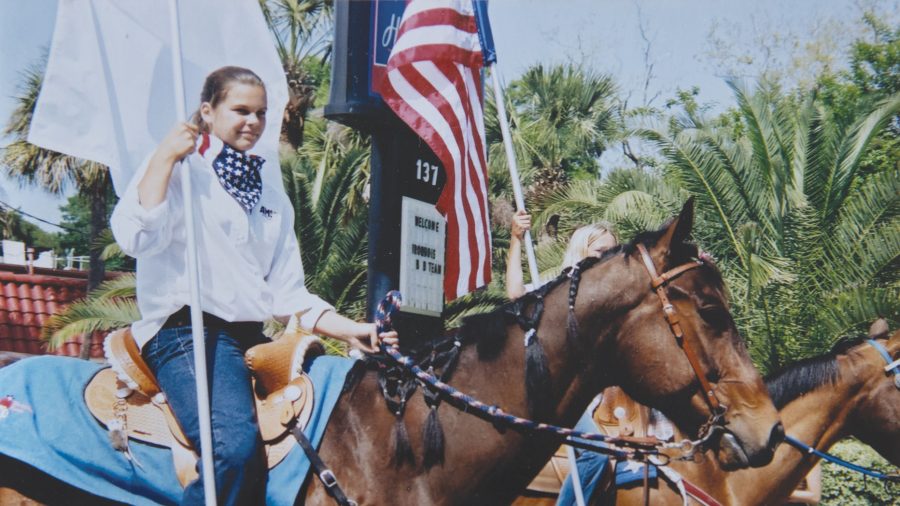
My sister and I did a little bit of everything on our family ranch starting at a young age. In the wintertime, my family ran the mares and colts on the desert in northern Nevada. I remember my dad telling Becky she had to be 10 years old to round up the horses in the spring. When she was 10, she finally got to go, and so did I, but I was only 7. Dad let us kids trail the saddle horses the last 10 miles to camp. Grandpa said that was the fastest the horses ever made that leg of the trip. We thought we were really something.
When I was a kid I rode a horse names Cisco. He was real laid-back, and I could do anything on him. I thought I was going to teach him something one day, so I blindfolded him and rode through the sagebrush. That was my first solo horse training experience, and I’m not sure what I was trying to teach him — maybe I was working on trust.
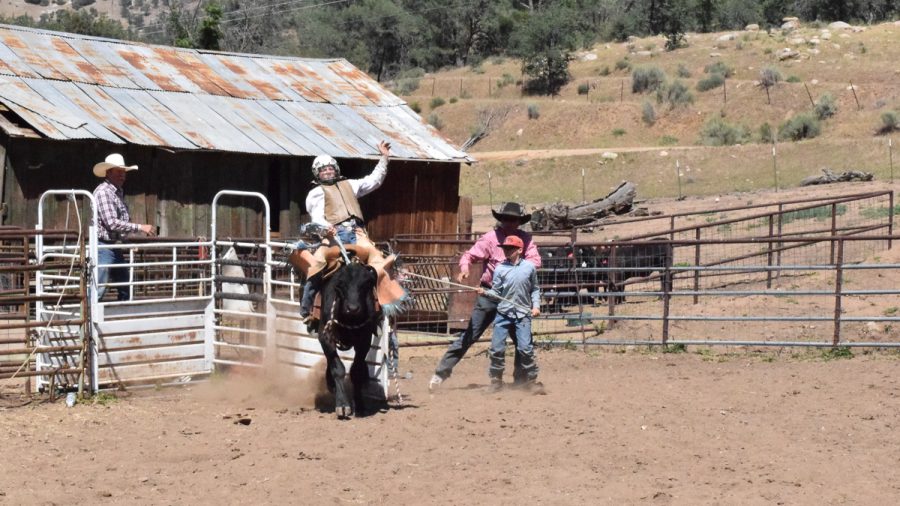
Working on the YP, I got to go out with the wagon and brand calves for two or three months in the spring. I was the only gal on the crew for the most part, but most of the guys didn’t get uptight about working with a girl. I did everything they did, and I got a lot of roping experience.
Martin Black has has the biggest influence on me as a horsewoman. I heard he was starting colts in Kentucky, and I really wanted to go, too. When he asked me if I wanted to help him, he figured I was willing to get on anything. I got to see a lot of new country, network with horse people and ride a ton of colts. Experience really is the best teacher, and I needed wet saddle blankets as much as those 2-year-olds.
“Until I had kids, horses defined me. Now my family is part of the definition.”
I got into showing cow horses so I can have a goal that motivates me to fine-tune my horses. I figure if I have a horse that can do everything on the ranch and also go to town, it’s pretty broke, but a horse is never really finished. There’s always something more to learn.
My grandpa, Frank “Shorty” Prunty, was a pretty good horseman. He would tell me to visualize a path through the sagebrush and that would help me learn how to keep a horse between my legs and hands. My favorite quote of his was “be kind to the little guy,” which isn’t really a horse training quote, but a good all-purpose reminder to be kind and help those who need it.
Being a mom is the hardest job I’ve ever had, but it’s definitely the most rewarding. To see my kids grow up outside on a ranch is really cool. I think my sons will have a good work ethic because they’re being raised on a ranch and always have chores to do. They’ll also have an appreciation for where their food comes from, and know there’s more to it than going to the grocery store.
I always knew I’d marry a rancher; it wouldn’t work out any other way. I don’t think anyone else would understand my need to be with horses. My husband, John, is a cattleman, and I prefer the horses. It keeps things balanced.
The ranching lifestyle lends itself to what I want to do with my horses and how I want to raise my kids. Like Bill Van Norman said, “I like the cattle because I need them for my horses.” I wouldn’t want to do anything else.
This article was originally published in the September 2015 issue of Western Horseman.