

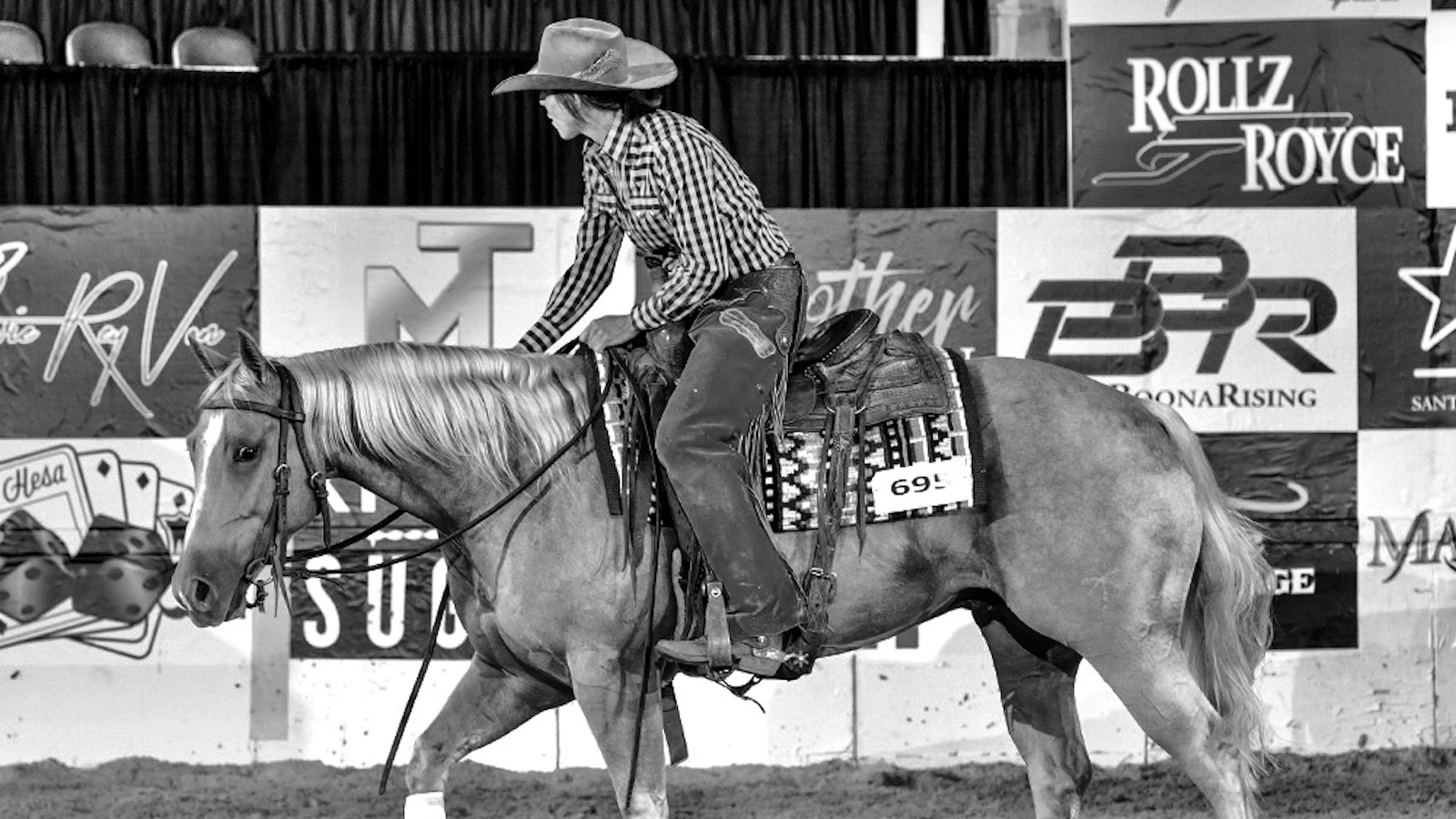
The horses in our lives all fall into some sort of category on the spectrum between dull and sensitive to physical pressure. The question is, which do you prefer?
Shorter days mean more time for visits. Holidays mean more get-togethers.
With all that upon us, lately, amongst my training peers and horse people, I hear plenty of musings about the equines they ride. I can’t help but feel that some clarification on terminology is needed.
And, instead of telling them to their face over pumpkin pie and coffee, I will do the decent thing and go to the internet instead.
Sensitive. A sensitive horse is a gem, indeed. Sensitive horses often mean less physical work (on the pressure side, anyway). Certain breeds tend to favor more sensitivity than others (a Thoroughbred vs. a Belgian, for example). They can sound intimidating, as it often gets misconstrued with “reactive,” but most riders and trainers are thrilled to have a horse with sensitive tendencies. They tend to force us to use our minds and read our horse’s reactions and body language better. They often take less pressure than a dull horse and seem to retain their training pieces longer than their thicker-skinned pals. A sensitive horse can make great changes in a short amount of time with minimal effort. A little can mean a lot. Sometimes, they can be a little more bothered about pressure and stimulation, but ultimately, this should make us better horsemen.
On the flip side, we have horses that fall into the “dull” category. Dull does not always mean that they don’t have reactions or are glazed over to the world. They simply don’t feel as much as a sensitive horse. It takes more pressure (in whatever form) to stimulate change or the ability to search for change in these types of horses. The dull horse in the field will often be the one who reaches through a tight fence and rubs out his mane to get some grass. It just doesn’t bother him as much. This doesn’t mean the rider should be less mindful of pressure, but their horse just doesn’t search the same to find relief. Now, some folks do prefer this to a more sensitive animal. I think sometimes a well-trained, sensitive horse can feel more like a sports car (and some riders don’t want that!), while a well-trained horse on the duller side is a little more like a trusty pickup.
Neither of these terms categorizes a horse as spooky or gentle. Neither one of these terms is synonymous with reactive or numb. A spooky horse is, well, spooky. They are unreasonably scared of things on a great scale. And a horse with any type of feel can be a gentle one. “Reactive” horses can still take a lot of physical pressure and show no change, and a sensitive horse can get numbed out, too.
When I speak of pressure, I mean everything from a curry comb to spurs, from giving a shot to the type of bridles we use. Sensitive to dull is more of a spectrum than a rigid category. Some horses are so sensitive they can’t even stand the feeling of fringe off a cowboy’s leggin’s tickling their sides. Some horses are so dull they feel nearly unreactive in a bridle with no leverage.
There are good notes and bad ones to each of these terms. We all have our preferences, and no one is really wrong.
And since no one has asked, I will inform you that my order of preference for the horses I ride is:
1) Sensitive and gentle
2) Dull and gentle
3) Sensitive and spooky
4) Dull and spooky.
And I suppose the same can be said for the people in my life, as well.