
Transitioning a horse from the snaffle to a bridle can be a rewarding learning experience for horses and their riders.
For most young Western horses, there comes a time when they go through “The Big Change.” Their rider helps them take the leap from just a colt to almost a horse, from green filly to broke mare, from packing a rider with a rein in each hand to having just one light hand guiding them.
Yep, I’m talking about the transition from snaffle to shanked bit.
To be fair, no, it’s not imperative to do this to have one “trained” or “finished” or “fancy” or whatever the cool kids are calling it these days. Plenty of horses go through life with the same jointed bit in their mouths and do just fine. But a lot of horsemen see it as a step toward being more broke. Some riders just crave the variety and the challenge of taking their bridle choice to the next level. Some associations even mandate this change for legal competition at certain ages.
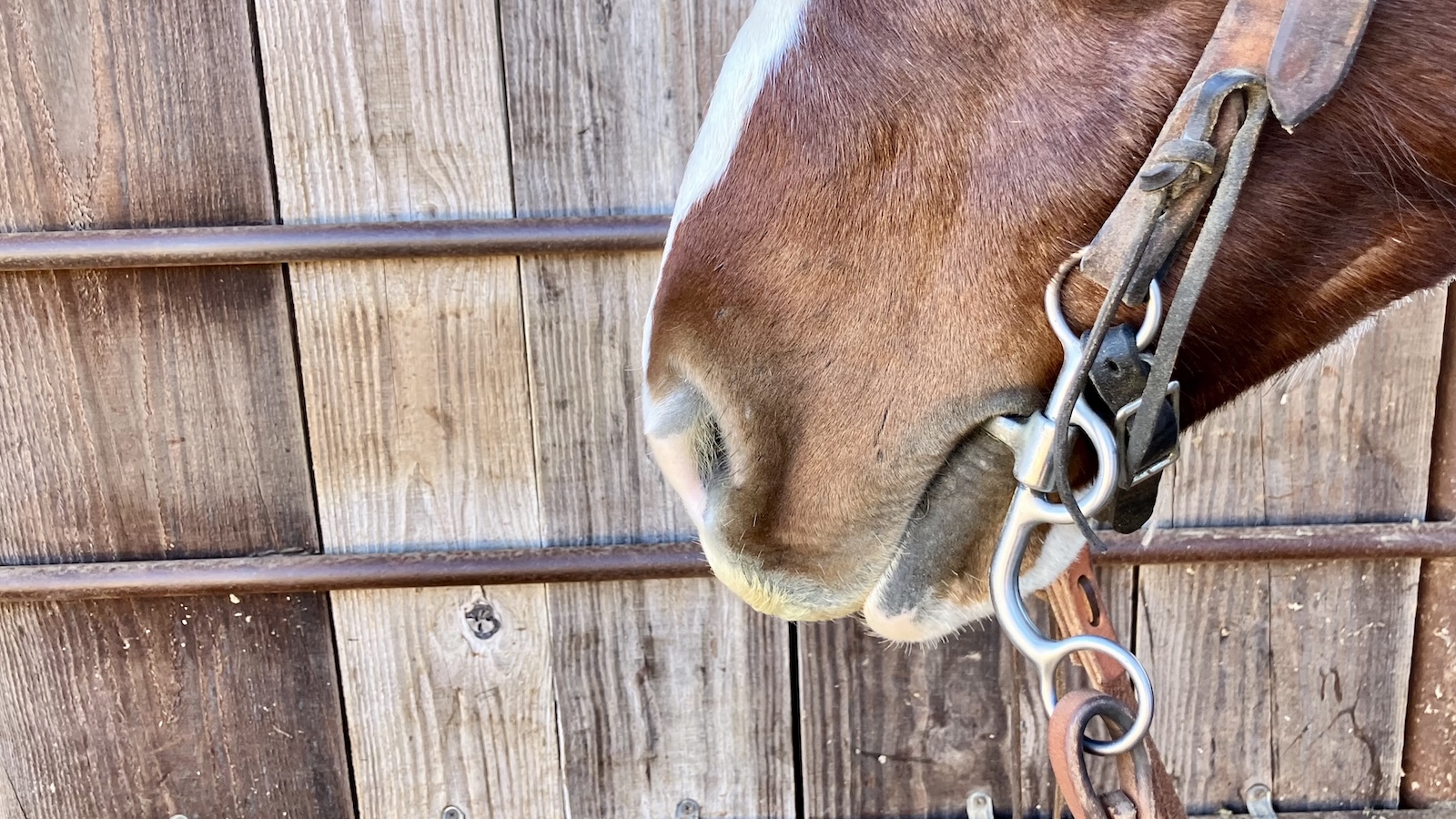
A snaffle offers guidance from a ring on each side of their mouth, which keeps signals simple, lateral and clear, for the most part. A bridle offers shanks, a port and a curb strap, and the level of severity varies significantly. A snaffle is generally made to introduce requests and solidify basics, and the bridle is meant to refine and advance maneuvers and abilities.
I know that some feel like this is a big deal, and I don’t discount that. Plenty are content just riding two-handed, using a snaffle, a hackamore or even sometimes going bridle-less. Some folks plan their horse’s life around changing bits and want to follow rigid traditions to stay pure to whatever plan they feel must be followed to do it right. There are advantages to every side of this argument. Most horsemen I know fall somewhere in the middle and would like to advance their horse’s knowledge bank and get them reining around one-handed, whether to show, pleasure ride or simply do a job.
One thing is for sure: a bridle is best introduced when a horse is willingly responsive, knows basic cues and how to carry himself properly under saddle. It’s never the right time when a horse is having issues doing so. A bridle is not a fix-it; it’s a way to effectively communicate signals and advance the relationship between horse and rider.
It can help a horse become more ready for the next guy, too (though, often when I have a green rider on a broke horse, strangely, I have them ride said horse in a snaffle). Most options can be extremely comfortable and humane tools for a horse, and all can be clearly cruel in the wrong hands.
How does one know when the horse is ready? Well, it’s a sliding scale. But fear not — it can be done, and it can be fun! On the horse’s part, it takes a readiness in our hands and under our seat to receive the big change. On the rider’s part, it takes feel, sensitivity to the fact that a leveraged mouthpiece will feel different to a horse and react accordingly. There are great bits that can introduce a horse to a bridle, and each person has their own method and desire on how to approach it.
It can be a surprising change for a young horse to feel a bridle with a curb strap, but with enough feel, time and patience, it can be a fit like a glove. From a consumer standpoint, the world of bridles can be daunting, but with assistance from a knowledgeable horseman (if you aren’t already one) and the right resources, it can be a really rewarding and interesting change. It’s nice for a horse to learn to pack a good bridle properly and comfortably. And it’s great how we riders can learn how to communicate with subtler cues, simpler moves and different pressure.
“The Big Change” can be a rewarding advancement, and it doesn’t have to be a big deal either. From snaffle to bridle, or from snaffle to hackamore to bridle, or from snaffle to hackamore to two rein to bridle, or shoot, to just stay in a snaffle forever, hats off to anyone out there enjoying their horses and continuing their education.
(And if nothing else, it gives us a great reason to add a little silver and leather to the tack room).