
Through her functional and fashionable leather products, this designer is working to shift high-fashion paradigms while supporting regenerative ranching practices, American ranchers and rural communities.
Wild curiosity, an adventurous spirit and an appreciation for Western heritage have sparked Cate Havstad-Casad’s creativity and given her passions for fashion, agriculture and all things Western a higher purpose.
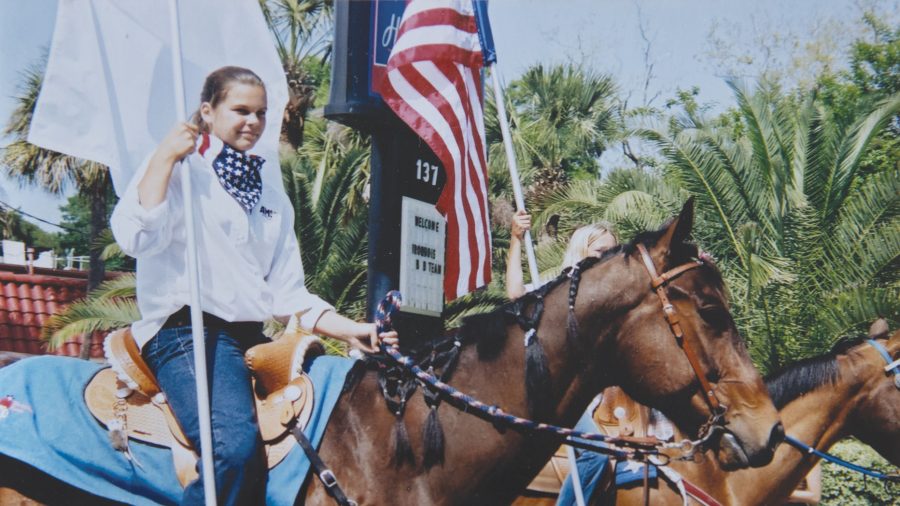
Growing up in Occidental, California, Havstad-Casad wasn’t fully immersed in the Western lifestyle. However, the moments she experienced as a young girl made a lasting impression on her life and later shaped her career. One of her earliest memories of Western culture was of an all-Black cowboy parade in East Palo Alto, California. The gear, clothing and horses fascinated her. She also recalls a portrait of the iconic Marlboro Man painted by her grandfather that hung in her childhood home. From a young age, she wanted to ride horses, and thanks to a childhood friend, she was able to take lessons, attend pony camp and ride on her friend’s horses.
“My parents were very busy, self-employed people, so I often stayed at a friend’s house after school, and she had horses,” Havstad-Casad recalls. “We would ride to the Union Hotel in Occidental, go inside and order breadsticks and milkshakes, and then ride home. We also rode on the beach in Northern California. I never realized how enchanting those experiences were until I was an adult and started my own business.”
Business in a Barn
While attending college at the University of California, Santa Cruz, Havstad-Casad exercised horses at a training barn in Salinas, California. She majored in anthropology, planning to work in archaeology and primatology, conducting field studies like the late Jane Goodall did with chimpanzees. However, she later shifted her focus to cowboy culture, working as a wrangler and trail guide in central Oregon.
“I tend to follow my curiosities — people, traditions, evolution and communication,” Havstad-Casad explains. “What’s interesting about archaeology is how we study past civilizations through artifacts left behind.”
Two aspects of the cowboy culture that interested Havstad-Casad were cowboy hats and land conservation. While in Oregon, she apprenticed with a hatmaker and volunteered at an organic farm, where she cultivated a deep interest in agricultural production. The biodynamic farm was owned by Chris Casad, who would later become her husband. She first met Casad when she visited the farm during a weekend trip with a friend who went there to buy organic honey.
“I thought he was very cute, and we had a nice interaction, so I bought some honey, too,” Havstad-Casad recalls. “I wrote him a $25 check for the honey, but keep in mind, I was making very little at that time. The next week, he called me, and I was so excited. He said, ‘It was nice to meet you, and, by the way, your check bounced. I was so humiliated. He asked if I was interested in making a trade, and I thought that was cool. He gave me a [Community Supported Agriculture] subscription to receive produce from his farm in exchange for a custom hat I would build him.”
Havstad-Casad made him a 100X beaver hat, the first she crafted on her own. That was the catalyst for her leaving her mentor’s shop and opening her own in 2014.
“I was living in an apartment within a horse barn, and I asked the owners if I could convert the washroom into a studio,” Havstad-Casad says. “I bought some equipment and supplies, built a tabletop on the wash rack and started Havstad Hat Company in that barn.”
Mobile Hat Maker
In the summer of 2015, Havstad-Casad purchased a 32-foot Airstream travel trailer and transformed it into a mobile hat shop. She hit the road with her dog and a couple of girlfriends.
“When I was in college, I read a John Steinbeck novel called ‘Travels with Charlie,’ and I was really inspired by it,” Havstad-Casad says. “I had a dog named Charlie, so it was a manifestation of a dream to explore the United States.”
Over six weeks, she traveled from Oregon to Tennessee, stopping along the way to set up her shop in various locations, including in Nashville, Tennessee, and The White Horse Saloon in Austin, Texas. She built a large social media following, some of whom became clients, while curious customers approached her trailer and ordered hats.
“It was all very organic,” Havstad-Casad recalls. “I was on Instagram and gained some early traction because musicians like Nikki Lane, Kacey Musgraves and Post Malone had caught on to what I was doing and became supportive. I just put it out there what I was working on, and people would find me or stumble upon me making hats in the trailer.”
The trip was a pivotal moment in launching her hat-making career, but it also marked a turning point in her life. A developer offered to build her a hat shop in Nashville, and she says she thought she’d become “Cate, the Nashville Hatmaker.” It was an enticing opportunity for a young entrepreneur, but she and Casad were growing closer, and she enjoyed helping him on his farm. She left Oregon with the idea that she might not come back, but instead, she gained clarity about the lifestyle she wanted and who she wanted to share it with.
“I turned the ship around and went back to Oregon,” Havstad-Casad says. “I’m very glad I made that choice. I’m sure my life would’ve been awesome in Nashville, but the life Chris and I have built is a lot more personally sustainable for my ethos.”
Hoof to Hide
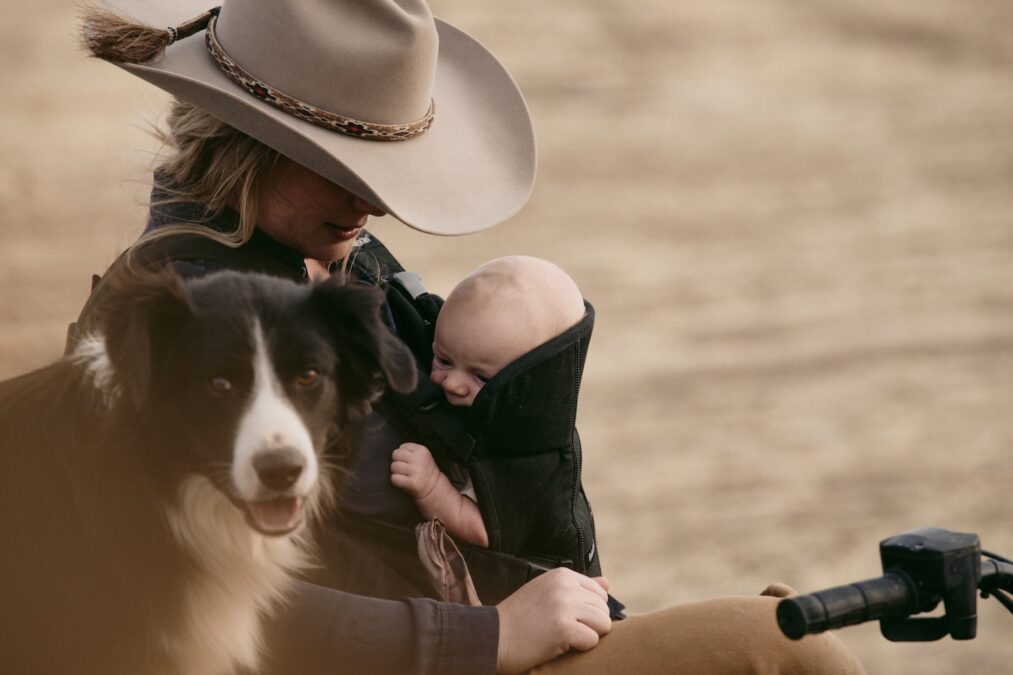
The couple married in September of 2019 and is raising two sons, Hesston, 4, and Crosby, 1½, on their farm and ranch in Madras, Oregon. Together, they developed and diversified their operation to adapt to drought, market fluctuations and other challenges. They manage 1,400 acres stocked with cattle and pigs. They harvest and market the meat on the hoof directly to consumers, and they also sell some of the calves from their cow-calf operation.
“Our core, holistic goal is to grow food for our community and to improve the ecosystem we’re stewarding,” Havstad-Casad explains.
As first-generation farmers and ranchers, the couple is learning and adapting as they go.
“[It’s what makes us] creative and open-minded to the changes that need to happen to remain relevant and sustainable,” Havstad-Casad says.
The couple’s farming and ranching endeavors inspired another venture in 2021. As they transitioned from growing row crops to raising livestock, Havstad-Casad studied the economics of the meat industry and discovered startling statistics.
“Every time we send a steer to slaughter, only 65% of the carcass is utilized,” Havstad-Casad explains. “That means, from a business perspective, most family ranchers only get a 60% return on their asset, and they pay to get rid of the remaining 40% as waste. Every year in America, 5 million cattle hides end up in the trash rather than being used as a natural resource.”
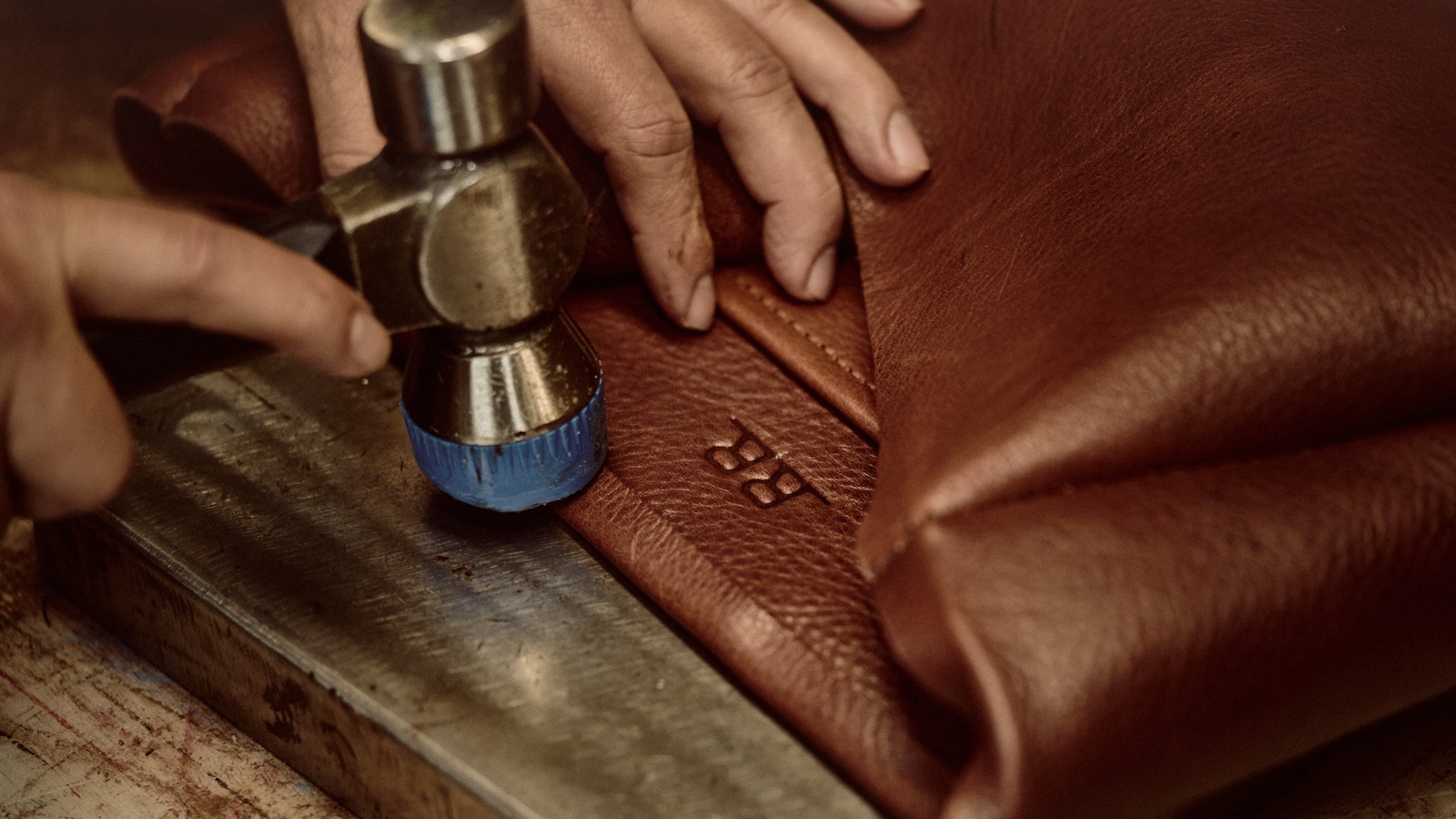
Using her design skills, she started Range Revolution, making high-end, designer-quality leather goods, including handbags, small leather accessories and luggage. Her leather goods are made from hides sourced from American ranchers rather than imported from Brazil and other countries. Each piece is ethically handmade by leather artisans in Los Angeles, California, and Leon, Mexico, who are paid fair wages.
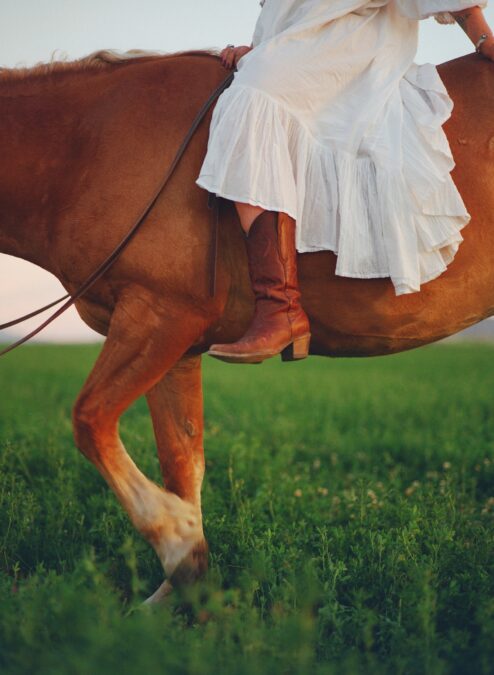
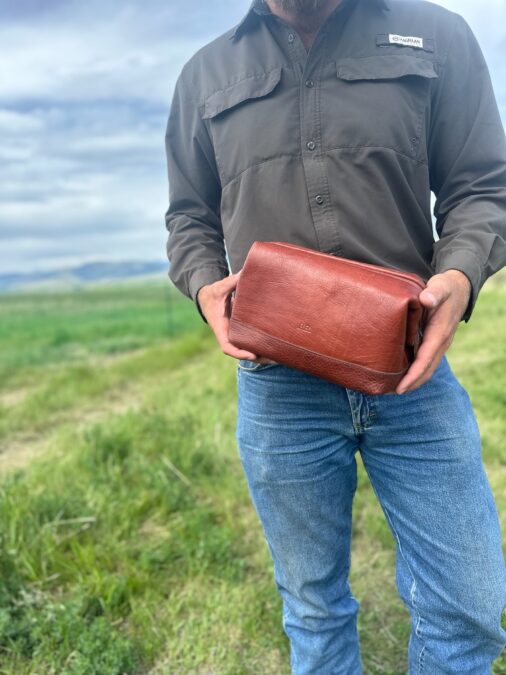
“It’s been a wonderful evolution combining two of my career paths — agriculture and design — to promote ag advocacy through Range Revolution,” Havstad-Casad says. “I didn’t fully understand what I was getting into, but I see it as earning my MBA because this level of business is so different from the farm and even the hat company. I’m challenging myself to become a much better businesswoman, and it’s benefiting all my other businesses along the way.”
Range Revolution launched its first bag, the Range Tote, at Cowboy Christmas during the 2021 Wrangler National Finals Rodeo. The entire bag, including the hardware, was made in America, and Havstad-Casad designed it to be a versatile tote anyone could carry, especially new mothers with baby items.
In 2025, Range Revolution made its fifth appearance at the NFR with over 30 products, including full-grain leather and suede options, in five colorways.
“I see leather as a byproduct of land conservation,” Havstad-Casad says. “In some circles, we use the word regenerative, and it resonates with people in San Francisco, New York and L.A. In other contexts, like at Cowboy Christmas, I don’t need to say that because ranchers understand that if you’re a good rancher, you’re essentially a good grass farmer. If you know how to grow good grass, you can increase your stocking rates and make more money. The best ranchers are also conservationists, and that’s what I get to practice and see in my community. That’s also what I want to help the average fashion consumer understand.”
Havstad-Casad has observed in recent years that high fashion promotes plant-based or bio-fabrics, such as vegan “leather,” to environmentally conscious consumers rather than informing them about natural fibers produced by American ranchers. In an economy centered on mass-produced, disposable goods, she values that members of the Western community turn to heritage products made with integrity and high-quality materials that support generations of ranchers and artisans, last a lifetime and beyond.
“Vegan leather is actually petroleum,” Havstad-Casad says. “It’s not durable, and it’s not a heritage material that will be passed down for generations. This isn’t something that’s creating better outcomes for land or communities. I want to educate people through Range Revolution that cattle and leather aren’t the problem, and natural fibers are the answer. If we work together, supply chains from American producers are possible.”
The Next Steps
A free-spirited, open-box designer, Havstad-Casad is always exploring fashion from different cultures. However, ranch women and those making their living on the land inspire her most. She aims to create high-quality, functional products that can be used going to town, traveling or riding on the ranch. She is currently preparing to launch a Western Weekender bag with space for boots. Her Sling Bag can be worn as a small backpack or crossbody, and it also slides onto the back latigo of a saddle. She recently redesigned her Fringe Phone Bag, so that it can hold a cell phone, keys, a credit card and other small items for a night out or while on horseback.
Thinking about social responsibility on a larger scale, the designer is also working to wholesale American hides to other leather-product manufacturers, as well as developing other lines. Last year, she and longtime hat customer and actress Beth Behrs collaborated on two boot styles that were recently unveiled. “The Chestnut” is a short, pointed-toe bootie, and “The Coltrane” is a classic cowboy boot. Though she didn’t know anything about boot manufacturing, she has learned a lot in the process.
“It’s like everything in my life, all of my past business experiences and relationships are always building on each other,” Havstad-Casad says. “I look at work, not from year to year, but in terms of decades, and everything is just sowing the seeds. I know it will build on itself.”

Makers Marks
Maker: Cate Havstad-Casad
Location: Madras, Oregon
Specialty: Handmade leather goods sourced from American hides and custom hats.
Traveler Approved: Sling Bag, Range Tote, Duffle Bag, Dopp Bag, Heritage Briefcase and RR Leather Luggage Tage
For more information: rangerevolution.com, havstadhatco.com
This article was originally published in the March 2026 issue of Western Horseman.