


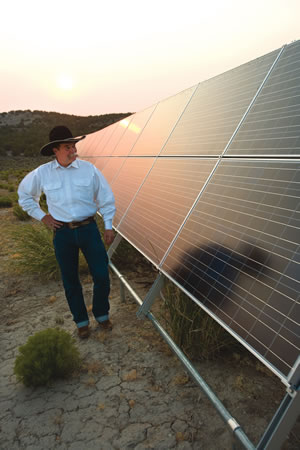
To the south of the steel structure, 100 feet from the home site, he installed 24 102-watt, photovoltaic (PV) solar panels, which convert sunlight into electricity. The panels are attached to a 48-volt battery system inside the building. An inverter transforms the low-voltage DC power stored in batteries to 120-volt AC power that passes through circuit breakers, which power lights and appliances inside the home. The seven-kilowatt system provides 7,000 watts of electricity for eight hours. To conserve electricity, the couple uses 11-watt or less light bulbs and has energy-efficient appliances.
Radiant heating makes the floors wonderfully toasty, eliminates allergens circulated through air vents, and is easily powered with renewable energy, minimizing fossil-fuel use. The heating system is made up of a network of pipes beneath the floor, in which antifreeze-infused water heated by a propane boiler circulates, warming the floor and walls. The heavy insulation that keeps the heat in during the winter also cools the house in the summer. Ceiling fans throughout the house help circulate cool air. Design-wise, there aren’t any unattractive radiators or vents to interfere with furniture layout.
Fireplaces and wood stoves serve as backup heating sources.
Another measure the Mitchells took to minimize their carbon footprint was installing on-demand water heaters, a tellullar phone box to convert cellular signal to radio signal, which operates with standard wireless home phones, satellite internet and TV service, and a gas-powered cook stove they recycled from a ranch in Wyoming. They considered installing recycled countertops and bamboo flooring, but it wasn’t practical for their needs. Instead, they opted for vinyl flooring that doesn’t contract or expand with the radiant heat, and composite countertops made from recycled crushed stone.
The couple worked with the county building department to ensure the home met code and could be hooked to the grid later on if desired. Their self-sufficient home employed new technology with which some inspectors weren’t familiar, and it turned out that the Mitchells’ biggest challenge was finding experts who could help them integrate multiple alternative-energy systems so they’d all work in unison and at maximum capacity.
“Most PV applications are for grid-fed houses turning the meters back,” Lisa explains. “We wanted to store our electricity and invert it for use, not feed it back to homes tied to the grid.”
The Mitchells did their homework and sought advice from many torchbearers of green design. They moved into their home nearly one year after construction began. As with any new home, there was an adjustment period. Add living off the grid several miles from the nearest help and the learning curve grows exponentially.
Their first winter in the home was baptized by brutal snowstorms. The couple had initially installed only four batteries, which proved insufficient to operate the home under such extreme conditions.
“The thing about solar,” Waddie says, “is that in the winter, when the days are shortest and you produce the least amount of energy, that’s when you need the most.”
To rectify the situation Waddie doubled his storage capacity by installing four more batteries and is building a small wind farm to generate more energy.
The couple estimates that installing their entire alternative-energy system cost about $60,000, which was equivalent to the cost of putting up unsightly power poles on their property and running conventional electricity to their home.
“Plus, we’d have to pay utility bills every month,” Waddie adds. “Once we get all the systems in place, then we’ll go through a payback period and actually start saving money.”
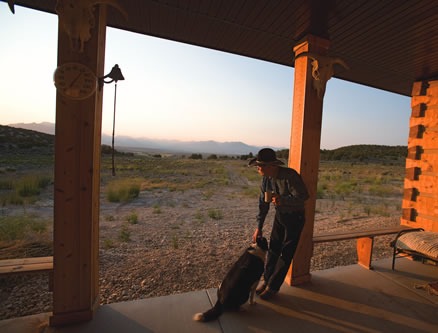
HAD THE MITCHELLS STUCK to their original plan for a 1,700-square-foot home, their energy needs probably would have been met with their initial battery investment. But as he became a grandfather, Waddie saw the need for more space. The 5,000-square-foot ranch-style home has three bedroom suites with full baths; two additional bathrooms; two offices; a large living room with adjacent bar, library, den, open kitchen and dining room; a covered front porch; and an enclosed back porch with a hot tub.
Having been a homeowner most of her adult life, Lisa let Waddie have the reins when designing their home. He factored in wide hallways, towering doorways and a spacious floor plan for easy traffic flow from room to room.
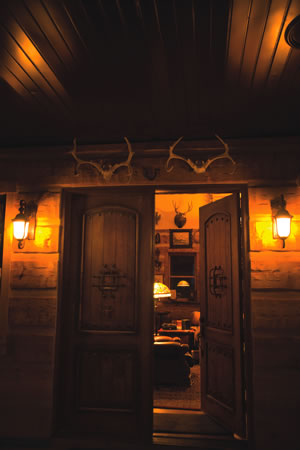
Of all the spaces in the home, the library is most important to Waddie. A mere nook off the living room, the library houses Waddie’s recliner, a reading lamp and an end table. Its perimeter is lined from floor to ceiling with a vast collection of books, ranging from classical and cowboy poetry, to literature, novels, biographies and historical references.