


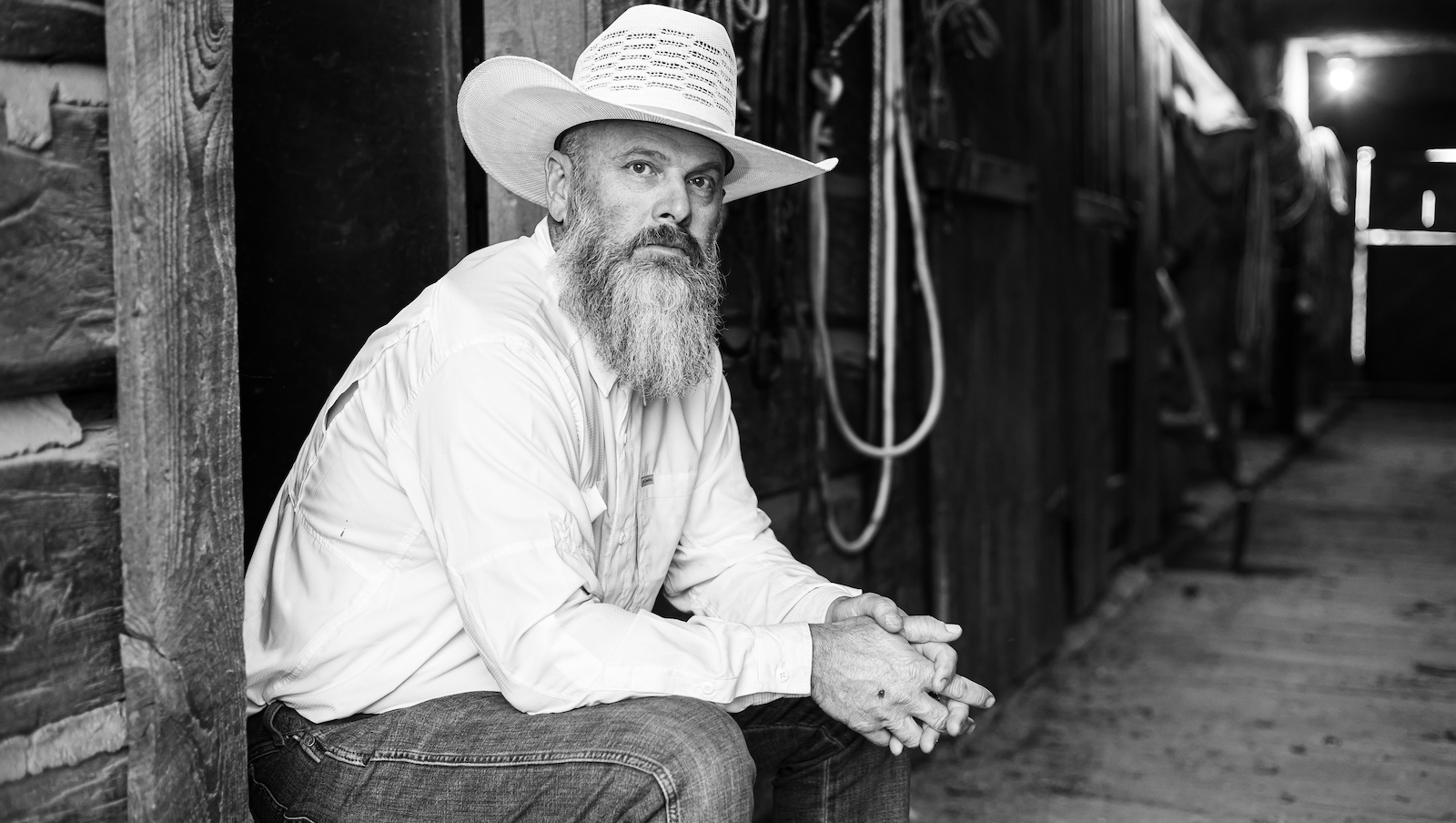
Mental health, depression and addiction are stigmatized in Western culture, but groups of working cowboys are banding together to encourage vulnerability and recovery through storytelling and connection.
Mental health. Depression. Alcoholism. Sexual abuse. Addiction. Anxiety.
Cowboys go to great lengths to avoid these words. It’s basic cowboy courtesy: “We simply don’t talk about it.”
But maybe it’s time for this to change. That’s the vision for many who have seen the effects of ignoring this problem, including Justin Reichert and Nicole Grady.
“I’ve seen too many friends die,” Reichert says. “Too many guys have either drank themselves to death, shot themselves or ran their truck off a cliff.”
Reichert joined forces with Grady to pave a trail for authentic cowboy connection at The Outside Circle Show in Elko, Nevada, to address the mental health crisis in the cowboy community. The cowboy music and poetry show, which has since 2014 featured cowboys who live the lifestyle, included a mental health panel in 2023 and 2024.
Inside the atrium at the Stockmen’s Casino and Hotel, cowboys and cowboy gals gathered in January for the second time to speak with their peers in a sobering but honest plea for conversation about depression, addiction and suicide within the community. It was a candid discussion about mental health and addiction in the lives of cowboys.
Some are slow to engage in unfamiliar conversations, but neither Reichert nor Grady will let outside perspectives sway their resolve to address the issue.
“We’re not taught to process emotions,” Reichert says. “We’re not taught to talk about our shit, so we don’t really know how, and I think a lot of people are going through this, a lot of men especially, and then cowboys are even worse.
“In the cowboy community, it’s not cool to talk about your feelings,” he continues. “I’ve realized that none of us have really learned how to process anger or sadness or grief, and all that manifests into something. Watching so many people in the community die, or even they’re not dead, but they’re not living. In the cowboy community, there’s a lot of unhealed little boys hiding behind buckles and hats and our egos. I’m learning I’m one of those boys, and it’s time to try to process some of those emotions positively.”
A Movement on the Horizon
In 2024, more than 80 people gathered in chairs and stood along the walls inside the atrium of the Stockmen — an unexpected level of support for a topic “we don’t talk about.” Knowing the stigma cowboys may struggle with, Reichert and Grady set up the event in a way that allowed attendees to fly under the radar.
“I intentionally scheduled the [cowboy gear trade party] afterward, because it’s a natural draw and it gives people a reason to come up to that floor and be there without being obvious,” Grady says. “By allowing the mental health panel to be before and having the trade party after, the people in the panel can kind of mill around, and people can very inconspicuously come up and talk to them.”
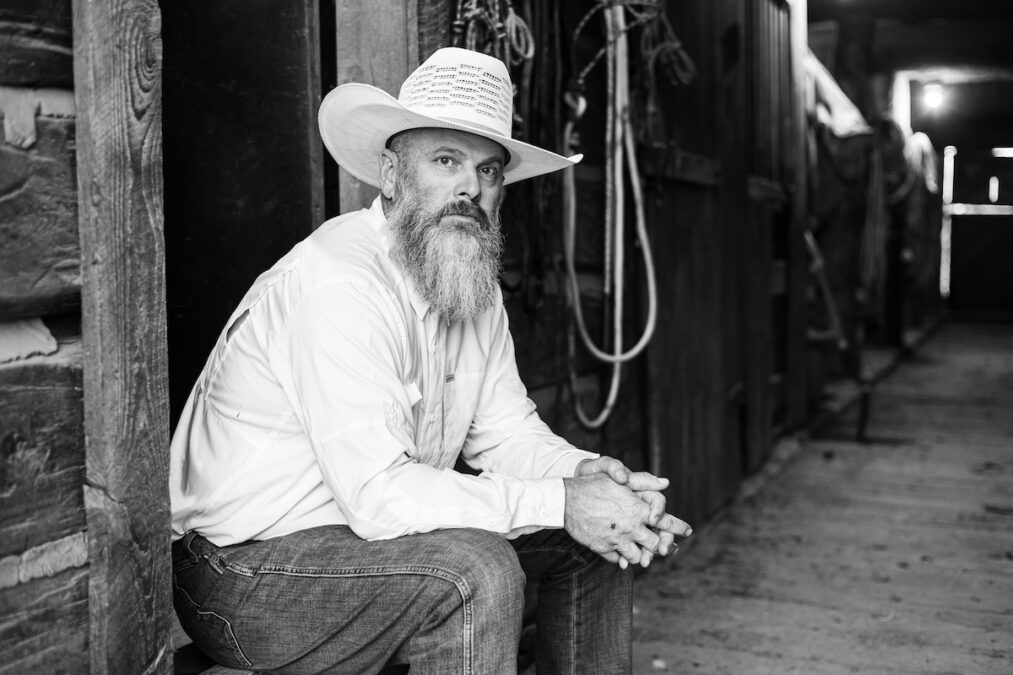
Grady and Reichert led the movement by gathering a panel of men and women who live the Western lifestyle to discuss the challenges of mental health within the cowboy community. Among the panel this year were Jeremy Morris, and husband-wife team Scott and Andrea Van Leuvan — all cowboys and day-workers by trade, and all who have personally dealt with addiction and mental health struggles.
Morris grew up cowboying. He has been involved in nearly every facet of the Western industry, from day-working to professional rodeo, training reined cow horses, starting colts, managing ranches, shoeing horses — you name it, he’s done it.
Scott Van Leuvan is a legend in the buckaroo community, though he’d never say so himself. Cowboss at the historic C-Punch Ranch in Lovelock, Nevada, Scott and wife Andrea are the founders of the Buckaroo Traditions Gathering Big Loop Roping. Andrea cowboys for a living alongside Scott but has also worked in substance abuse prevention for more than 20 years in Nevada.
Bringing respected peers into the conversation has been a key factor to the success of the Outside Circle Show’s mental health panel and resulting movement.
“People feel safe to come and enjoy that and have those conversations with people like Scott and Andrea and Jeremy, who are so respected as cowboys. Scott getting on stage and looking around and telling all those young buckaroos it’s OK to talk about your struggles is a really big deal,” Grady says. “Scott was a little beside himself getting up there, but at the same time, the impact he ended up having on people that weekend was pretty significant.”
To Reichert and Grady, it’s a movement born from necessity — a call to their peers to set aside the pride and ego, to break the stigma and to give cowboys permission to begin the conversation.
“Last year we addressed the fact that there is indeed a problem in this community and that people need help and people don’t know where to go. I don’t think that was breaking news to anyone,” says Outside Circle Show mental health panelist Josh Lazie as he opened the discussion leading others to share their stories. “People are dying. People are quietly suffering. People are getting hurt. It’s time we said something, because no one is looking out for us. We’re going to have to do this shit ourselves, kind of like most things in the cowboy community.”
Life on the Run
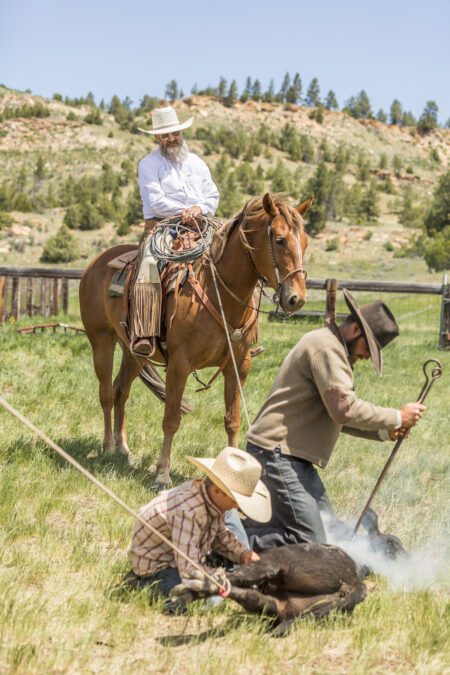
Cowboying is all Jeremy Morris has ever known. After his parents separated when he was 6, he moved from outfit to outfit with his dad. It was a dream life for a young aspiring cowboy, and Morris grew up with the romance of what it means to be a cowboy burdened on his soul.
“My dad was the epitome of the working cowboy — always looking for that perfect outfit. I think until I was in high school, I never went to school two full years in the same place,” Morris says. “We moved [from Idaho] to Montana, then back to Idaho, California, Oregon. All I wanted to do was be a cowboy. All my heroes were cowboys.”
After graduating high school, Morris kicked off his professional rodeo career, spending his winters rodeoing in Arizona, his summers packing mules in Wyoming and working on yearling outfits, all the while never leaving his working cowboy lifestyle behind. Life on the road was everything he dreamed it would be — another rodeo and another party just a few more miles down the road. It was a lifestyle he would later call life on the run.
After five years on the pro rodeo circuit, Morris switched gears to ranch rodeos and “big loop” roping. He started training horses for clients and working for colt starters. Still, he’d move on to the next outfit or destination every six months. Eventually, he picked up contracts in Wickenburg shoeing horses for dude ranches in the morning and riding colts in the afternoon. Before long, his identity was wrapped up in being known for his craft, his expertise.
Eventually he started landing big gigs managing horse operations for the wealthy. The money was good, and the alcohol flowed freely.
The drinking started innocently enough — celebratory drinks after a rodeo or with the crew after payday — as it does with many in the cowboy community. The often romanticized work-hard, play-hard cliché of cowboy culture fueled Morris’ addiction. He found himself managing ranches in remote locations, where he spent much of his time alone. With that isolation, his alcohol indulgence changed from social to habitual. By this point, at age 30, Morris had collected three DUIs in different states across the West.
“[I was] hiding behind being a cowboy and all it represented,” Morris says. “All the things that were celebrated in it was the perfect storm for a guy like me. I got to say I moved every six months because I liked to see new country. For some of us, it’s just getting to live life on the run.”
It’s an unspoken, yet commonly known attribute of cowboy culture. Ask any of the panelists in Elko, and they’ll tell you drinking and partying seemed to go hand-in-hand with the cowboy lifestyle.
“I hate to say it, but in this community, it’s pretty easy to say you got bucked off a horse. ‘Well, here. Have a cold beer. Let’s go to the bar.’ Or your girlfriend broke up with you. ‘Hell, have a beer. It’ll be OK. Rub some dirt on it,’” Reichert says. “It’s easy to be an addict in this environment. Like when I’ve got a camp job, I’m alone all the time. When you’re out on the mountain and well, OK, today, I’m just going to go check some waters. It’s easy to do that with a six-pack or 12-pack in the truck. I think the lifestyle in and of itself lends itself to being able to be a functioning addict.”
For Morris, there was a much deeper wound beneath it all.
“I was trying to outrun the messes I was not only making, but that unprocessed pain from childhood that was filled with sexual abuse, and physical and mental abuse,” Morris says. “I was sexually molested and made to do things on men and other boys. You add the shame that goes along with that with being a cowboy, and it’s like there’s no way out.”
Morris continued life as a cowboy. As he aged, so did his addiction. Even after getting married and while his wife was pregnant with their first child, Morris hid his drinking from the outside world.
“In the depths of my soul I was convinced there was something really wrong with me, and if anyone ever found out, the jig would be up,” Morris says. “Like how in the world are you going to be a cowboy and ever talk about that or deal with it? So you just stuck more vodka on top of it. Then when your past starts catching up with you, or the law in my case, you just outrun it, and it was celebrated. A perfect solution was to be a cowboy, where partying was such a big part of the culture.”
The 2008 housing crash shut down an equestrian community Morris managed in Idaho. Overnight, Morris and his wife lost their livelihoods. They moved to Prescott, Arizona, forced to start over. By this time, Morris says his drinking reached an all-time high. His wife, who was not blind to his habit, reached her breaking point, bought her own place and moved out.
“I figured out the science of being an alcoholic. I knew when I needed to back off, I knew when I needed to eat or not eat, just to stay numb all day,” Morris says. “I’d drink Diet Dr Pepper and vodka all day. I figured out how to keep it under the radar just enough that people didn’t notice.”
The following summer, Morris got a job shoeing horses in Wyoming. While hauling a load of horses in Livingston, Montana, he received his fourth DUI. He recalls he was drinking a handle of vodka per day at that point. The next day, he was driving back to Wyoming to pick up a load of horses to haul to Florida when he got pulled over and received his second DUI in the span of 48 hours, his fifth total.
The law required Morris to stay in jail until he could see a judge. While sitting in a Jackson, Wyoming, jail cell, Morris finally came to terms with the fact that his life needed to change.
“In that jail cell, my prayer changed from, ‘God, get me out of this situation. My wife is leaving me,’ to ‘What kind of father am I becoming?’ I felt God take alcoholism from me,” Morris says. “I felt something change inside of me that day, and I’ve been sober ever since.”
After 14 years of sobriety, Morris has transformed his life and reconnected with his wife, and they have another child. Now at 51, Morris is helping other men struggling with addiction, depression, sexual abuse and mental health through his nonprofit organization, Wild Courage.
Numbers Speak Volumes
Research on mental health specific to the cowboy community is all but nonexistent. Data within rural, farming and ranching communities is far more scarce compared to other parts of the world. Still, in the last 10 years there have been a few studies on the topic.
In a 2019 study by Rudolphi et al. on depression, anxiety and stress among young farmers and ranchers, personal finances and time pressures were identified as the greatest concern. The study concluded that the prevalence of depression and anxiety were much higher among young farmers and ranchers compared to the general population, citing 71% of their respondents met the criteria for a Generalized Anxiety Disorder diagnosis and 53% met the criteria for a depressive disorder.
National averages are much lower. An average of 18.1% of adults live with an anxiety disorder. Only around 6.7% of adults annually experience at least one depressive episode, defined as a period of two or more weeks during which there is either depressed mood or loss of interest or pleasure, and at least four other symptoms, such as problems with sleep, eating, energy, concentration, self-image, or recurrent thoughts of death or suicide.
In simple terms, the study found that depression, suicide and substance abuse are much more common among agricultural populations than in the general public. It also reported that the rural West has the lowest availability of primary care providers of any region in the country. More than 90% of all psychologists and psychiatrists, and 80% of
social workers, are located exclusively in metropolitan areas. Couple these facts with studies proving that men are far less likely to seek behavioral health support and four times more likely to commit suicide than others, and it’s a recipe for disaster.
“The ranching community has always had to be tough. I guess egotistically, it’s like, ‘I can’t let people know I’m struggling.’ That’s been the big stigma for tough cowboys,” Andrea Van Leuvan says.
A Courageous Life
Generationally speaking, the world is changing. There are less than 2 million farmers and ranchers in the United States, and yet they produce 80 to 90% of the nation’s food and fiber. This pressure combines with factors like geographical access to resources, financial disparities and societal reluctance to seek help and contributes to the cowboy and ranching outlook on mental health.
Much in the same way Reichert created The Outside Circle Show to fulfill the lack of representation, most within the cowboy community don’t feel that those outside of their lifestyle can understand their struggles. With Reichert and Morris leading the charge through their organizations, not only is perception of the topic becoming more acceptable, but access to resources is increasing as well.
“We don’t really have a whole lot of resources for folks who are in chronic pain — getting bucked off and living a hard life. So, drinking comes as a coping mechanism,” says Kadie Zeller, Scott and Andrea’s daughter. “That door is really opening for these younger people to realize that you can be successful and you can be a good cowboy, and you can go to these bars and not drink. [You can do] all these things that are a part of the experience without having to degrade your mental health.
“I do think the missing piece is that addiction is never the problem,” she continues. “It’s a symptom. And the symptom is generally something going on inside, and they’ve never been given the resources and tools and talked about how to cope with that.”
Britton Collum, an accredited life coach with Wild Courage, says many of the clients he’s worked with are harboring trauma or biases that prevent them from properly processing emotion.
“Most people say by the age of about 6, we become what the most influential person in our life says about us. If we are young people raised in the cowboy culture, the primary mantra is: ‘Here is the description of a tough man. This is a cowboy.’ We sort of adopt that philosophy, and that theology precludes us from processing emotion,” Collum says. “[We’ve given justification in the] cowboy culture that the only way you can really be a cowboy is that you have to dissociate. I think by and large people are going to reproduce what they’re exposed to, and all it’s highlighting is that the mass majority of the culture is emotionally immature.”
Morris recalls the struggles of sobriety. For him, it was not necessarily getting sober, but rather dealing with the emotional damage of his traumatic childhood.
“When you decide to do something about getting sober, that doesn’t mean your life is going to get easier, because now you’re going to have to deal with all the reasons you drink in the first place, and that’s why it’s hard to get sober and it’s hard to stay sober,” Morris says. “You can’t anesthetize that pain anymore. I never had a gun in my mouth a day in my life when I was drinking; I didn’t need to. But it was my fifth day of sobriety dealing with all that unprocessed pain and having nothing to do with it and nowhere to go with it that was overbearing.
“The mess that I had made of every relationship in my life and blew up my marriage — in that season of life, I just remember thinking, ‘Why do I show up the way that I do? What is wrong with me?’ At that point I knew I had to do something different, and that’s when, for the first time in my life, I tried vulnerability,” he continues. “The scariest thing imaginable was to let somebody in to all those hurt and broken places of my life that kept me on the run. That started the healing journey.”
Because of Morris’ personal experience with sobriety and counseling, he’s been able to guide Wild Courage in a way that speaks to others in similar situations. Wild Courage has a list of vetted resources, counselors and life coaches who understand the cowboy and Western communities. Its mission is to assist those looking for help, whether that’s through traditional counseling, rehabilitation, online help or life coaching. The organization also provides financial assistance for those in the agricultural community where insurance might not be a viable option.
Wild Courage also hosts retreats where men meet to connect and learn about tools to help overcome mental health struggles or addiction.
“We have all these toxic behaviors that come out of all this pain that’s trapped inside,” Morris says. “I think at some level, we all feel like we’re alone in whatever it is we’re going through, and there’s something very hopeful and validating about hearing somebody verbalize something you’re experiencing that you thought you were the only one on the planet who was going through it. It’s validating to your pain, but also it’s hopeful, like, ‘Wow, that guy made it through it. Maybe I can.’”
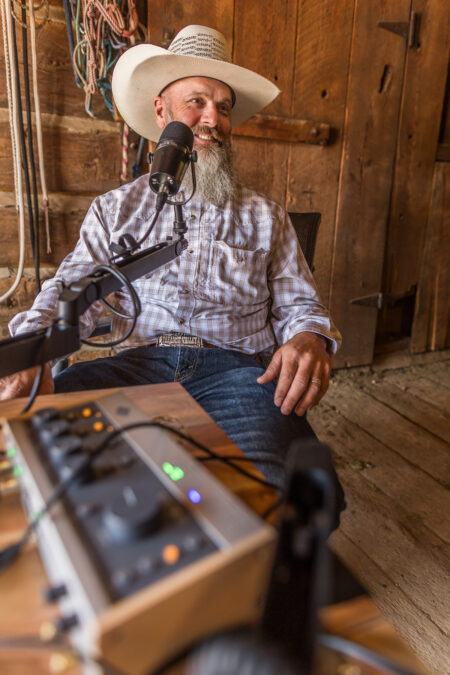
Through Morris’ Wild Courage retreats and podcast, he’s heard from working cowboys, performance horse cowboys, professional rodeo competitors and men from all walks of life in the Western industry share their experiences or simply thank Morris for his bravery in sharing his story.
“I get these messages from guys that say, ‘I’ve listened to your story, and I didn’t know it was possible or OK to talk about the things you’ve said. I thought I’d take this to my grave,’” Morris says.
It’s Time to Start Talking
While pushback is inevitable in any new venture, and especially one of controversy, those who feel called to this cause won’t be halted by negativity. Reichert admits their mission wasn’t met with 100% support; some were both skeptical and averse to making waves within the community.
“The first year was rough. We didn’t know what it was going to be or how it was going to be perceived. Even this year, there were guys standing out in the hall laughing,” Reichert says. “But, if we can preserve some of the cowboy culture and keep it authentic and keep it real in the day and age of social media, I think that’s worthwhile. And, if we can do any good in the mental health community, if we help one person, it’d be worth it. I guess I can’t really let what people think of us stop us.”
Ultimately, in a world often caught up in the ego and pride of what it means to be cowboy, this group of men and women are breaking barriers. The cornerstone of their cause is love for their fellow cowboy, and it has created a safe space for their peers to gather and open their hearts to a new way of thinking and living.
“What if we had the courage to be seen and heard? To tell our stories that we thought we’d take to the grave?” Morris asks. “We create this narrative that if you really knew what’s happened to me or what I’ve done, I will be unaccepted and judged. We’ve learned that through our society and the shame that comes with some of these stories. But I’ve found that shame and vulnerability can’t coexist. These beautiful things start happening with men when they have a chance to be vulnerable and have a safe place to tell their story.”
Addiction rears its head in many ways. Some struggle with substance abuse while others are consumed with work, food or any number of vices. It’s a chronic, compulsive, physiological or psychological need for a habit-forming substance, behavior or activity that ultimately results in having a harmful effect on one’s life. But there’s light at the end of the tunnel.
“Life is so incredibly beautiful when you’re not looking through the haze of addiction,” Morris says. “I’m not saying it’s easy, but it’s worth it. And you’re worth it.”
Resources for the Cowboy
- Wild Courage: thewildcourage.org
- Suicide Hotline: 988lifeline.org; Call or text 988
- The Outside Circle Show: outsidecircleshow.com
Editor's Note: This article was originally published in the August 2024 edition of Western Horseman. Edits were made for clarity in some instances. In May 2025, the article received two first-place awards at the American Horse Publications Equine Media Awards in the categories: Service to the Horse Industry and Feature Single Article.


I just was made aware of your Organization by a Cowboy Pastor I am friends with… We lost our 25 yo son in May 2010 from suicide… and he was a Cowboy!! I’m thrilled to see this!! Starting these conversations is the hardest part!! Thank You and God Bless!!