


Wearing clean exam gloves, fill a 12cc syringe case with a solution of one part 2 percent-chlorhexidine solution and three parts sterile water. Restrain the foal, and dip the entire length of the umbilicus in the syringe case, holding for 20 to 30 seconds. Repeat every six to eight hours for the first 24 hours.
Call your vet immediately if you observe swelling or discharge from the umbilicus, or if the foal urinates through the umbilicus. Such symptoms point to infection or a more serious problem. A lethargic foal with a distended abdomen is also a cause for concern, as those symptoms can be a sign of a bladder rupture.
COLIC PREVENTION
Parasite control is vital to intestinal health and pre-venting colic. The first de-wormer, given between 6 and 8 weeks of age, should focus on ascarids, a worm particularly dangerous to foals less than 6 months old. This parasite can build up quickly in youngsters, causing intestinal obstruction, colic, and, in severe cases, death.
In addition to a regular de-worming routine, parasites can also be controlled through timely manure removal, resting pastures and avoiding placing foals with juvenile horses.
STRONG LEGS TO STAND ON
A common misconception with foals born with contracted tendons, is that time and turnout will correct the issue. However, the opposite is true, Jergens says.
“Exercise won’t ‘stretch out’ the tendons; it will cause muscle fatigue and worsen the condition,” she says. “If left uncorrected, crooked legs can lead to chronic lameness. If treated early, this condition can be corrected in most cases, but it needs immediate attention.”
The most important action an owner can take for a foal born with limb deformities or other leg issues is preventing the condition from getting worse. Corrective trimming, limited turnout, and in extreme cases, surgery, can often ward off a lifetime of chronic lameness, but a veterinarian and farrier should be involved in the process immediately.
EASING INTO THE FIRST TURNOUTS
For a healthy foal, exercise helps develop sound hooves and legs by strengthening ligaments and tendons. However, the first few turnouts, when the foal’s legs are still wobbly and weak, can be an opportunity for injury—some of which can cause permanent lameness.

For example, Jergens, a diplomat of the American College of Veterinary Surgeons, recently performed surgery on a Quarter Horse foal that had suffered a fracture caused by overzealous running. Such an injury can easily derail a foal’s future, as was the case with this colt, who has a poor prognosis for racing.
The best defense against such an injury is exercising control over the pasture size and the herd. For example, turning out a revved up mare alone in a small paddock gives her time to run and kick without a foal alongside, trying to keep up. However, her foal should be restrained where they can see each other.
Owners can also avoid pasture problems by containing a mare and foal alone for the first few trips outside. The more horses around, the easier it is for foals to get riled up and overexert themselves. After about a week in a small paddock, owners can start combining other mare-foal pairings and gradually increase the herd size.
SMART START
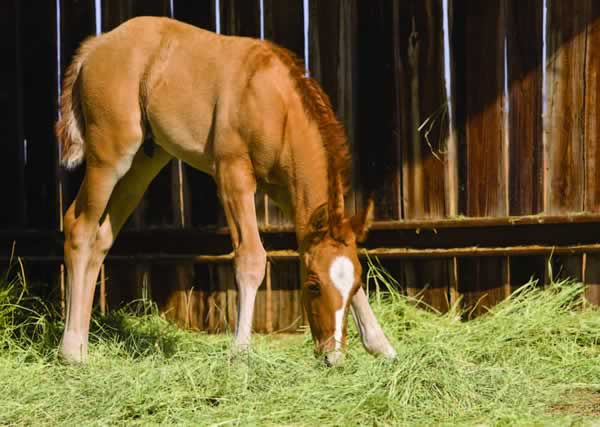
THOUGH NUTRITION isn’t the only factor in foal development, a proper diet can have a significant effect on foal growth, beginning in the womb.
“The long-term ramification of improper prenatal nutrition is that you don’t get good, sound development when they’re growing,” says Russell Mueller, an equine nutritionist at Progressive Nutrition, an equine feed company. “Some of these conditions are very hard to get on top of once the foal has them.”
One such problem is contracted tendons, which falls under the category of developmental orthopedic disease. Contracted tendons can lead to clubfoot if not treated properly.
However, Mueller says proper prenatal nutrition, which he defines as a vitamin and mineral package in early gestation and an all-around concentrated package in late gestation, can prevent many problems from developing.
“There are many factors to DODs and nutrition is just one of them,” he says. “Genetics is another, and there’s also a matter of environment, management or dumb luck. But the rate of nutritional-related problems is higher than it should be.”
Once the foal is born, the biggest challenge for owners is supporting the youngster’s genetic potential as he develops.
“If nutritional requirements aren’t met, the foal’s growth rate will be affected,” says Karen Davison, manager of equine technical services at Purina Mills. “If you don’t provide adequate nutrition while the foal is young and growing, the growth plates will still mature and close, and that’s when you end up with a horse that’s stunted.
“It doesn’t have to be really complicated,” she says. “Owners just need to choose a feed that has the right protein, vitamins and minerals to feed to a moderate body condition. If you try to make them grow faster than their genetic potential, they’ll just get fat.”