

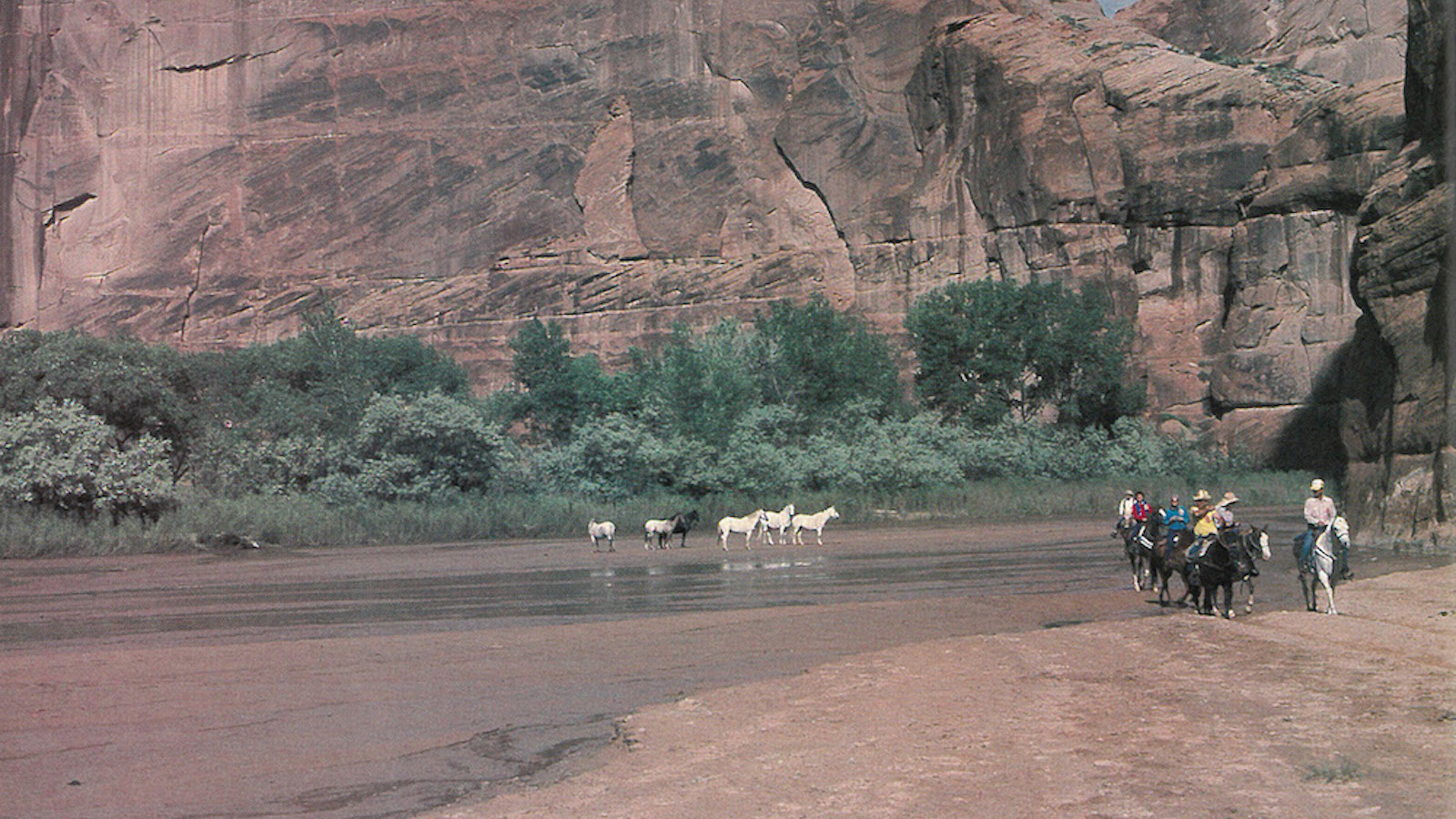
A week-long trek in Canyon de Chelly National Monument gave riders a firsthand look at how the Anasazi lived hundreds of years ago.
The high desert shimmered in the heat of late May as we tooled along the highway leading to Chinle, Arizona. Only pinon, sagebrush, and junipers interrupted the horizon for miles. Gradually, apprehension crept into my mind. “This is the kind of country we’ll be riding in for the next five days?” I silently wondered. Although this part of northeast Arizona has its own brand of scenery, it certainly doesn’t rank among the state’s top ten loveliest areas. Or even top twenty.
But a surprise awaited. Just a few miles east of Chinle lies the edge of Canyon de Chelly National Monument, a vast system of sheer-walled canyons that were cut through this arid region millions of years ago. If ever an area qualified as an oasis, this is it. A stark contrast to the surrounding parched, bleak country, the canyons feature rivers, springs, groves of shady cottonwoods, thick stands of tamarisk and flowering shrubs, and significantly cooler temperatures.
Our directions said to meet at the Cottonwood Campground near monunument headquarters. There we spotted a number of horse trailers and riders who had already arrived. The occasion: a five-day ride through Canyon de Chelly National Monument, organized by Adventure Trails of the West, Inc.
Adventure Trails is the creation of brothers Dana and John Burden, and Bob Nuth, who are rapidly gaining a reputation for putting on first-class trail rides in scenic areas of Utah and Arizona. And about the time you read this, they will be in Australia handling their first two rides in the Snowy River country of Victoria.
For their CDC rides, the Burdens work closely with Ron Izzo, who operates Twin Trail Tours a few miles from Chinle. Ron has been guiding riders into CDC for years, and is invaluable for his knowledge of the canyons, plus his expertise in handling the red tape involved with putting on a ride within a national monument that is part of the Navajo reservation.

Although Canyon de Chelly (pronounced de Shay) is administered by the National Park Service, the land is controlled by the Navajo Nation. Conflicts of interest between the two groups result in policies not found at most national parks and monuments. For example, there are no fees whatsoever at the campground; off-road vehicle travel is permitted within CDC; and Navajos continue to live in the canyons during the summer months, tending their livestock and crops.
A family ride, the 1985 CDC trek began on Monday morning, May 27th, with 71 riders saddling up. They came from Connecticut, New York, Louisiana, Ohio, Illinois, Colorado, California, Arizona, and England. A surprising number brought their own horses, including a contingent of 2l riders from the San Diego area.
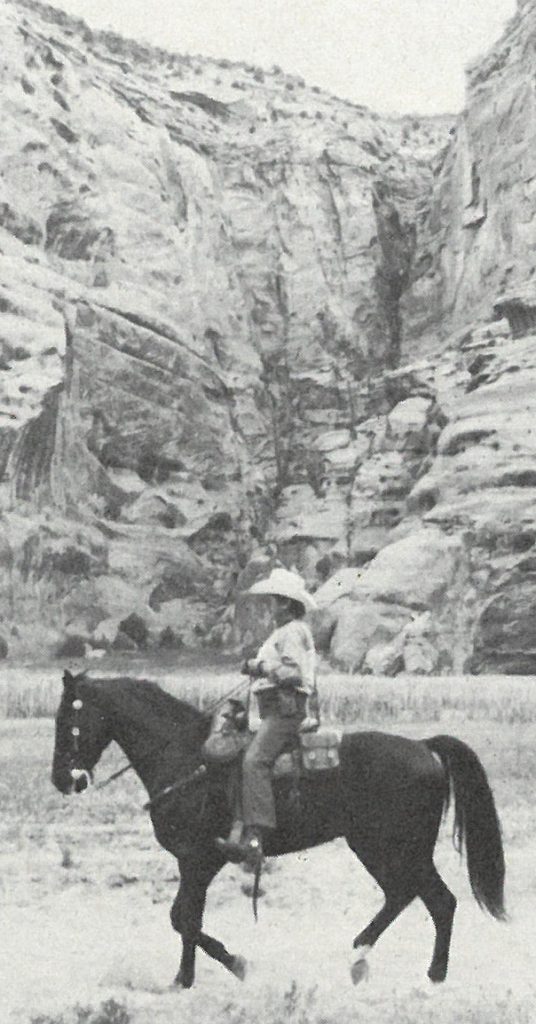
Others used rental horses provided by Ron Izzo and Dobbin Shupe, who sent down a truckload from his summer headquarters near Bayfield, Colorado. It could truly have been called an all-breed ride because there were Quarter Horses, Appaloosas, Paints, Tennessee Walkers, Missouri Fox Trotters, and a number of grades.
Although the area is known collectively as Canyon de Chelly, there are several major canyons: Canyon del Muerto, Black Rock Canyon, Monument Canyon, plus Canyon de Chelly. Our jumping-off point was on the rim of CDC, about 14 miles from Chinle.
For a mile or two, we rode along “on top,” following a sandy wagon trail that led through the pinon and junipers. We passed several old Navajo hogans, no longer in use, and spotted colorful blooms of prickly pear cactus.
Our descent into CDC followed the steep, rocky Bat Trail, so named because of the bat nesting sites in nearby small caves: It was a long way to the bottom, about 1,000 feet as the rock falls, but much longer with the gradual descent along the switchback trail.
According to our guide, Ron Izzo, Bat Trail was used by the U.S. Cavalry as far back as 1864, and was no doubt used by the Anasazi before then. For those who are not anthropology buffs, the Anasazi were an ancient people who lived in various parts of the Southwest a thousand and more years ago. Within CDC National Monument is a vast archaeological record of human activity for the past 2,000 years.
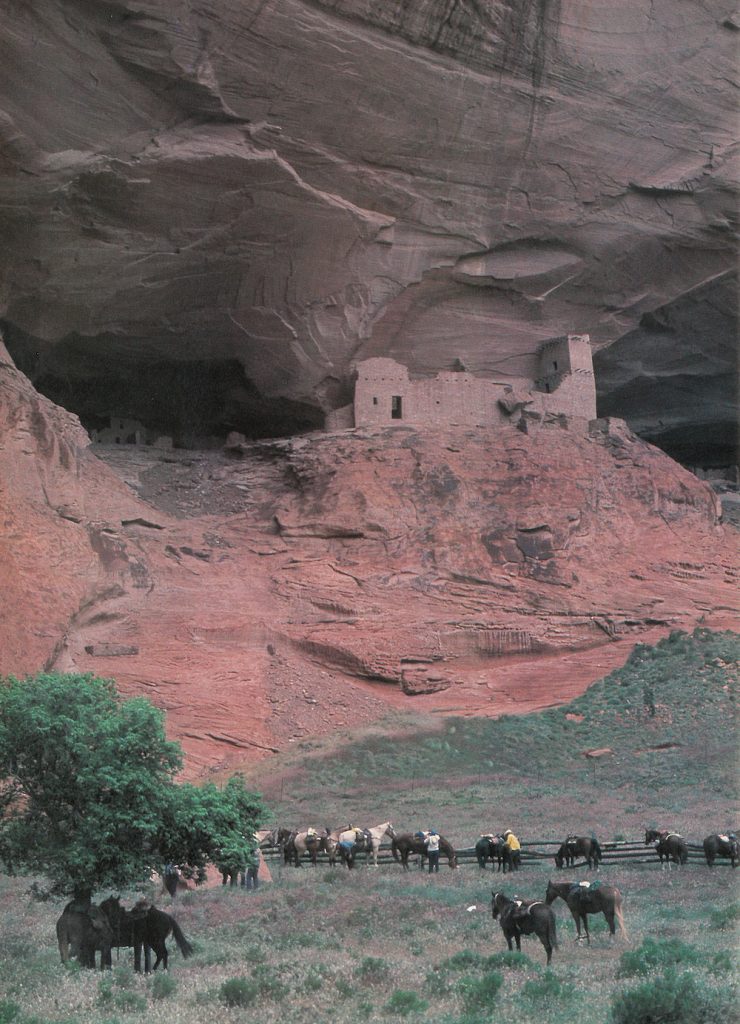
The Anasazi were cliff dwellers, and the canyons made an ideal home for them. There was plenty of water year round, and the soil grew abundant crops. Today, ruins of many cliff dwellings are a major attraction of CDC, and we paused to examine many of them throughout our ride.
They range in size from small storehouses to the huge House Under the Rock, in Mummy Cave. According to a marker at the site, House Under the Rock was built and lived in by Anasazi Indians beginning about 300 A.D.
For unknown reasons, the Anasazi began leaving CDC in the 14th century, and the Navajos began arriving in the mid-1700s. Although not cliff dwellers, they also liked the protection offered by the canyon walls, and the fertile fields for growing crops. We saw a number of Navajos at their hogans, herding sheep, working in the fields, and driving their pickups in the river. Yes, in the river.
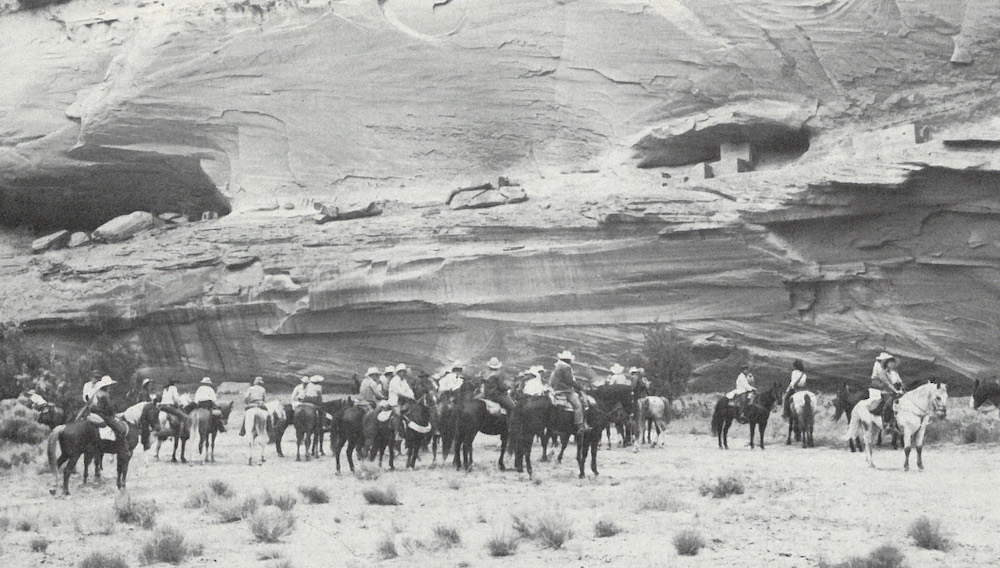
Throughout the Canyon de Chelly, the riverbeds serve as roads and trails. There are some wagon roads, but for the most part, the wide expanse of the riverbeds and the thick stands of trees and brush monopolize the canyon floors. For the first couple of days, we rode almost constantly in wide riverbeds. The water was shallow, the footing sandy, and the riding cool and pleasant. And any horse afraid of water when the ride started had web feet by the end of the ride.
The rivers are noted for quicksand, however. Our leader, Ron Izzo, warned us several times to stay directly behind him, “and if I sink out of sight, pick another route!” Although several horses did hit either quicksand or bog holes, they lunged out safely.
A pickup truck can also get mired in quicksand, and if another vehicle can’t get it pulled out pretty quick, it can disappear from sight, never to be seen again. We were told that a number of pickups belonging to local Navajos have met this fate. And it almost happened to a pickup belonging to one of our camp crew members.
Two of the crew went after a load of hay one evening. When they didn’t return after a reasonable length of time, a couple of fellows went looking for them, and found them bogged down in the river. The second truck couldn’t pull out the first, so the men returned to camp for the caterer’s huge six-wheel drive Army-type truck that had a winch mounted on the front end. It got the job done.
We moved camp every day, and tents, sleeping bags, duffle bags, and other gear were loaded into a convoy of trucks that moved them to the next camping site. By the time riders arrived, the camp crew had unloaded all the trucks and had the picket lines set up. Riders, however, set up their own tents. Camp was always located close to a stream of some type so horses could be easily watered.
Adventure Trails uses pack animals only for carrying on-the-trail refreshments, medical kit, and farrier tools. The use of trucks makes moving camp easier, and allows for special gear and equipment to insure comfortable camps.
Due to the large number of riders, plus the crew members, the Burdens hired a caterer to handle the kitchen detail, and it’s doubtful if they could have hired a better one: Ralph Patane of R.P.C. Catering in Phoenix. Ralph does a lot of catering “on location” for trail rides and movie companies, and generally uses his own specially equipped trailer. But because the trailer could not negotiate the streambeds, the Burdens rented the big Army-type vehicle already mentioned. Into it were loaded ovens, stoves, ice chests, groceries, and other supplies.
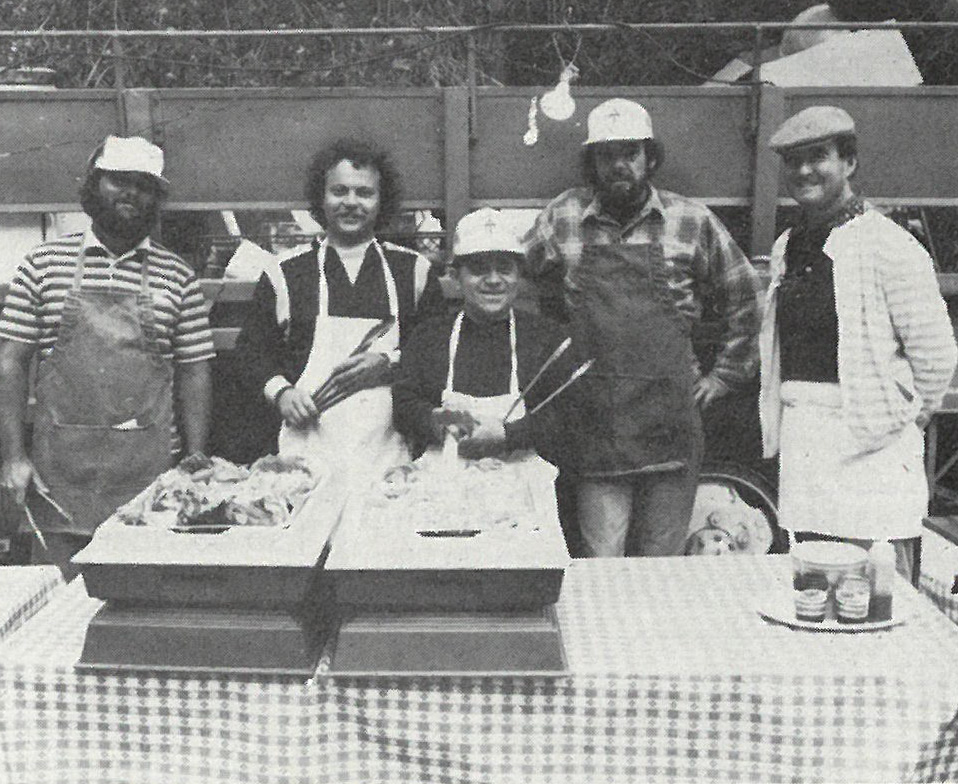
Every afternoon when riders arrived in camp, Ralph and his crew had an array of mouth-watering hors d’oeuvres ready, and dinner was never later than 7 p.m. Meals included such time-honored favorites as prime rib, broiled chicken, and broiled New York strip sirloins-all prepared on Weber charcoal grills. Ralph was also especially proud of the fresh veggies he served every day.
Breakfasts featured eggs, pancakes, bacon, sausage, and biscuits and gravy. After which riders made their own sack lunches of sandwich meats, fruit, and candy bars.
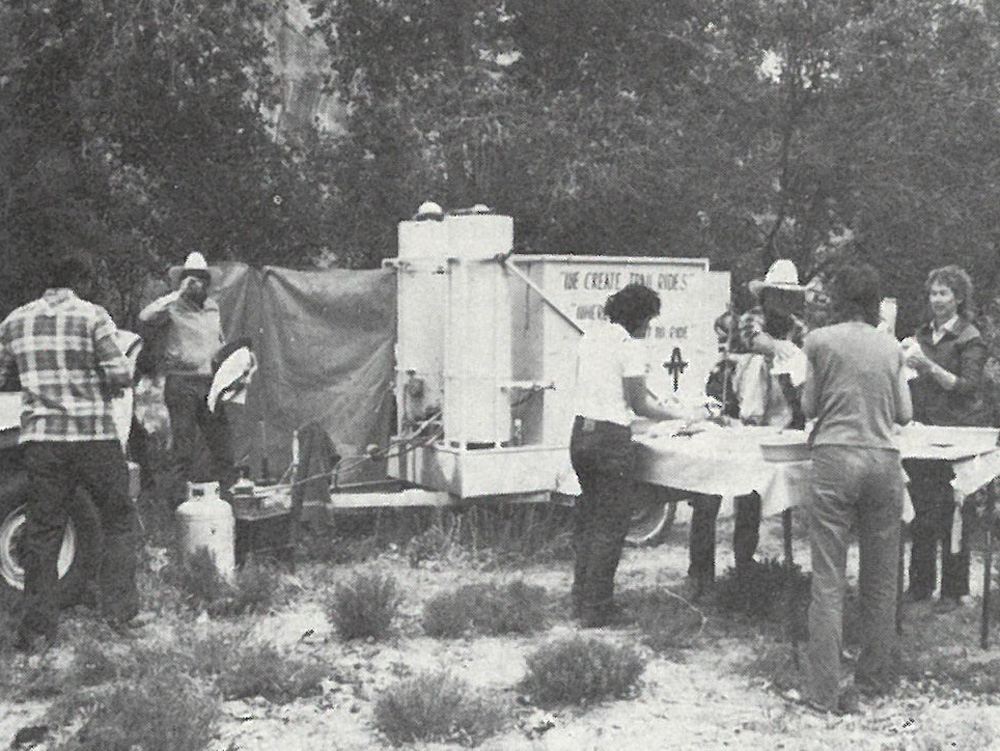
Thanks to John Burden’s ingenuity, this ride featured the unexpected luxury of hot showers. John has rigged a small trailer with two huge water tanks, and a propane burner that heats one tank. Plastic was hung to enclose the shower area, and rubber mats were laid on the ground as a floor.
Because the water was limited, not everyone could take a shower every night, so we alternated: men one night and women the next. Even so, a hot shower every other night is still a welcome treat. Portable “johns” were also set up, as was a wash stand with mirrors.
If any one term could best describe this ride, it would be relaxing. No one was ever in a hurry to go anywhere or do anything. Each day’s ride proceeded at a leisurely pace, with plenty of time for inspecting Indian ruins, abandoned hogans, and pictographs. Lunch stops lasted an hour or more, and were always in a shady or picturesque location. One time it was along a river, just across from the well-known White House ruins.
Riders itchy to move along faster got their chance on several occasions when Ron led them on side trips, or took a different route to reach our next campsite. Those riders with a little racing in their blood also got their chance one morning when we spent a couple of hours at Antelope House Ruin. The nearby dry riverbed made a good race track. The “racing card” got underway with several Tennessee Walking Horses seeing who could walk the fastest, followed by several flat-out horse races.
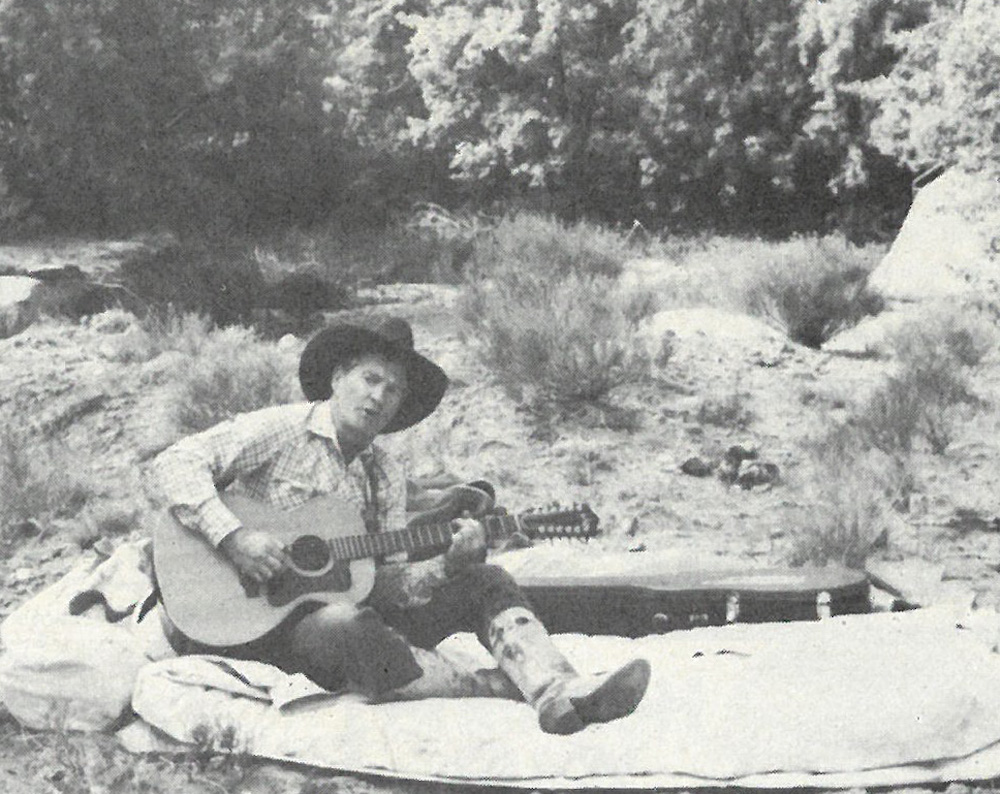
Evenings were spent around the campfire listening to Marshall Trimble. A history buff, Marshall has authored four popular books on Arizona history, and is director of Southwest Studies at Maricopa Community College in Phoenix. He’s a first-rate story teller, and also strums a pretty good guitar while singing old-time favorite cowboy songs.
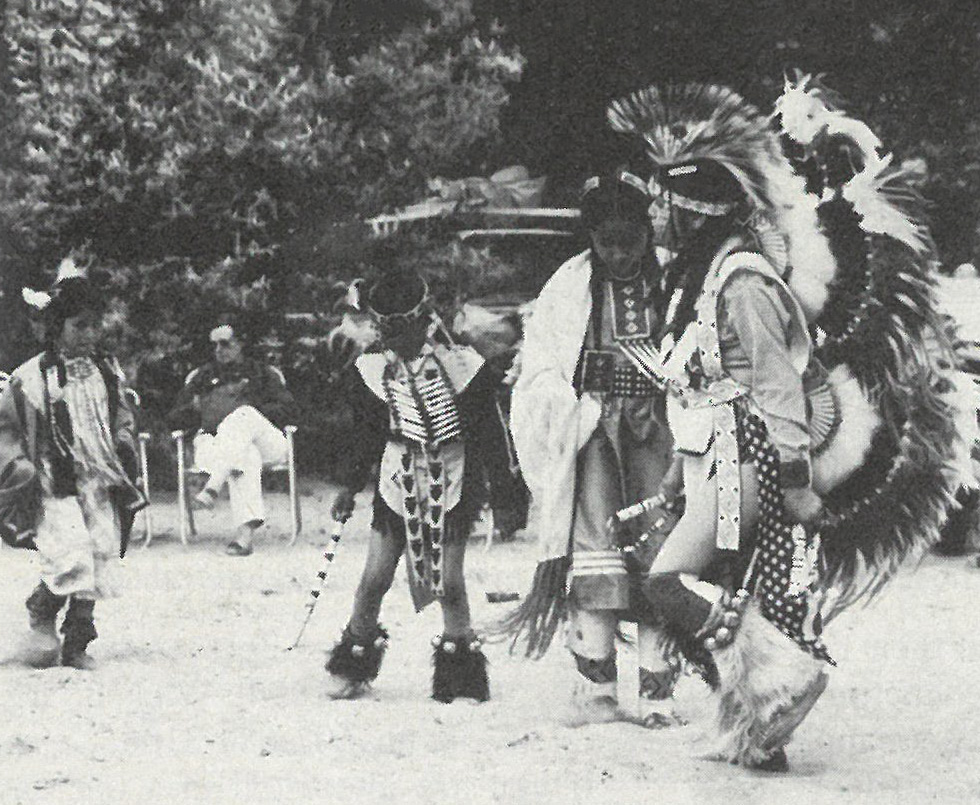
One evening, the Twin Trail Pow Wow Club entertained us with Indian dancing to the beat of tom-toms. Riders have been told beforehand that if they were invited to participate, it would be considered rude to decline. Therefore when the Indians did solicit partners from the audience, no one turned them down. Actually, dancing in the heavy sand was just the ticket for working off one of Ralph Patane’s gourmet meals.
Unlike some of the Navajos we met, these dancers gave us permission to take their pictures. Many Indians will not permit it because they feel a picture captures a person’s soul.
The highlight of the ride had to be the many cliff-dwelling ruins we saw. Considering that the Anasazi had the barest of tools, it is amazing what they constructed. Antelope House, for example, contained over 85 rooms.
But the most impressive was House Under the Rock, in Mummy Cave where over 400 people once lived. Mummy Cave was named for two mummified bodies found there in 1882 by an expedition sponsored by the Bureau of American Ethnology.
Not far from Mummy Cave is Massacre Cave. Because it is almost straight up a sheer canyon wall, we could only view it from a distance as Ron Izzo told us the story behind its name. In the winter of 1804-5, Spanish soldiers massacred about 115 Navajo men, women, and children. Because of the cave’s location, the Navajos felt safe, but they didn’t realize the soldiers had rifles. From the bottom of the canyon, the soldiers fired their rifles into the cave, and the ricocheting bullets killed the Navajos. This happened in what is now called Canyon del Muerto, “Canyon of Death.”
One of het biggest surprises of the ride was the weather. Many riders were expecting temperatures typical of the Arizona desert, but the days were pleasantly warm, nights cool (jackets were necessary), and rain nowhere around.
With a good horse, great food, so many interesting people to get acquainted with, it was a marvelous way to spend a week.
This article was originally published in the February 1986 issue of Western Horseman.





This looks awesome