

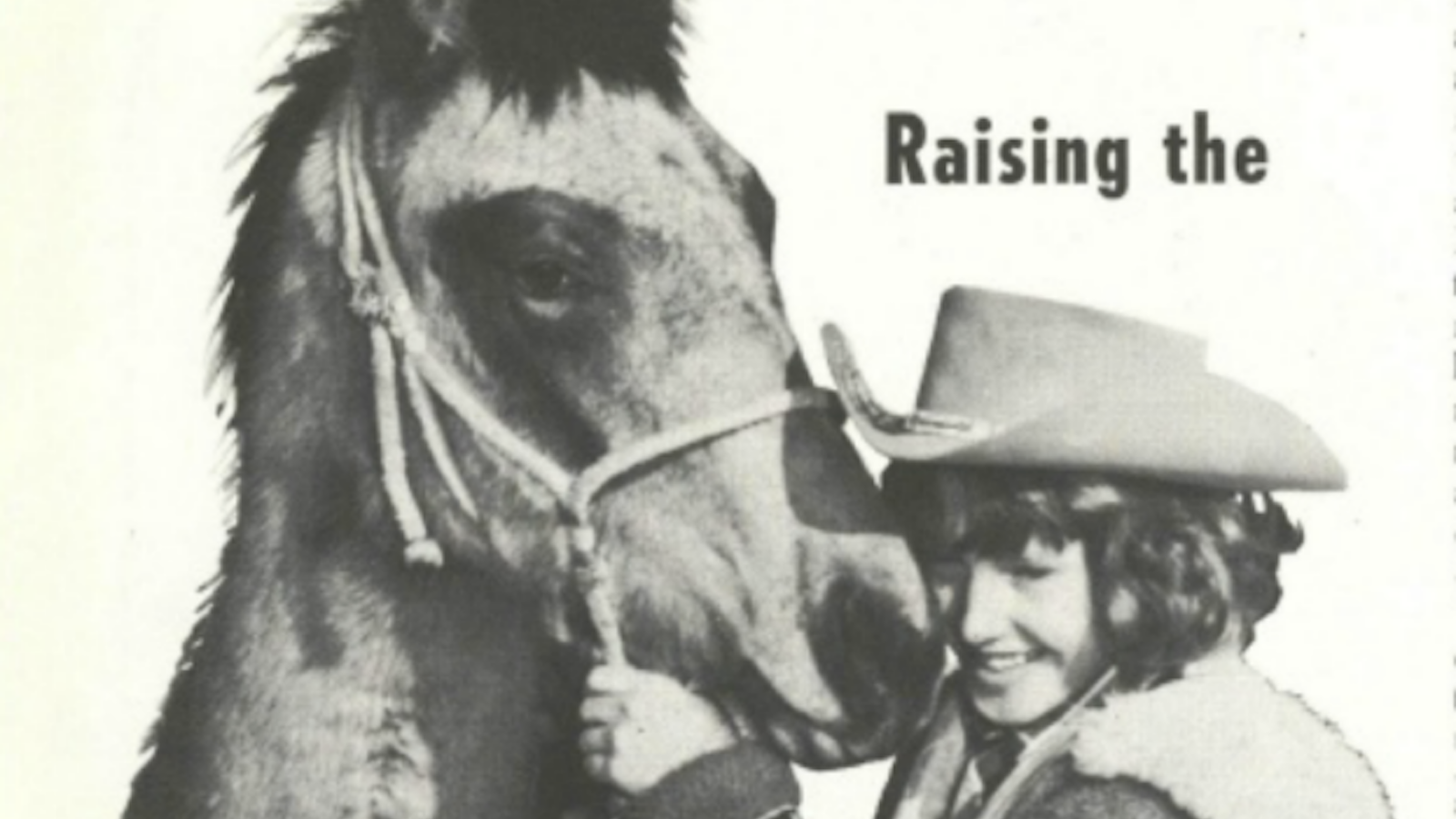
Caring for an orphan foal can be hard work, especially during the first week of its life, but those who have done it successfully will agree that it is a satisfying experience. Find out what it was like raising the orphan foal in 1965 with this throwback from the April 1965 issue.
Caring for an orphan foal is hard work, especially during the first week of its life, but those who have done it successfully will agree that it is a satisfying experience. There is many a fine horse at whom the owner points a prideful finger saying, “I raised him on a bottle.”
A foal may be orphaned in several ways. Often a mare will refuse to accept her foal. Such a mare should be tranquilized. If she continues to reject her foal it may be necessary to restrain her with a twitch. I’ve had good luck tying up one front leg on such mares, in order to give the foal a chance to nurse. A foal may also be orphaned because the mare cannot produce any milk. Lastly, a foal is sometimes literally orphaned by the loss or death of its dam.
Whatever the reason, the person bearing the responsibility of caring for such a foal has undertaken a real job.
The first milk, or colostrum, is important for any newborn animal. It is very rich and has a high vitamin content. It is filled with disease-fighting antibodies. Colostrum also has a laxative action, thereby helping to clear the foal’s bowl of meconium (fetal intestinal contents). Nature provides colostrum, with its special protective properties, to aid the newborn during the first critical days of life.
The foal that is deprived of colostrum is, therefore, more susceptible to infection, constipation, and other serious afflictions of the newborn. To compensate for this lack, veterinarians usually prescribe high levels of antibiotics for such foals, plus supplementary vitamins by mouth or injection, and enemas to prevent death due to severe constipation. Protective serum may also be given.
Naturally, the foal will also need protection from extreme temperatures and dampness. Excessive warmth is not recommended if the foal is alert and active.
The other thing our orphan will need is food, and this is the most time-consuming part of the job. The baby foal should be fed every hour, taking about half a pint, more or less, depending upon the size of the foal. After a couple of days the interval between feedings may be increased to two hours, and in a week or so to four hours. Don’t expect the foal to do well unless you are willing to feed it frequently. By one month of age, four feedings a day will do. The commonest question the owner asks is, “What do I feed this foal?”
If mare’s milk is available, naturally it is best. Sometimes a nurse mare is available, or a mare may be milked and the foal bottle-fed. Some farms store mare’s colostrum in a freezer. But usually mare’s milk isn’t available, and a substitute formula must be used. Mare’s milk is lower in protein, and the protein is different than cow’s milk. It is also lower in fat, but is higher in sugar. Therefore, we can modify cow’s milk to approximate mare’s milk by lowering the protein and fat content, modifying the nature of the protein, and increasing the sugar content.
There are many formulas which accomplished this. In fact, a check of sixteen sources (four universities, six textbooks, and six veterinarians) yielded sixteen different formulas. Though they all varied, their objective was as described above, and remember that the milk of mares will vary considerably from one animal to another. Any of the following formulas may be tried. If one doesn’t agree with the foal, try another.
Formula No. 1
1 pint of low fat cow’s milk
4 ounces of lime water
1 teaspoon of sugar
Formula No. 2
1 pint of low fat cow’s milk
2 1/2 ounces of water
2 1/2 ounces of lime water
2 teaspoons of lactose
Formula No. 3
1 can evaporated cow’s milk
1 can of water
4 tablespoonsful of lime water
1 tablespoonsful of sugar or corn syrup
By low fat milk, we do not mean non-fat (skim) milk, but cow’s milk with a butterfat content of 1% to 2%. Regular cow’s milk has a butterfat content of 2 1/2% to 7% depending upon the cow. Market whole milk is usually standardized to 2 1/2% or 3 1/2%. In many areas, the markets carry low fat milk, so labelled.
Goat’s milk has been used successfully, although its formula really is not too close to mare’s milk. In fact, foals can be taught to suck a good nanny.
Regardless of the formula used, bring it to body temperature (about 100°F) before feeding. If the foal will not eat, or shows signs of weakness, illness, fever, diarrhea, or constipation, call your veterinarian at once. Modern drugs, intravenous feedings, and blood transfusions can save many foals nowadays that used to die, but it is important to initiate treatment before they are too far gone.
As soon as the foal is interested, allow it free access to green grass, or top quality leafy alfalfa hay. When the foal will eat grain, see that a mixture is available. There are many good formulas. Here is a simple one:
- Steamed rolled oats, 80%
- Linseed meal, 10%
- Wheat bran, 10%
Half the oats may be replaced with barley if desired. Offer a hundred-pound foals a half-pound of this grain ration daily. Increase the grain proportionately as the foal grows. Add a balanced vitamin-mineral supplement as directed on the label. Many such products are advertised in your horse magazines.
Parasite control and vaccinations are important for any foal, but this is especially true for the orphan foal because he is at a nutritional disadvantage.
Newborn foals shouldn’t be left alone. Leave them with a friendly goat, duck, burro, dog, cat, or other animal for company.
This article was originally published in the April 1965 issue of Western Horseman.
The April 2026 issue is brought to you by Martin Saddlery