


It’s one of the more common causes of equine lameness, but that doesn’t make a sole abscess any less aggravating. The good news is that the majority of abscesses treated resolve quickly with drainage, says equine veterinarian Jeff Young of Amarillo, Texas.
“The old term for a sole abscess was ‘gravel,'” he explains, “even though most abscesses had nothing to do with a piece of gravel invading the hoof.”
Generally speaking, a sole abscess is an infection caused by migrating bacteria introduced into the hoof from outside forces, including foreign bodies such as nails (“hot nails,” or those stepped on), or moisture traveling up through cracks in the hoof wall or white line. Depending on the location of the abscess, the trapped fluid eventually follows the path of least resistance, releasing via the white line, heel or coronary band.
What can make a hoof abscess scary for horse owners, Young explains, is the seemingly rapid onset of lameness that signals its arrival. Typically, he says, a horse owner will notice the gradual onset of lameness over two to three days, as pressure builds within the hoof wall, until the horse is drastically lame.
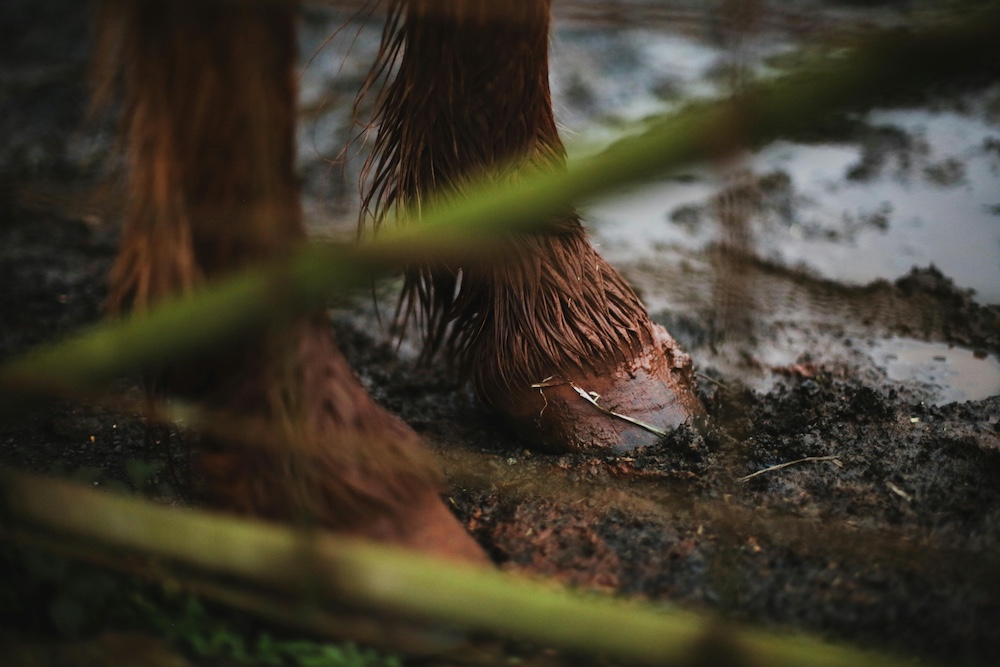
When a foreign object is not the culprit, the infection can stem from muddy and unsanitary conditions that wick moisture and bacteria up through the white line or fissures in the hoof wall. As the hoof dries, the moisture inside stays trapped within the hoof. The body’s response to the invading bacteria is to bring in white blood cells to fight the infection, which inevitably leads to tissue destruction and pus.
How do you know your horse has an abscess? In addition to the high-grade lameness, a horse might exhibit heat in the hoof, an increased digital pulse and sensitivity to hoof testers. Tenderness around the coronary band and heel bulb, where drainage is most likely to occur, can also signal a brewing abscess.
After localizing the area of soreness, Young often goes a step further, taking X-rays of the hoof to eliminate the possibility of a fractured coffin or navicular bone, which can trigger similar signs of lameness.
“When I remove the shoe for X-rays and see some old, black pus come out of a nail hole,” he says, “I’m pretty sure that horse is working on an abscess.”
Because some abscesses will actually drain back through the white line, notes Young, a shoe can turn a simple abscess into a chronic leak if the fluid can’t be fully expelled.
X-rays can sometimes pinpoint a pressure pocket, allowing Young to locate a spot on bottom of the foot where he can surgically release the pressure through a hole in the sole.
“I try not to get too aggressive digging on a good sole,” he explains. “I prefer to work with gravity. That way I know it’s more likely to drain completely.”
For abscesses that need a little more encouragement, Young alternates between soaking the hood in Epsom salts for 20 minutes and applying an Ichtamol poultice and medical boot for 24 to 48 hours. Both work to soften the hoof and draw the fluid to the surface. In some cases, he also uses a homemade “sugardine” concoction that combines the osmotic properties of sugar with the antibacterial components of Bedadine.
“Which I use depends on the bedside manner of the horse,” he adds. “If a horse knocks the bucket halfway across the room, then I forego the salts and go to the boot. I generally don’t introduce antibiotics unless I’m dealing with a foreign-body puncture, where sensitive structures might be affected.
“Luckily, in most cases, drainage is 90 percent of your abscess treatment.”
To keep the horse comfortable and prevent additional strain to the other leg, Young uses phenylbutazone and support wraps for several days during the treatment. He also keeps the hoof in a medical boot for several days following treatment to ensure there is no chance for reinfection. In situations when foreign objects were removed from deep within the hood, or large drainage holes were established, Young incorporates long-term shoeing options, such as medicated pads or hospital-plate shoes, which further protect the hoof as it heals.
The key to avoiding the problem int he first place? Proper hoof care goes a long way to preventing certain abscesses, explains Young. If you anticipate prolonged wet weather, applying certain thrush treatments to the sole of the foot can help. Housing your horse in a dry, bedded stall, keeping his feet picked out daily, and staying on schedule with your trimming and shoeing are also sure ways to keep most abscesses at bay.
This article was originally published in the October 2007 issue of Western Horseman.