
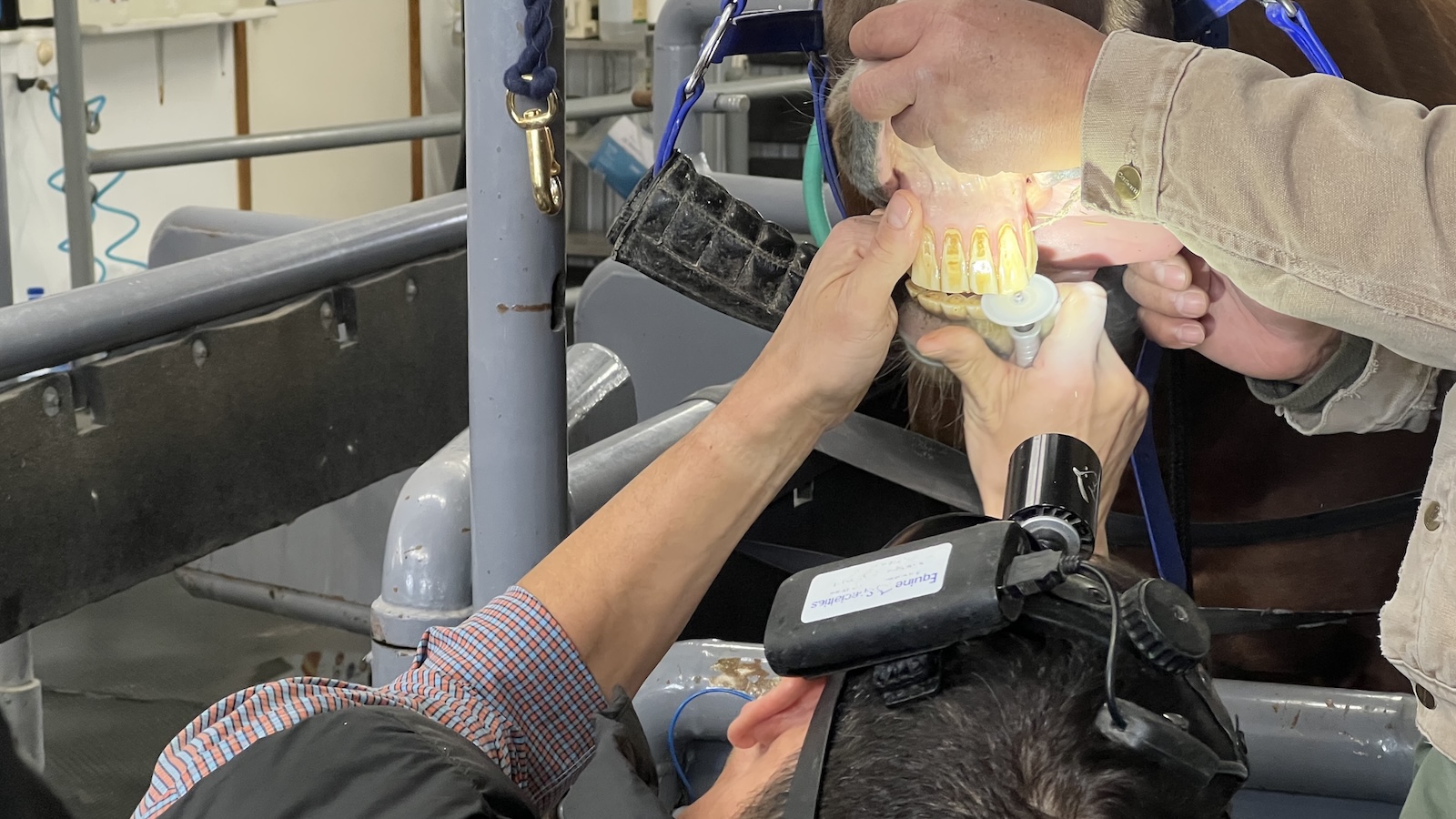
The size and shape of a horse’s tooth indicate not only its age, but its lifestyle habits.
In today’s pedigree-happy horse society, it might seem like overkill to know how to age a horse by the size, shape and wear on its teeth. But not all horses come with papers. Not all horses have seen an equine dentist annually. And not all are sold by a reputable seller. These are all reasons why horse owners should know how to decipher a horse’s age by the tale the teeth tell.
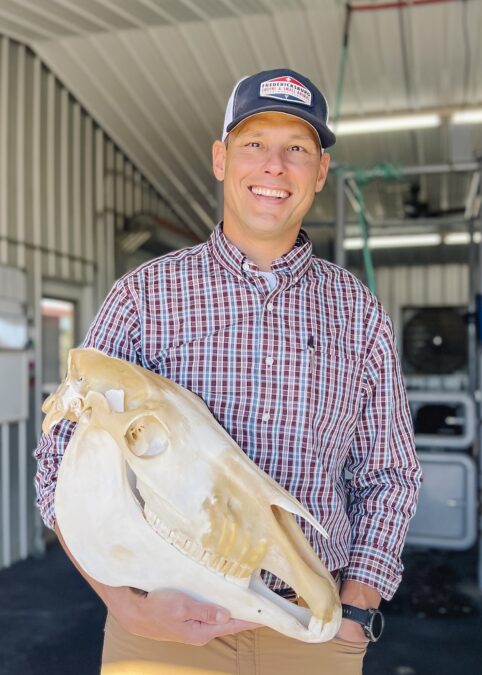
Dr. Matt Moskosky graduated from Texas A&M University’s College of Veterinary Medicine more than 17 years ago. Even though he practices fulltime, often diagnosing lameness and routine health issues, he still considers himself a student of equine dentistry, an area of expertise he began studying after learning the rudimentary lessons in school.
“I think it is really important to at least be able to put the horse’s teeth in a range, which is relatively easy to do with a little bit of practice,” Moskosky says.
Today, Moskosky dedicates focused continuing education to specializing in dentistry to achieve overall oral balance and equilibrium, which is equal length of tooth in all areas of the mouth. That said, he sees a lot of horse teeth.
“Since a horse’s teeth erupt continuously throughout their life, as a horse ages, teeth get longer,” Moskosky says. “If you don’t take away anything else from this, being able to identify baby teeth versus adult teeth is crucial in aging a young horse. Once a horse has all its adult incisors, being able to look at the corner incisors length versus width will help give an age range. Beyond that, the other structures can be highly variable.”
Basic Bites
Unless a horse sustained a traumatic injury that altered their teeth, such as losing a tooth at a young age, its mouth develops similarly. Contributing factors to altering how a horse’s teeth wear are whether it is turned out most of its life or it lives in a stall. The reason is obvious — the more they chew or graze with their teeth, the more they wear them down, Moskosky says. But when a horse is young, aging by teeth shape and size is simple.
“Being able to age a horse is beneficial if you have a senior horse, probably late teens plus, or one that is younger than 5 years old, because those are the ages when the most changes will happen in the mouth, and the most problems are occurring, respectively,” Moskosky says. “Up to 5 years old — that is when they are losing baby teeth and getting adult teeth, and there are a lot of changes in the mouth, which lead to malocclusions and balance issues.”
He says that aging horses can fall easily into identifiable ranges: Less than 5 years old, 5 to 9 years old, 10 to 15, and 16-plus.
“If a horse has regular wear patterns, you can be relatively accurate up to their mid-to-late teens; then, after 20, it’s a best guess,” Moskosky explains. “We use the incisors for most of our major estimates. If things aren’t clear, we use cheek teeth. But where you start is with the incisors. You look to see if you have baby teeth, some baby teeth or all adult teeth.
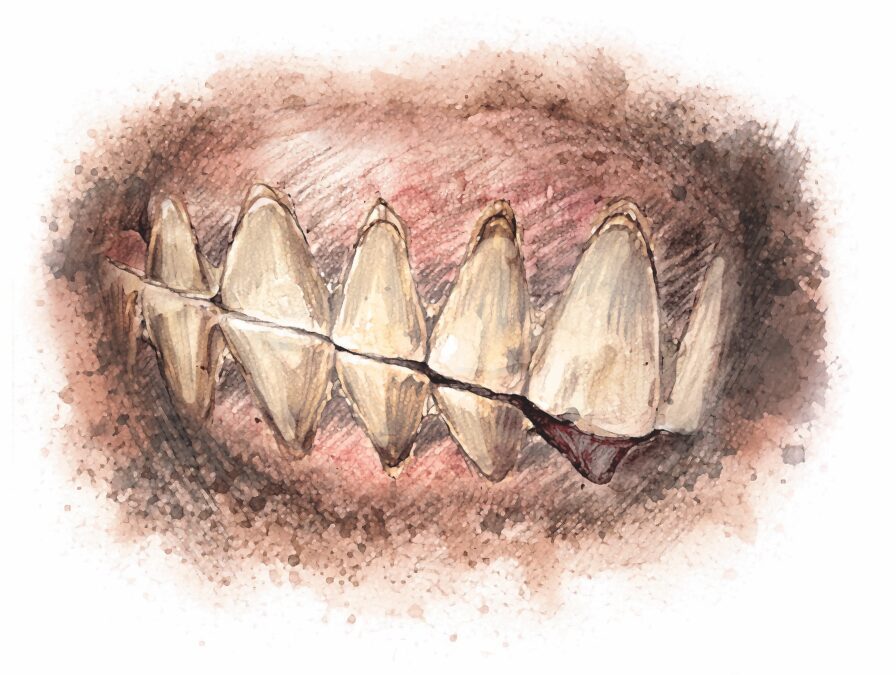
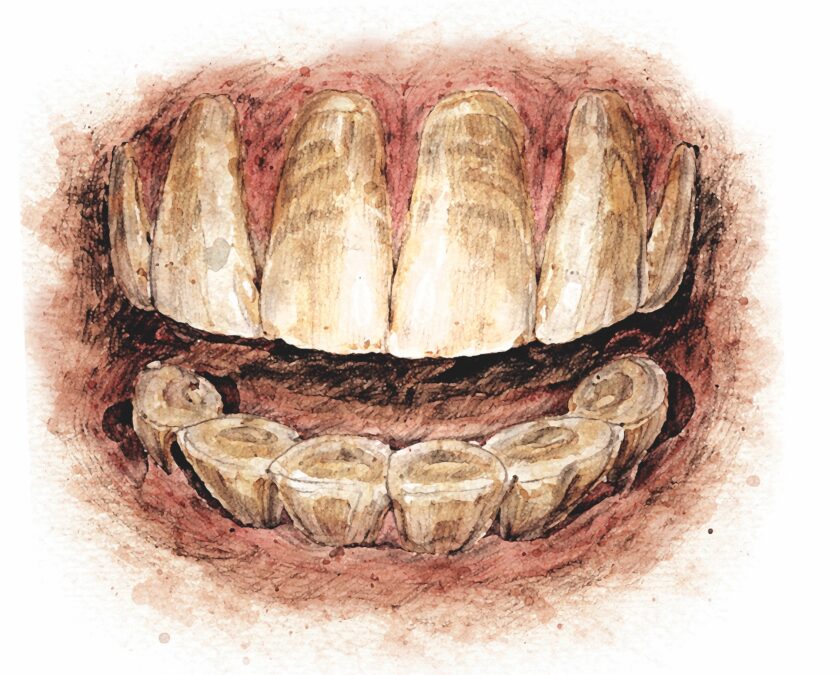
“The incisors develop from the inside out,” Moskosky continues. “The central incisor is first, then the intermediate incisor, and then you have the corner incisor. Every arcade [group of teeth] has three incisors, and there are 12 total incisors.”
A horse’s incisors can be seen by lifting the lips, but to see cheek teeth, the mouth must be open, and most veterinarians grab the tongue to see around it. The shape of a horse’s incisors’ occlusal (biting) surface starts more rectangular, then the teeth get more biangular, or look like a tee-pee with two slanted angles that straighten at the top as they age.
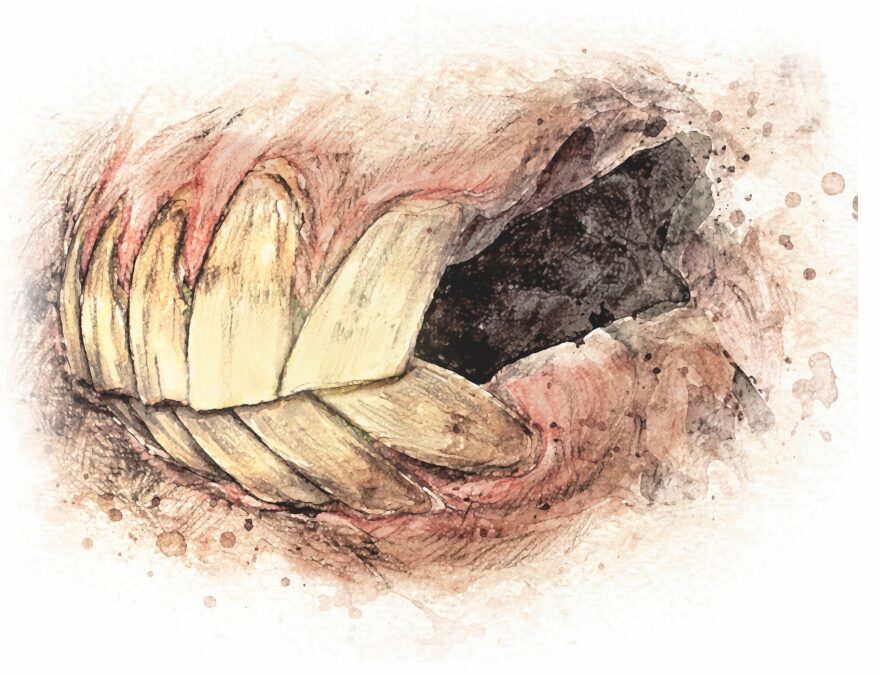
Another starting point is the angulation of the incisors. From a profile angle, as a horse ages, the teeth go from straighter up and down to more pushed out.
“The adult teeth are going to come in and be very distinct from the baby teeth. They are taller and more stained yellow-brownish, depending on the horse’s diet,” Moskosky explains. “The central incisor comes in at 2 1/2 years, intermediate 3 1/2 years and corner 4 1/2. If all the adult incisors are there, the horse is 4 1/2 years or older.”
Also, if a horse has all larger teeth, it is more than likely an adult horse that has lost all its baby teeth. Without getting out a ruler, Moskosky says that identifying the tooth length and width can be done by eyeballing the tooth.
“We look at the length of the corner incisor compared to the width,” Moskosky says. “The length is the backside of the tooth, or the side that is closest to the corner of the mouth. Compare that to the width of the same tooth. We know they are all adult teeth, so we know the horse is at least 4 1/2 years old.
“If the tooth is shorter than wide at the gumline, put the horse in the 5 to 9 range,” Moskosky continues. “If it is equal between the length and width, they are in the 10, 11 range. If the tooth is taller than wide, the horse is 12-plus. That is how you can immediately put an adult horse into a range.”
The Nitty Gritty
To determine a horse’s age within one year, as Moskosky strives to do, requires a more in-depth look into the mouth. After looking at the clues on the incisors, he then focuses on the maxillary, or bottom, incisor biting surface.
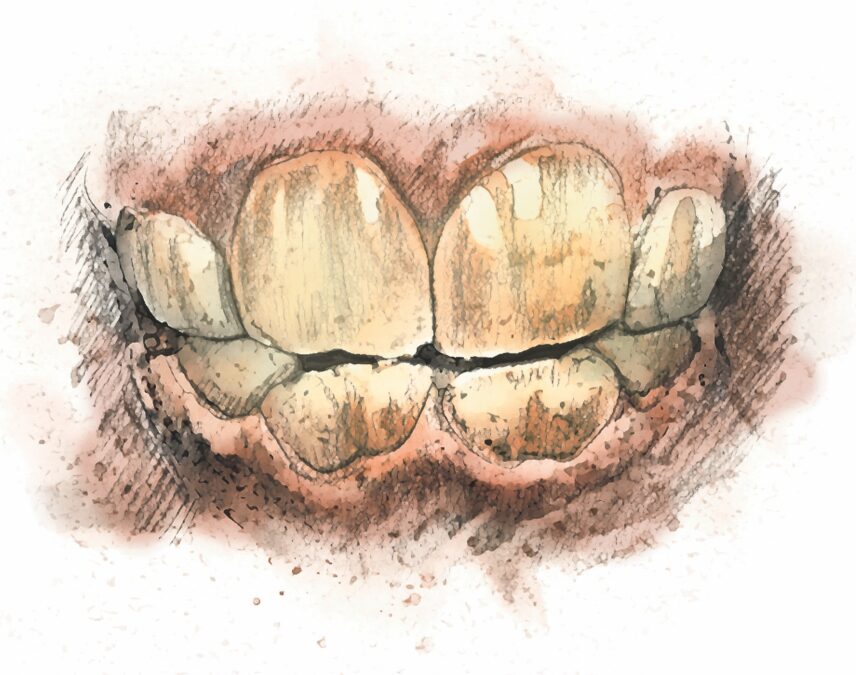
If he has seen that the horse has all adult teeth, it is 5-plus years old. Then, he looks at the corner incisor. If it is shorter than it is wide, the horse is in the 5- to 9-years-old range. Next, he will look at the occlusal surface, or the biting surface.
Moskosky explains there are two structures on the occlusal surface: the pulp, or dental star, and the infundibulum, which is referred to as the “cup.”
“You should easily see where there are cups and where there are not cups. When I say a cup, that is the infundibulum dished out,” Moskosky says. “Imagine pouring water on the incisors; the cup would hold water. As the horse ages, the teeth erupt, are worn down, and the cup goes away and the tooth is flat. Once the cup is flat it is considered ‘cup gone,’ and it’s the remnant of the infundibulum, called the enamel spot.
“The horse will be cup gone at 6, 7 and 8 years of age on its lower incisors,” Moskosky continues. “It will always progress from the center out. If the horse has a flat cup on the central incisor but a cup on the intermediate and on the corner, that horse is 6. If the horse is cup gone on the central and intermediate but still has a cup on the corner, the horse is 7. They are all cup gone at 8.”
While this reads fairly technical, opening the mouth and identifying the “cup” is easy with the naked eye. Another factor Moskosky uses to verify his findings in an older horse is through what he calls a method he “wouldn’t hang his hat on,” but always looks at and is relatively accurate more often than not, he says. The Galvayne’s Groove is a dark line, or groove, on the outer surface of a horse’s upper, corner incisor.
“On the upper corner incisor, there is a groove that forms at the gum line in the center of that tooth around the 10-to-11-year range,” Moskosky says. “That groove will work its way down the tooth as they age. If it appears between 10 and 12, we can use that as a marker, and when it is halfway down the tooth, the horse is about 15. When it is all the way down the tooth, the horse is 20 or more years old.
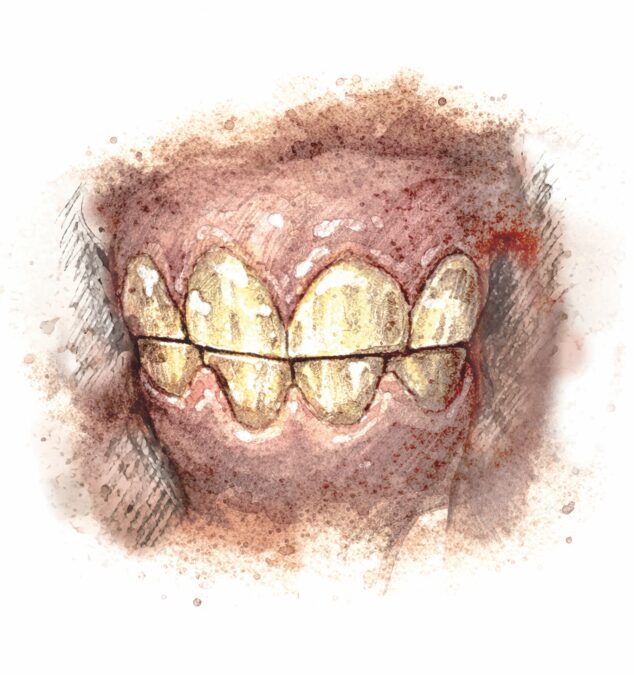
“Where it can be tricky is if the horse has staining on that groove from whatever forage the horse is eating,” Moskosky continues. “That can be misleading because sometimes the stain goes further down the tooth than the groove.
Despite the method being sometimes tricky, Moskosky says it’s still a good tool to know how to use.
“After 20, the groove starts to disappear,” Moskosky explains. “But it is pretty easy to differentiate if the horse is older than 20 or 15 and younger, if the groove starts disappearing. The point is, the groove can be useful, but it should never be your only identifier. It can sometimes muddy the waters and shouldn’t be the only thing you look at, but one of them. It is a snapshot I take a quick look at to see if it agrees with my other aging factors.”
When it comes to understanding horses’ teeth, it truly all goes back to the length of the tooth and the wear that the tooth shows when examined. A veterinarian or properly trained dental tech is the best source to identify a horse’s age, considering factors like cribbing, trauma to the teeth, and whether the horse grazes or lives in a stall. However, horse owners, especially horse buyers, can assess the shape, size and wear to get a rough indication of age.
No matter the horse’s age, Moskosky advises having an annual dental exam to ensure healthy dentition, which means a healthier horse.
“Whether you have a horse for 10 years or you just got a 2-year-old colt for Christmas, a yearly dental on the horse is important,” Moskosky says. “The most important part of the dental is the oral exam, which identifies any issues and allows you to deal with them on a proactive basis versus waiting until there is an overt problem, which often leads to limited options and more extractions, which we want to be our last resort for any tooth in the horse’s head.”
This article was originally published in the April 2026 issue of Western Horseman brought to you by Martin Saddlery.