


A horse that walks off mid-mount isn’t just frustrating. It can also be dangerous. Jason Irwin shares practical steps to teach your horse to stand still and wait for your cue.
Horses should be taught to stand still for mounting and stay still until the rider asks the horse to move forward. It’s obviously awkward for the rider when a horse walks off when they’re halfway on, but it can also be dangerous. If a horse heads off for the sunset before the rider is all the way on, the person could easily fall off or get dragged.
If you have a young horse that’s being started under saddle, it will make life easier for both you and your horse if you teach him to stand still from the very beginning of his training. That way, standing nice and still will be all that he knows. However, if you have an older horse that moves off as you’re getting on, then you need to break that habit. The following tips assume you’re trying to break this habit in an older horse, but a lot of it can also be used as preventative maintenance to make sure the habit doesn’t start in the first place.
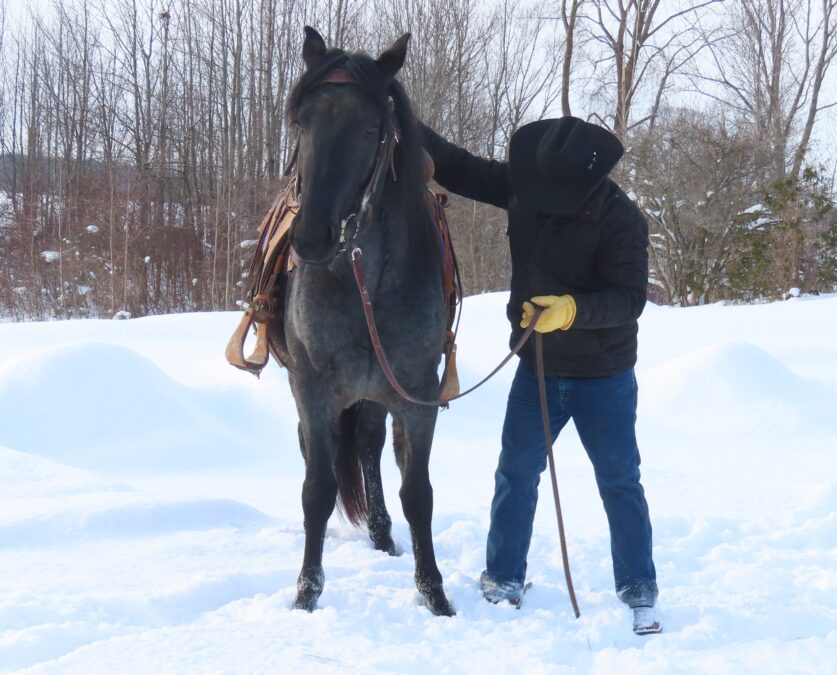
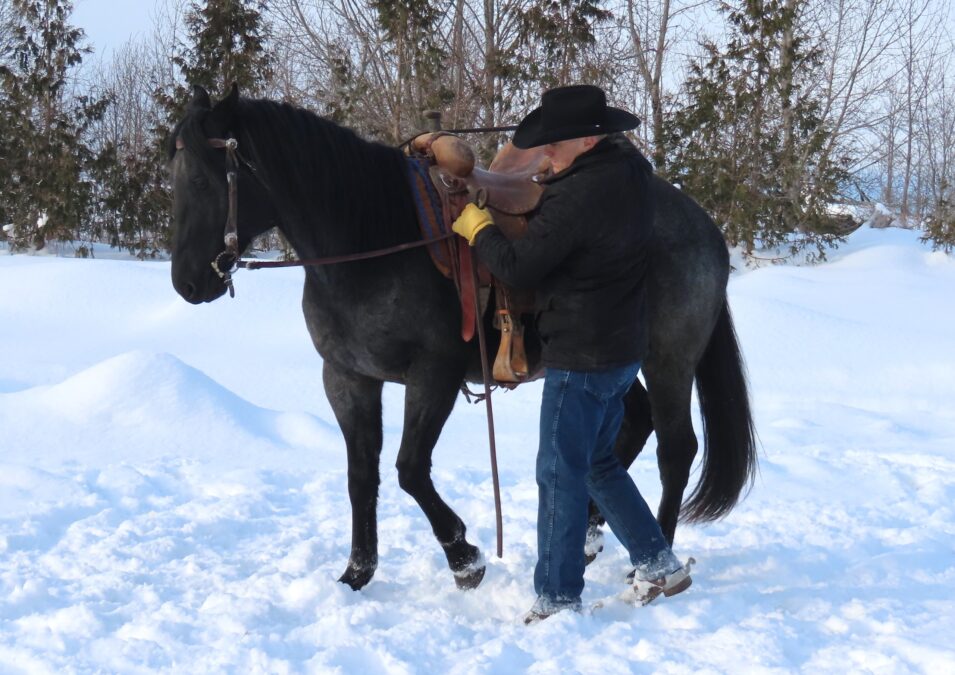
To start, set your horse up for success by making it easy for him to stand still. To do that, take note of where the horse is placing his front feet. If a rider mounts from the left-hand side and the horse’s left front foot is placed farther back than the right front foot, then the horse is going to have trouble supporting the rider’s weight as they get on. When the rider steps into the stirrup, the horse’s left knee will likely buckle, and the horse will move to better support the weight. Now the horse is moving, and the problem is starting. For this reason, it’s better for the horse to stand with his left front foot farther forward. Now the rider can step up, and the horse won’t have to move his legs to hold the rider’s weight. Another option is to get the horse to spread his front legs wide apart. To do this, simply hold onto the saddle horn and then push it away from you and then toward you once or twice each way. This will cause the horse to lose his balance a little bit, and he will spread his front feet out wide to brace himself. This is what we want because now he can support our weight without moving.
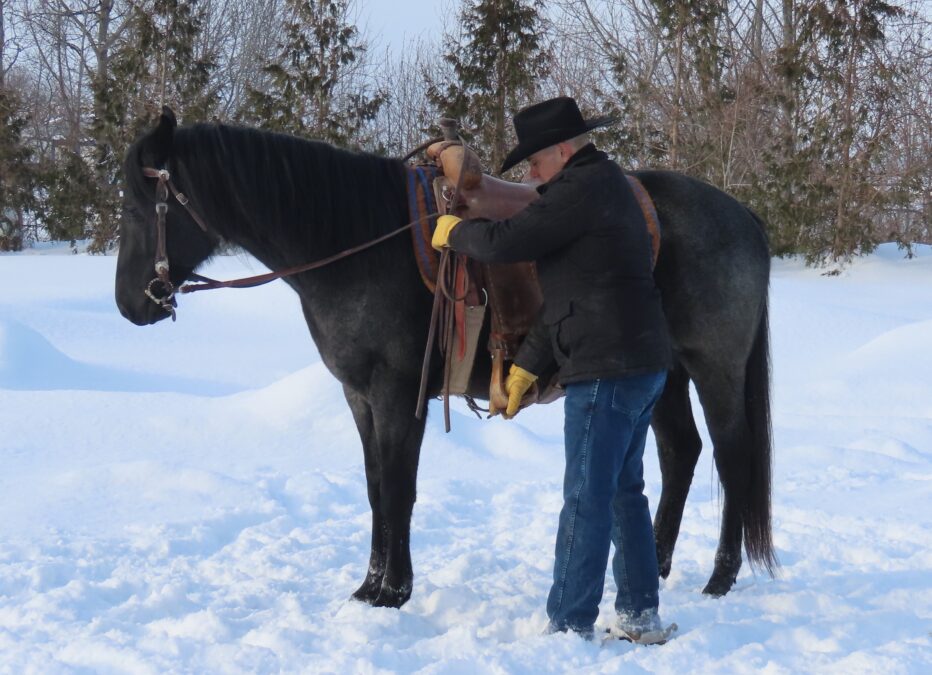
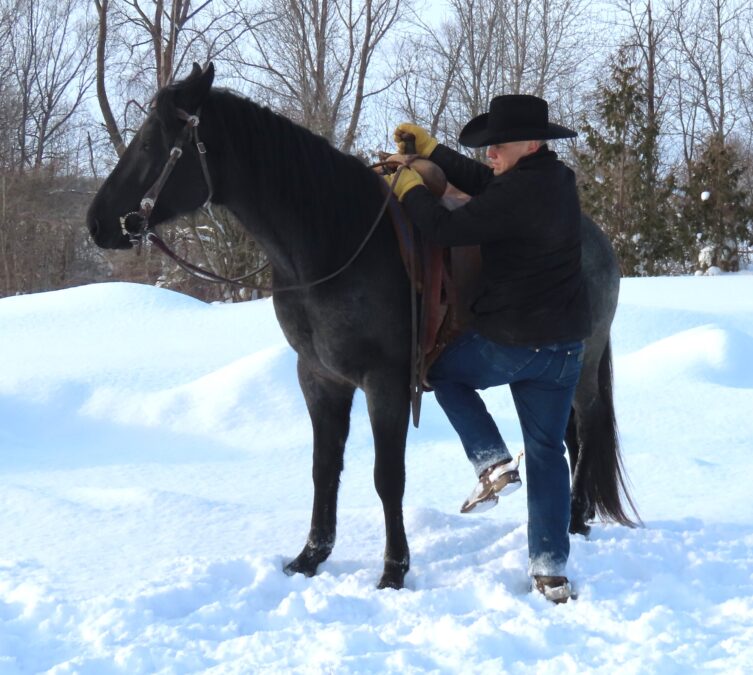
The next step is to pretend that you’re going to get on the horse and then catch him in the act if he tries to walk off. To start, run the right rein around behind the saddle horn and down to your left hand. Hold the left rein in your left hand as well. Now take hold of the left stirrup in your right hand and move it around, and lean on it to put some weight in the stirrup. You can also pull on the saddle horn and shake the saddle with your right hand. The idea is that we want the horse to think that you’re getting on. If he chooses to move, pull on the reins to catch him in the act and back him up quickly. Keep repeating this until he doesn’t move at all. If the horse starts to walk while you’re getting on, he’s likely going to be able to move a ways before you get him stopped again, so he feels like he got away with something. By using this method and pretending you’re getting on, you can correct him the moment he starts to move, making it easier for him to learn to stay put.
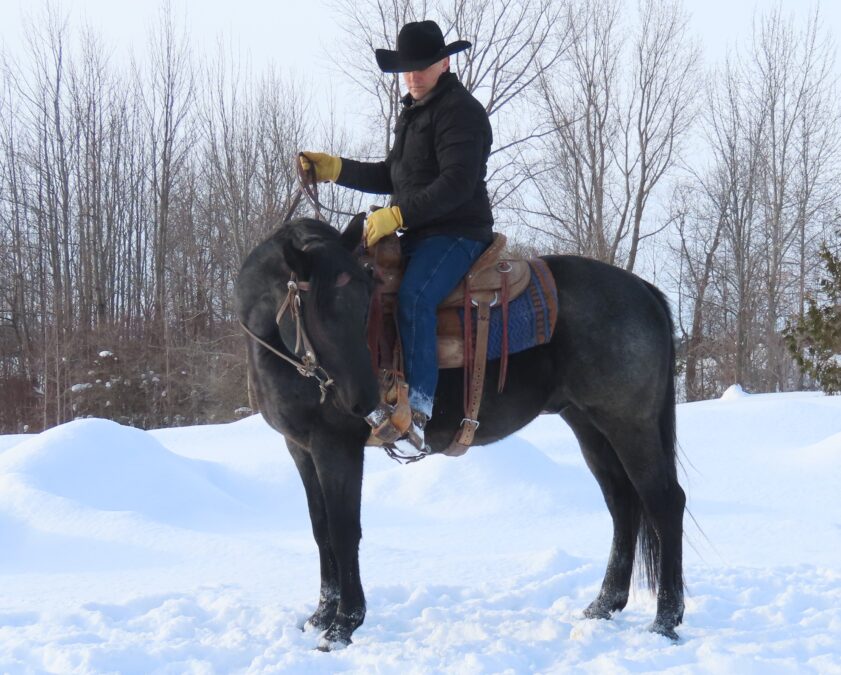
Once your horse is standing perfectly still, then swing on. When you sit in the saddle, don’t ask the horse to move right away. He should stand still until you say go. However, if your horse is bad at walking off, only ask him to stand still for a short time. For instance, if you think your horse will stand for 15 seconds before he wants to move, ask him to move after 10 seconds. You’re asking your horse to move before he really wants to, so leaving becomes your idea rather than his. Eventually, build up the time until he stands for as long as you want.
Another way is to get on, back the horse up a few steps, and then roll back in either direction before walking out of it. Over time, the horse starts to think that walking forward once you get on is not an option, so he loses the desire to move before he’s asked.
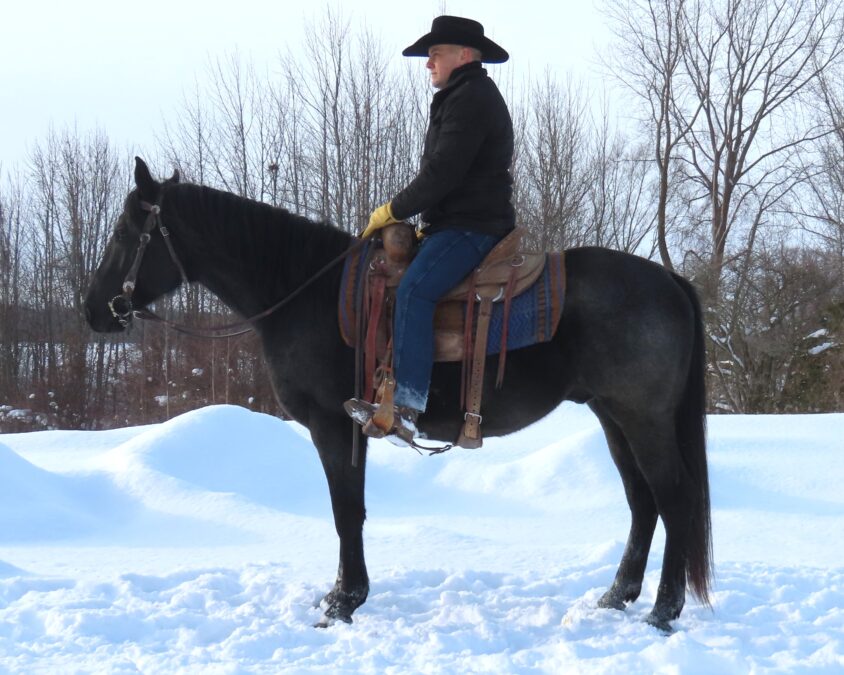
It can be a good idea to give the horse something to do while he is standing still. I will often ask a horse to flex back and forth, touching his nose to the toe of one of my boots and then the other. This is a way to put the horse’s mind to work without moving his feet. The horse will focus on this job instead of moving, and eventually he will stop wanting to move.
Keep in mind that a horse is going to have the most energy at the start of his ride, which is also what can make it hard to keep him still. A person obviously has to get on their horse to get the ride started, but that doesn’t mean it’s the best time to work on fixing this problem. When I’m working with a horse that won’t stand still, I will get on and put that horse to work. Towards the end of the ride, I will lope several circles and then stop and have the horse practice standing still while I get on and off several times. If the horse isn’t standing perfectly still, I will lope some more circles and then try again. This is effective because the horse is now tired and probably doesn’t want to move. Once I do this for three or four days, the horse very often doesn’t want to move anymore, whether it’s at the start of the ride or near the end.
I hope this helps you teach your horse to stand still for mounting. Once your horse is standing still, make a point of mounting and waiting for at least thirty seconds before asking him to move off. Do this for the rest of your horse’s life to make sure he never thinks about walking off before he’s asked.
Good luck to you and your horse!





Great suggestions, really agree with you Jason. I think what you’ve done will do the trick.