


Les Vogt discusses leaving your horsemanship comfort zone.
Why would a man considered a master, a world-class trainer and showman, in one event choose to master a new level of expertise in another event? Les Vogt, Santa Maria, Calif., had long been a success in working cow horse competition when, a few years back, he decided to also achieve a greater degree of finesse in the art of reining.
And, yes, the dry work, as they sometimes call it in working cow horse circles, is reining, but it’s only a portion of the overall score. In full-fledged reining competition, the dry work is the score. Although Les could have been content with his mastery of cow horse competition, he chose to break free from his horsemanship comfort zone and concentrate on another aspect of the horse industry. Now, he’s not only a world-class cow-horse man, but also a world-class reiner.
Les was among the featured speakers at Clinician Craig Cameron’s Top Gun Clinic last fall in Bluff Dale, Texas. When I asked him about the change in his riding focus, he shared some thoughts that might help anyone ride out of an old rut to experience a new adventure in horsemanship — no matter their present level of expertise.
Why the change in focus?
I wanted a look at the objectivity in the (reining) scoring system and the accurateness of the discipline. The actual accuracy and the finesse that reining demanded was interesting. That control sparked my interest. In a reined cow horse class, you draw for cattle, and the cattle control the situation to a point.
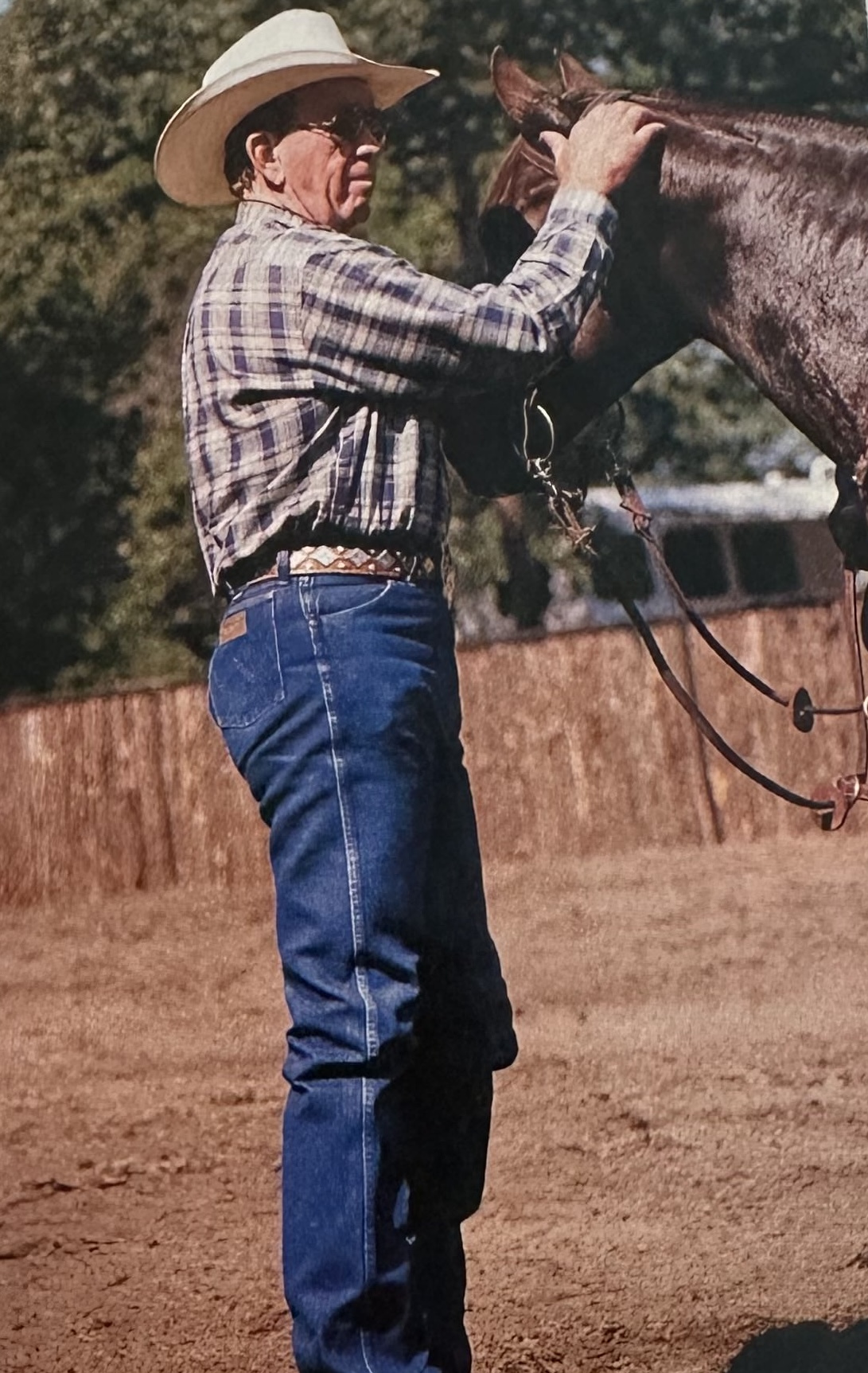
How difficult was it to break away from what you knew well to focus on another area of horsemanship?
I didn’t think it was very scary until I did it. When I went to my first reining in Burbank, I took two really good horses with whom I had been marking consitstent 75s and 76s (in the cow horse dry work). I had never shown in the open, big-money reinings, and this was a $5,000-added class.
On the first horse I thought I had marked a 75 or 76; it was a pretty hard run. The first judge said 70, the second said 70 1/2, and I couldn’t believe it. So when I showed the other horse, I turned him up a little higher — but my scores were a 70 and a 71. So I had to start asking questions.
Afterward, I found that reining was so interesting and a real challenge. There was so much more to the reined work than I realized. I had thought I could do reined work, and then I found out there was a lot left to learn. That inspired me. My enthusiasm jumped; I had a new project.
What tips someone off to the fact that it’s time for a change?
Anybody who does anything for a long period of time, especially if he is accomplishing things — or even if he’s not — finds a time when he must look at his overall horse program. There are checkpoints to evaluate your situation. Ask yourself: Am I happy doing what I’m doing? Do I need another sport within the horse industry — or even another sport outside the horse industry? Am I happy?
If whatever you’re doing with your horse is not fun, I don’t think you should do it. Life is too short. Change something in your program. If it’s too stressful, I don’t think the components in your program are linking together overall — no matter if it’s your trainer, your horse, your ability, your goals, whatever. We all can have problems with one of those factors, and can overcome a problem in part, but not an overall bad program.
And attitude has so much to do with making a change. I really enjoy the adventure of a challenge. When things are going too perfect, if everything’s going well and the horse is really trained, my program loses some of the glow to me. I like being excited about a young horse and visualizing what I think he’s going to be in a year or two. As my friend Gene Saiter once said, “If you have a friend contemplating suicide, sell him a 2-year-old. He’ll have to stick around until next year to see how he does.”
A young horse makes my day, and I’d like to complement his too. It’s a partnership thing, and we’re a team. We’ll pull together and hopefully neither one of us will stress the other. If we do, we need to change the program.
Although I really like the idea of having a project, after I’ve done it, then the pressure is on me to maintain that level of horsemanship. So the adventure is sort of gone, and then you have stress to maintain the horse. If that’s the case, it should trigger you to look around, evaluate, do a reality check. Think: What would get me excited about riding?
Once you decide a change is in order, what’s the next step?
Concentrating on reining, at first, was a rude awakening, but it told me I had something to learn. If you have the passion for riding and the courage to follow that passion, then you need help; you need advice. Get some videos; go to some clinics. I still do. I go to clinics whenever I get the chance, and I love to gain information from and exchange information with whomever I’m around.
To make the transition from local shows up, or from your comfort zone up to the next level, there’s no way around it in my eyes — get professional help. I think the cost of your personal training and help is probably far less than you’d spend as a loser with no help. It’s money well spent because you can keep that knowledge forever, and you can pass it along and share it.
When it comes to leaving your comfortable spot, a good trainer who cares about you needs to explain what you’re up against and what level he thinks you’re capable of advancing to comfortably. He can help keep you comfortable as you make the change. After all, riding is supposed to be fun.
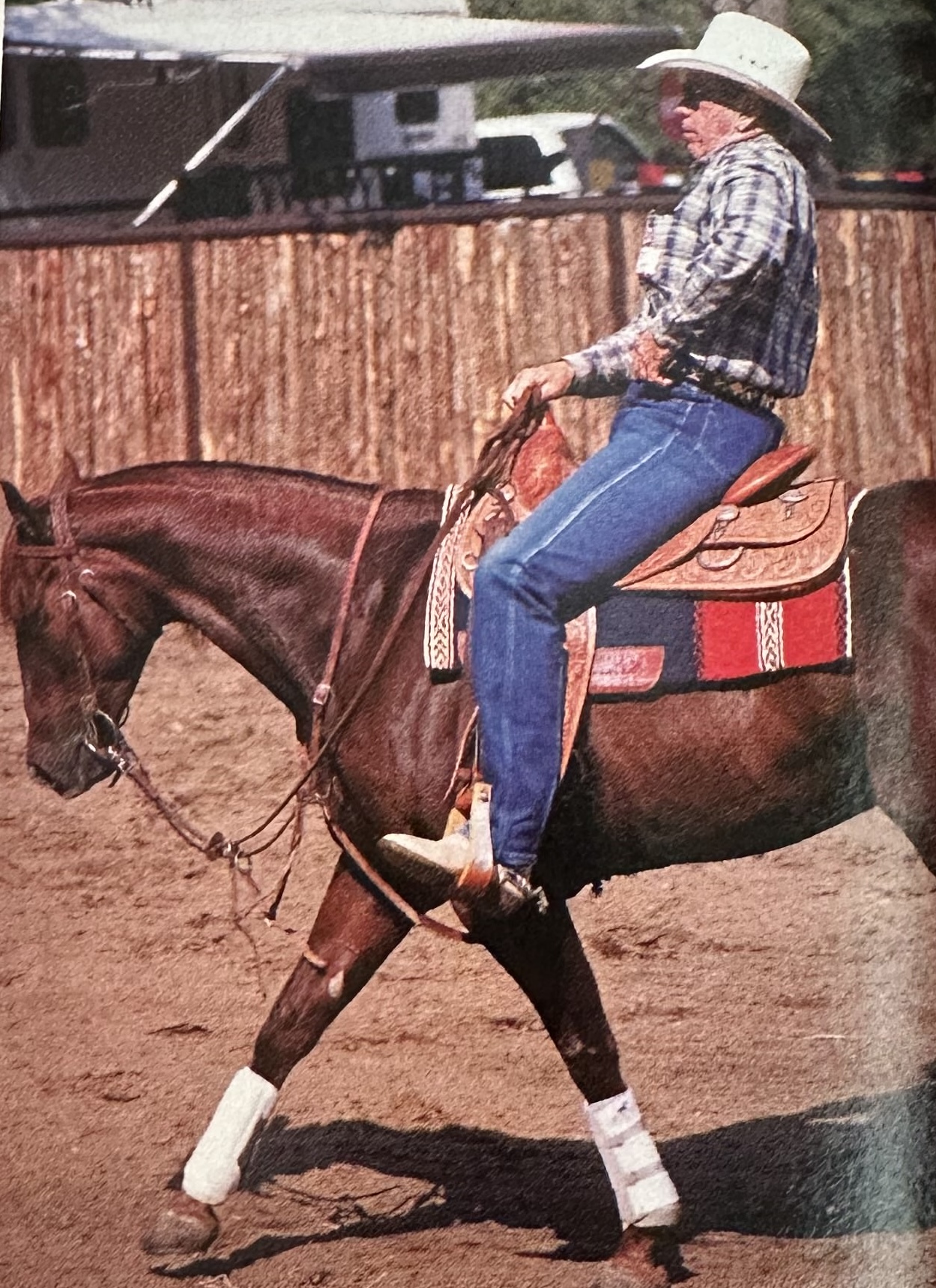
If riding becomes frustrating — if you’ve overinvested or have bitten off more than you can chew, no matter what the activity is — then the situation reverses. Your horsemanship program becomes a monkey on your back; it grinds and eats at you rather than being fun.
But, if you have the passion and the courage and dedicate yourself to learning that new activity, then you’ll be successful. With any endeavor I’ve been involved in — from roping to the reining transition — I don’t think it’s bad to be a little bit obsessive in that situation. Let that kind of be what you’re thinking about all the time. Without that determination and dedication, I don’t think you can make changes and make good decisions, and then you fall back into your safety zone.
What’s the big benefit of breaking out of your horsemanship comfort zone?
Even if you leave your riding safety niche for an adventure in another area and decide you liked your old event better, you’ll come back to it a better horseman. I promise you: You’ll be more worldly about horsemanship than you were before you left your comfort zone.
This article was originally published in the April 2000 issue of Western Horseman. Les Vogt, a legendary horseman, trainer, and innovator in the reined cow horse industry, passed away suddenly on September 6, 2025, at the age of 83.