

This online article is continuation of an story in the October 2009 issue of Western Horseman.
Story by Jennifer Zehnder • Photography by Ted Shanks
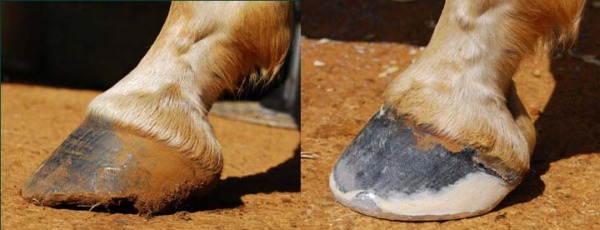 Hawaii-based farrier Ted Shanks offers these tips for keeping your horse’s hooves healthy on rough ground.
GLUE-ON SHOES
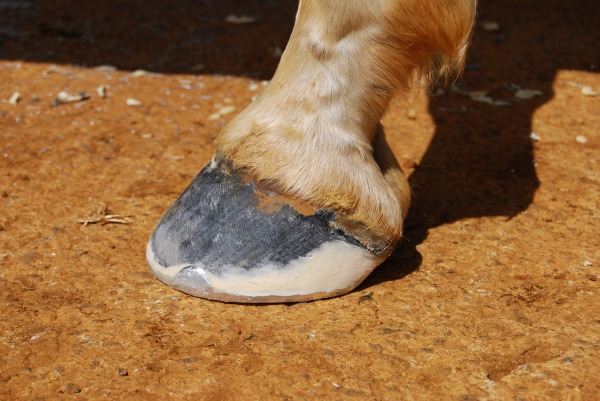
When it comes to keeping horseshoes on in difficult riding conditions, such as rocky or muddy terrain, glue-on shoes are some of the most secure available, if applied correctly. Though a clean environment, such as on concrete, works best, these shoes can be applied in less-than-perfect conditions. A farrier doesn’t need to trim differently to accommodate a glue-on shoe, but he must make sure the hoof is clean around the heels and bars. Shanks uses an aluminum shoe with clips for the glue-on process, as steel shoes tend to oxidize quicker in a wet environment and release the glue. Excess product can be used to “clean up” the hoof wall at the heel where a shoe is vulnerable. Today’s adhesives ensure glue-on shoes stay put eight to 10 weeks after application—longer than the typical horse requires. The increased longevity allows additional time for hoof growth, which is especially helpful for horses with rehabilitative needs.
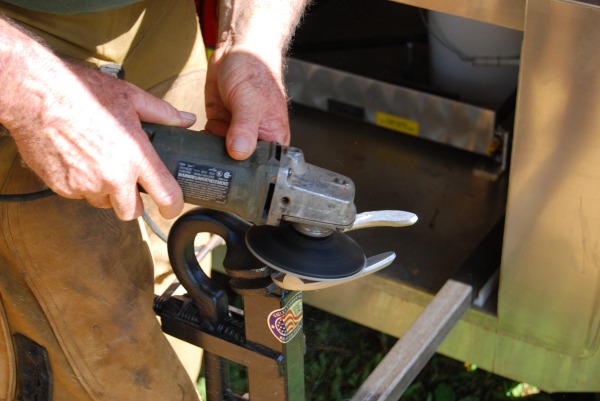
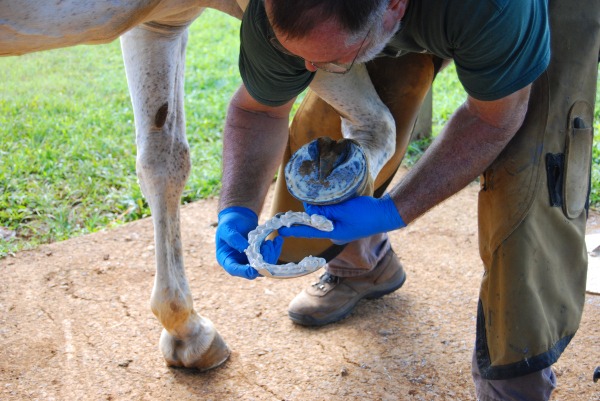
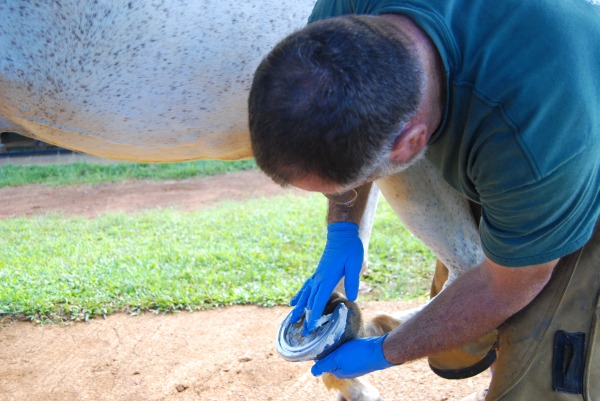
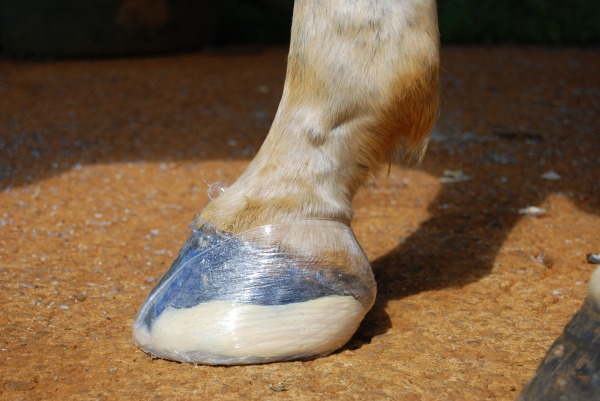
This photo series shows how Hawaii-based farrier Ted Shanks applies a glue-on shoe.
SOLE THICKENERS
Sole thickening products won’t necessarily increase sole depth, but when applied regularly they will slow down the exfoliation process, and help preserve the sole. But beware of sole hardeners. They may sound like a good idea, but the sole of a horse’s hoof was never meant to be rock hard, Shanks says.
“The sole is soft for a reason,” Shanks says. “It requires movement to displace shock and stress and protect the hoof.”
SOLE MATTERS
The best way to keep a horse sound is to leave as much natural sole as you can.
“Where we live, trimming out thrush is an everyday deal,” says Shanks, who lives in Hawaii. “After we started leaving more sole, we noticed we had less thrush, bruises, and tender-footed horses.”
For more information contact Ted Shanks at (808) 635-1556, or by e-mail at [email protected]. Send comments on this story to [email protected].