
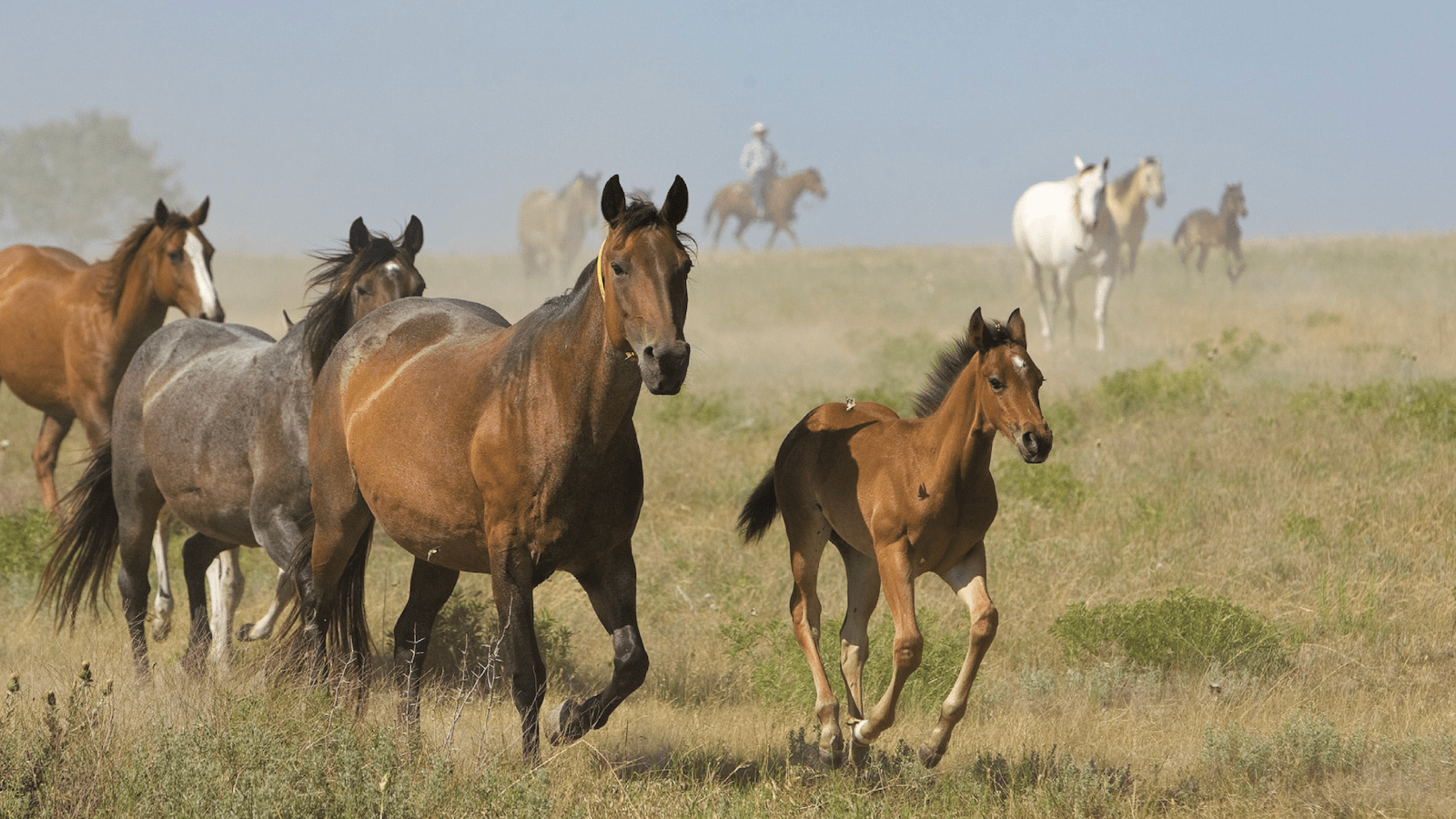
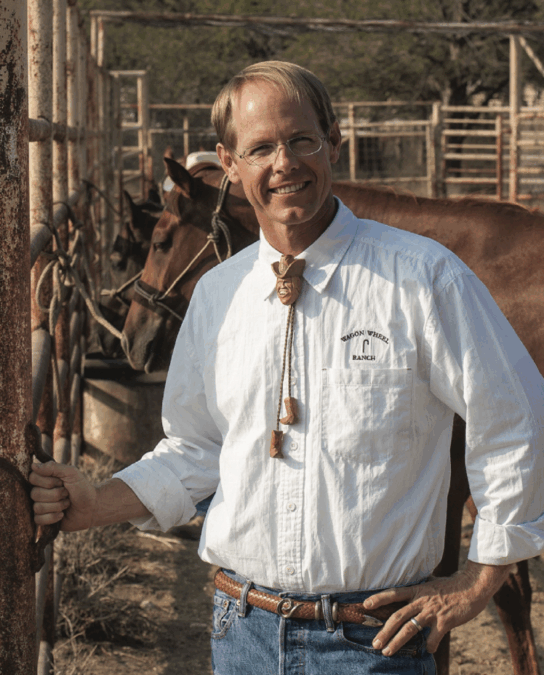
Dedicated to preserving his father’s foundation breeding program, John Gist hopes to donate the Wagon Wheel Ranch horses to Sul Ross State University.
Rebecca Splan, PhD, had returned calls like this before from someone wishing to donate horses to the Sul Ross State University equine science program.
The associate professor of animal science dialed the phone number left by John Gist of the Wagon Wheel Ranch, and she quickly realized this wasn’t your ordinary horse donation.
“It’s fairly common for us to return a call to someone who wants to donate a horse,” Splan says. “I talked to John, and he said, ‘Well, this is a little bit different’.”
Gist had about 250 horses in mind for donation, including broodmares, stallions and young horses. His parents, Fred and Elaine Gist, began building the historic Wagon Wheel Ranch horse program in 1972. With a focus on foundation bloodlines, the Lometa, Texas, horses became well known for carrying the concentrated blood of legendary Quarter Horse sires such as Driftwood, Joe Hancock, King P-234, Leo, Mr San Peppy and Three Bars (TB).
When Fred Gist died in 2009, John Gist and ranch manager Rusty Rodgers began to oversee the operation. They hosted production sales, instituted a training program, stepped up marketing endeavors and focused on a handful — rather than 10 — of proven bloodlines such as Blue Valentine, Driftwood, King and Mr San Peppy.
Gist acknowledges that he doesn’t have the same affinity for breeding horses as his father, but he remains determined to preserve what his father built. Several years ago, he began searching for the right person or organization to take over the Wagon Wheel horse operation.
“For the last six years I’ve been looking for the right steward for this program,” Gist says. “We’ve had individuals that have been very interested in it. But it became apparent to me that no matter how well-off an individual or family is, it is asking a lot for them to guarantee that a program like this will be preserved for decades into the future.
“This has become all about preserving what Dad built. And it’s not just because my dad built it, but because I really believe in these foundation bloodlines. We’re not just talking about some old horses that were once popular and now have fallen out of favor. We’re talking about the blood that has made the Quarter Horse breed.”
Gist decided the best way to preserve the Wagon Wheel program was to donate it to a university equine program. He talked to several throughout the United States, but none of them were as equipped to handle such a donation as Sul Ross State University. One of the biggest factors was land. The Alpine, Texas, university has a 300-acre campus ranch, plus 18,000 acres near Sierra Blanca and other pastures available for lease. Sul Ross faculty members also share Gist’s passion for foundation bloodlines.
“Our goal would be to continue the program in its current scope and fashion,” Splan says. “Because it is a breeding program that is concerned with genetic preservation, numbers are important. This isn’t just getting a lot of horses. Mr. Gist had the foresight to preserve these bloodlines. He saw the need for them. I’m a geneticist by training, and I’ve worked with a lot of foundation breeders. So this speaks near and dear to my heart.”
Splan added that inheriting the Wagon Wheel program has the potential to dramatically improve the university’s equine sciences program and interscholastic horse activities, such as its rodeo and ranch horse teams.
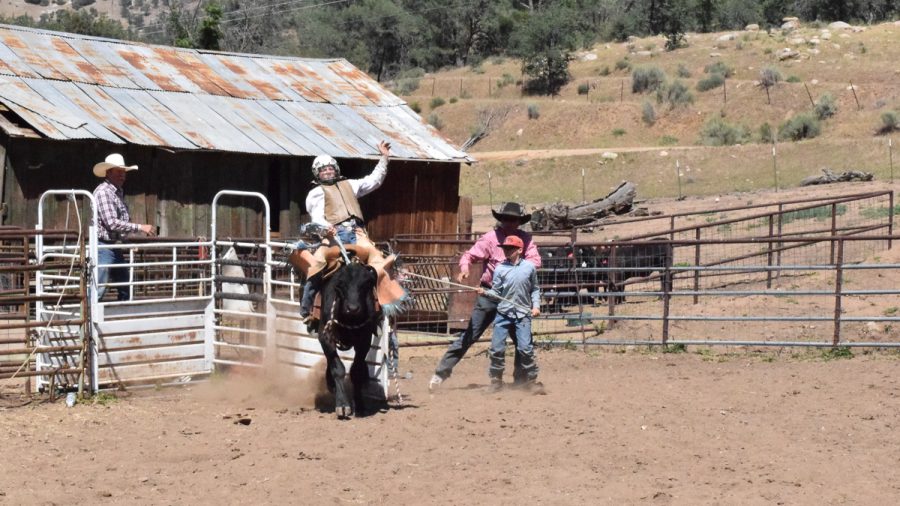
“It’s a game changer for us,” she says. “We can utilize the breeding program to teach our students all facets of the horse industry, from state-of-the-art breeding to colt starting, training, marketing the ranch horse, and management of equine operations. We are also the birthplace of the National Intercollegiate Rodeo Association, and we are in the heart of West Texas ranching country, so it absolutely fits with our history, our mission and our student body.”
One major hurdle must be cleared before Sul Ross is able to accept the Wagon Wheel horses: A $15 million endowment needs to be raised so the university has the funding for feeding and care of the horses, salaries for an additional faculty member and a herd manager, and some facility upgrades. Fundraising efforts, handled largely through the Fred G. Gist Memorial Foundation, began earlier this fall.
“I agreed to help with fundraising. so I started the Fred G. Gist Memorial Foundation,” Gist says. “Everybody is excited to have this thing happen, and to me it’s much more than preserving foundation Quarter Horse bloodlines. It’s creating opportunities for young people who will one day be students at Sul Ross. This has the potential to change lives.”
Splan echoes Gist’s enthusiasm.
“Although it seems like quite a big hurdle to overcome, all of us are really optimistic,” she says. “We think it’s such a great fit, and we’re so humbled and grateful for this opportunity. I know the folks at Wagon Wheel want to see this happen. We’re over-the-moon excited about this.”
This article was originally published in the December 2017 issue of Western Horseman.