

Horses have taken this Montana horsewoman from jumping to ranching and rodeo. Now her sights are set on showing a home-raised horse in cow horse events.
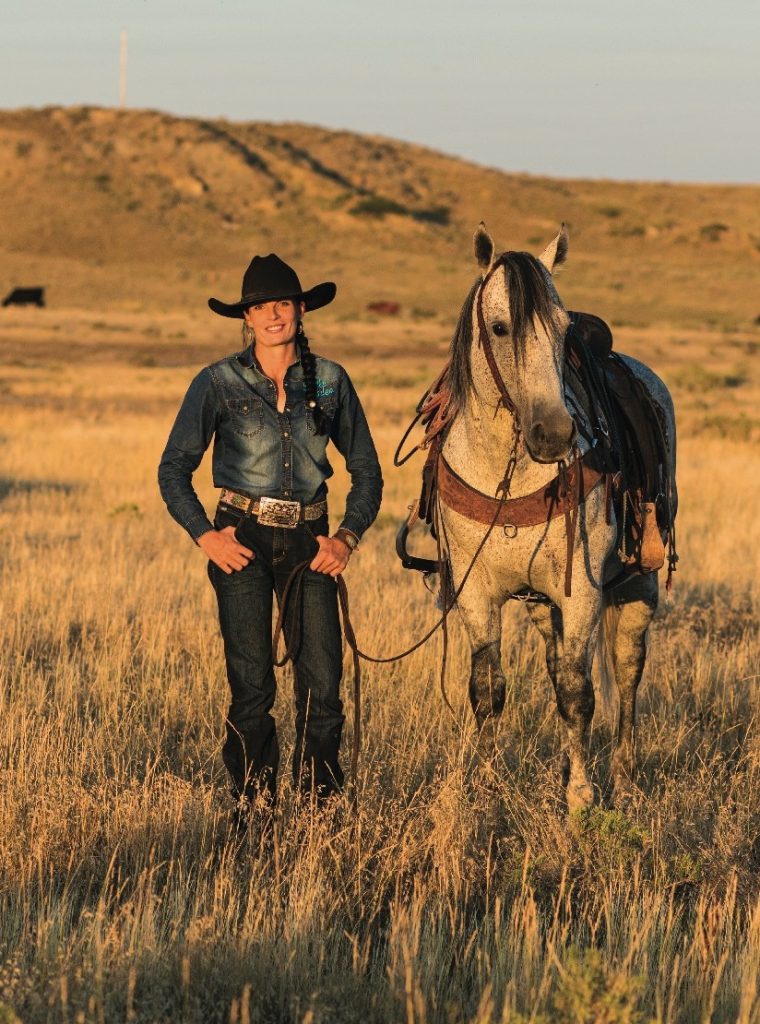
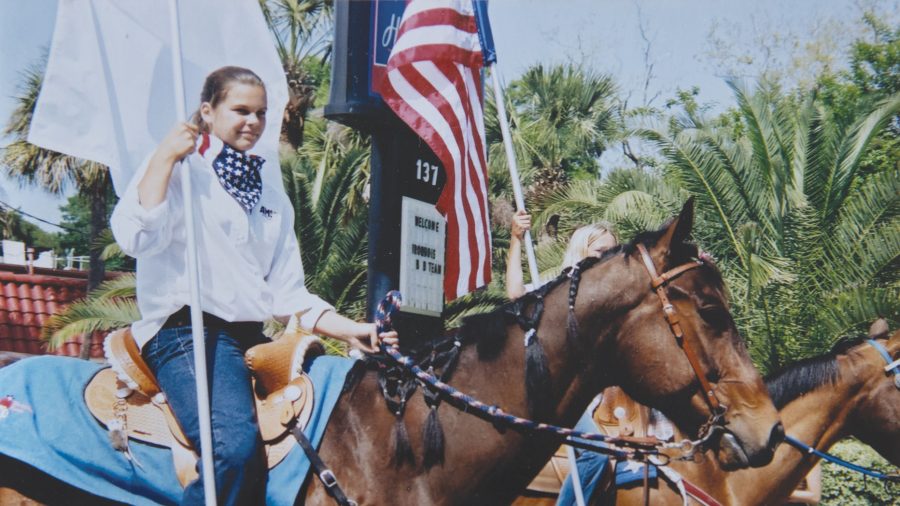
An independent, free spirit, Elle Parker has tried different things in her life, but they’ve always centered around horses. The 29-year-old native Montanan grew up on her stepfather Matt Wald’s family ranch on the Crow Indian Reservation in Lodge Grass, Montana, with strong ties to rodeo. However, Parker was drawn to competing in jumping and three-day eventing.
After high school, she worked on ranches in Idaho and Oregon, where she was usually the only woman on the cowboy crew. A few years later, she did a six-month stint starting cutting horse prospects for Karla Camp in western Montana.
In 2018, she became a state brand inspector. Based at the Miles City Livestock Commission in Miles City, she spends long hours horseback and on the ground working livestock at the sale yard for the weekly sales, as well as traveling to inspect livestock throughout her district and the state. She also day-works, starts colts and shoes horses, and is a single mother to her 6-year-old son, Gabe.
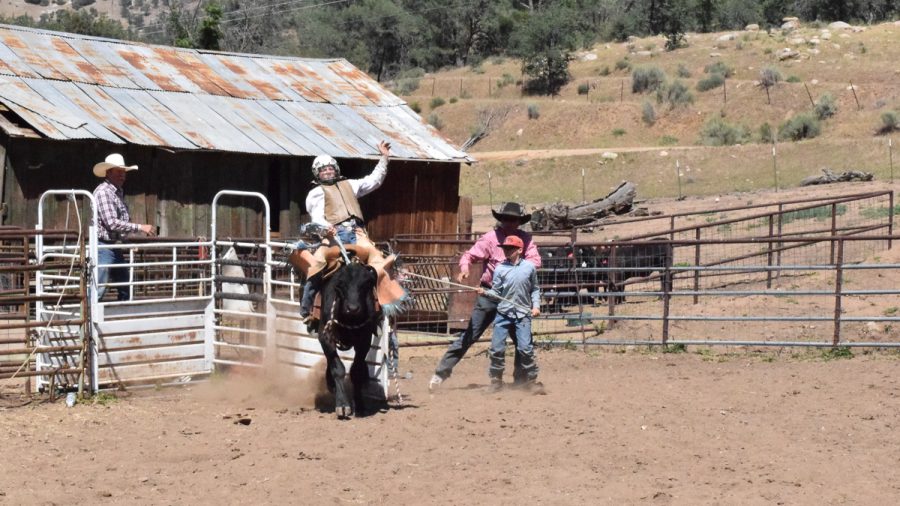
For the past few years Parker has partnered with Rand Selle of Selle Rodeo Productions to produce ranch rodeos and breed bucking horses. They’re also raising colts by their stallion, Espeuela Azul Frost (by Blue Light Ike and out of Espuela Tops by Frosty Tops, shown in the photo), with a goal of producing their own pick-up, roping and ranch horses. Parker also hopes to one day compete in cow horse events on one of the horses she’s raised.
Horses are my passion and have always been there for me. I’m lucky I’ve been able to make my living with them. Every horse I’ve been on has taught me something — good or bad — and made me into the person I am today.
Elle Parker
I grew up on a ranch, doing ranch work, but I also rode jumpers and three-day eventers from the time I was 5 years old until I was 18. It was something my mom wanted to try, so we did and I fell in love with it.
After high school, I went to Montana State University for a semester. I didn’t know what I wanted to do so I moved to Dubois, Idaho, and then Westfall, Oregon, to cowboy on ranches. I was young, single and wanted to see the world from horseback.
It wasn’t hard to get a ranch job as a woman. If it was, then I was hardheaded enough to not realize it.
Everywhere I’ve worked, I’ve learned that there are different ways to do things, but the focus is the same — to take care of the livestock with their best interests in mind.
I gained an appreciation for cow horses working for Karla Camp. She is one of my heroes; she let me show one of her old campaigners and start a handful of their home-raised 2-year-olds. It was a lot of work riding 10 to 15 horses a day, but I learned so much.
Becoming a brand inspector was something I’d had in my mind since my early 20s. Then, in the fall of 2018, my grandpa saw job listings [in a regional agricultural publication] for brand inspector openings, so I applied and got the Miles City job. My uncle, Bill Parker, helped put on the Billings Livestock Sales, and I worked for him and in the stockyards in Billings when I was a teenager. So I had a pretty good idea of what the inspection process entailed, but there was a learning curve with paperwork.
When I interviewed for the brand inspector job, they asked what I thought would be the hardest part. I told them that, for me, it would be working outside in the cold weather. It sounds silly, but honestly it’s what I struggle with the most.
Bucking horses have always caught my attention — they’re so big, strong and athletic. It’s amazing to have the chance to work so closely with them behind the chutes and get to know their individual personalities.
If I come back as a horse, I want to come back as a “bucker” — there’s a lot of care that goes into raising them and taking them to rodeos. We take care of them before we take care of ourselves.
My son, Gabe, is a rodeo kid through and through. He’s either behind the chutes helping me or playing in the dirt with his trucks. Most kids grow up without a sense of God and country. When the National Anthem plays at a rodeo, Gabe knows to get up and take off his hat, and I’m proud of that.
Most of the colts I start are for the public. Our oldest colt crop by our stallion is 2 years old, and I look forward to starting them and taking them on to become horses we use for picking up, roping and ranching. And, I’d like to show one I’ve raised in cow horse.
This article was originally published in the February 2021 issue of Western Horseman.