
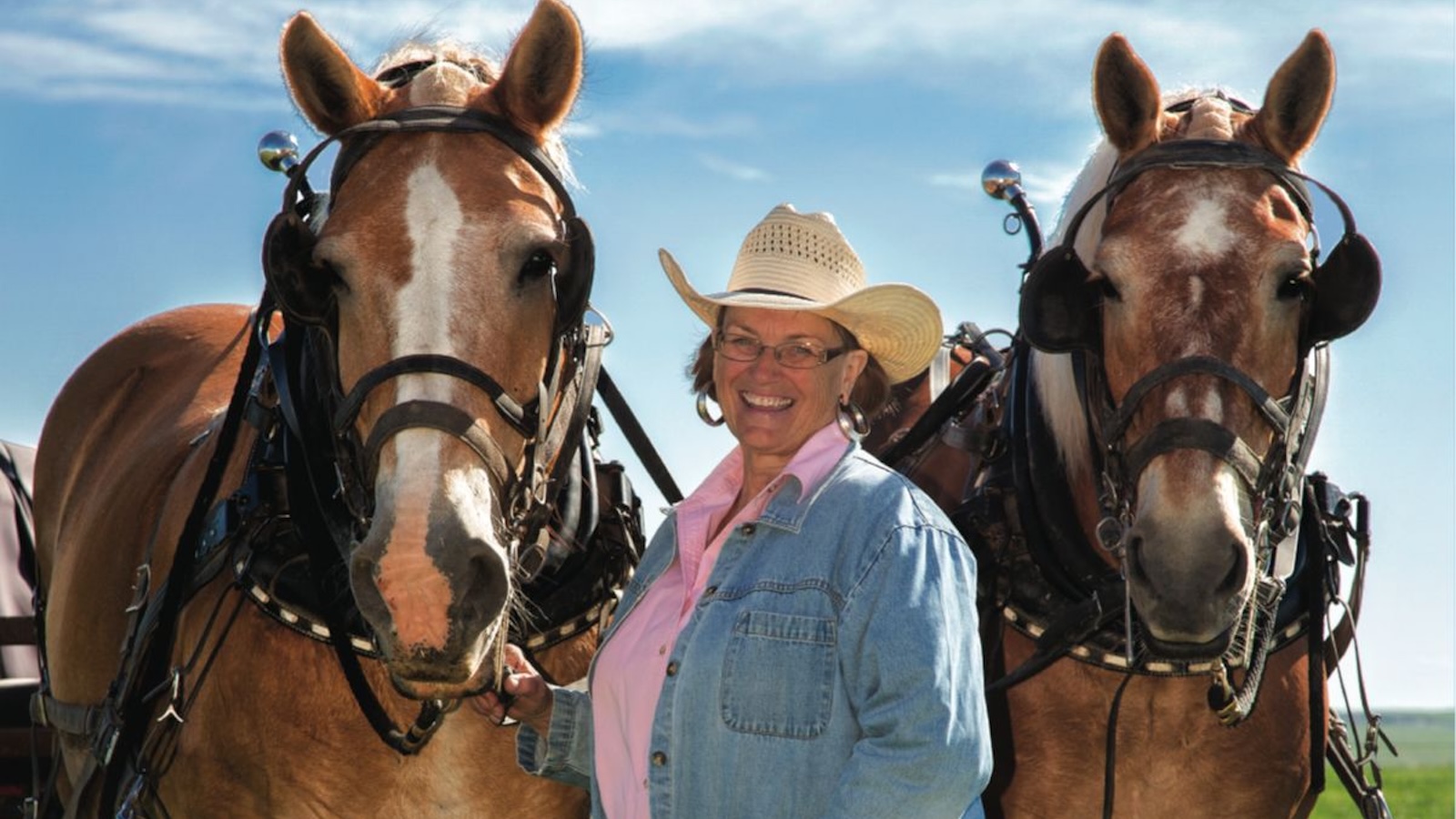
Self-described as the “mouth of the family,” Linda Gilbert speaks up for rodeo, ranching and beef cattle producers.
Linda Gilbert is a South Dakotan by birth and heritage, her family having homesteaded land on the Rosebud Reservation in the southeastern part of the state. Today, she and her husband, Ray, ranch in the northwestern corner, near Buffalo. Like her grandfather and father, she and Ray rely on teams of horses to handle ranch work, and brand calves using traditional methods.
Gilbert has been molded by more than 40 years of marriage and raising two children — LLoyd and Andrea — and has become a strong advocate for ranching. From working as a high school rodeo secretary to serving on the school board to representing beef producers on a national scale, Gilbert gets the job done.
I grew up in a family of five children, including myself, and we always ranched Angus cattle. I tell Ray I only married him because he had Angus!
My dad has teams because my grandfather didn’t believe in having tractors. My father managed a ranch for the solicitor general for President Eisenhower. In the summers, we were sent help from Yale and Harvard. There are probably still old men in therapy from us kids! It was a great way to grow up.
Adults are patient with kids, but I guess someone has to teach a kid how to handle a wreck. When I was 9, I turned some calves back on my dad. I knew I’d done wrong, but my dad came up to me and asked, “Well, sis, how could you have done that different?” Growing up in the rural country is a learning process.
In high school, Dad wouldn’t let us rodeo, so we all entered one the day we graduated! When I went to [South Dakota State University] in Brookings, I was on the rodeo team and was studying early childhood education. That’s where I met Ray. We married and moved to the ranch before I finished, so I took correspondence courses.
The word I learned the most from my mother-in-law was “strength.” You have to be so resilient and strong to survive here.
I was involved in high school rodeo when my children were in it. I think it is every parent’s job to step up and help get those rodeos put on. I was state executive director for the high school association, and during my tenure I was rookie secretary of the year. My children thought that was funny because I was a little old to be a rookie. Now, my grandchildren are growing uo with rodeo.
“Ranching is an independent lifestyle, but it is a partnership. It takes all hands on deck.”
I found it interesting to watch parents take the joy of rodeo away from kids by over-mounting them or putting too much pressure on them. Ten years from now, it is not going to matter about the buckle. What’s going to matter is that the kid set a goal and worked toward it.
In the 1980s, after 17 years of raising kids and ranching, I went back to Black Hills State [University] at Spearfish, 80 miles from the ranch. I took 54 hours in seven months to get my elementary education degree. I had a job waiting for me in Buffalo, and times were tough, I always say my degree cost me 20,000 miles.
When the kids went off to college, we figured my salary was going to pay a hired man, so I quit and came back to the ranch. I’ve been Ray’s hired man ever since.
I’m one of four South Dakota representatives on the Cattleman’s Beef Board, which oversees the Beef Checkoff Program. I try to represent the beef producers in the United States and use their money in a wise way to promote beef. Beef production is an integral part of our economy.
Our part of the country doesn’t lend itself tot he feeder industry, but the cow-calf [operation] is a viable option. I feel we start the process. When that steak hits the plate, it started on a place like ours with a family like ours.
Harding county has 1,100 people and 1 million square miles. There are lots of cattle and few people in our area; we are proud of our cattle. We feel it is important to keep tax-paying citizens on the land, not big corporations. Independent producers are the lifeblood of the whole industry.
We are known as “Sagebrush Rebels” at the state capital, but that is okay. We are strong and believe in what we are doing.
I started on a ranch, and 42 years of marriage later I’m still on a ranch. I’m tickled our son came home to ranch with us. Every ranch, whether on paper or not, is a corporation. They are a board of directors and everyone can have a say. My husband and I are transitioning out now, and I find myself not always knowing what my role is on the ranch. But, I think I’ve got the camp cook won!
Ray’s mother ran this ranch after his father died, and my granddaughter, Sawyer, already says she wants to run it — and boss the boys. There are a lot of strong women out there who have the ability to do this and make the tough decisions, and stand up for the rights of the independent producer.
This article was originally published in the September 2013 issue of Western Horseman.