
Artistic talent is this Alberta horsewoman’s vehicle for making a stake in the cattle business.
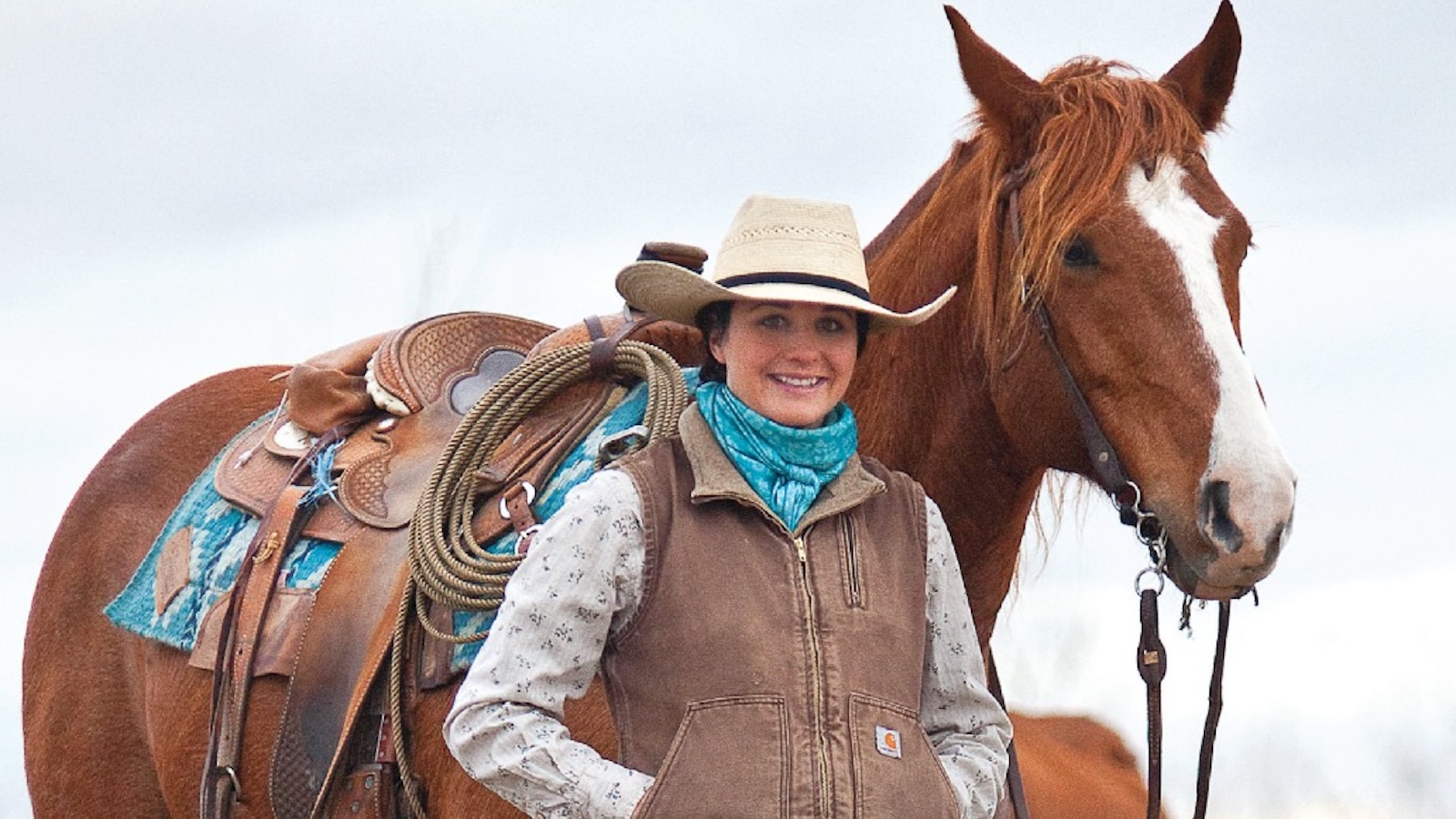
Nicole Viste is a multi-faceted horsewoman. She works as a Western artist, horse trainer, aspiring cattle rancher and rangeland agrologist, using fields such as animal science, food science and environmental science in the ag industry. Getting her to hold still can be like trying to catch a grasshopper in a Mason jar. But her art catalog is proof that it can be done. Viste’s pencil drawings depict serene moments from Western life: a horse in a shaft of sunlight; a toddler sitting on a saddle; cattle feeding at a bunkline. Her artwork has shown at the Calgary Stampede, the Western States Art Expo, the Western Spirit Art Show, and the American Quarter Horse Association’s America’s Horse in Art.
Viste says that artistic success is just a step toward her goal of becoming the fourth generation in her family to ranch on the prairies of eastern Alberta.
I pack a camera with me all the time. At brandings, people make fun of me because I’m always bent over a fence or crawling around the corral for just the right angle. But I get yelled at by my dad: “What in the hell are you doing, child?” This year I got out lucky because two days before branding I had a colt tweak my back, so I was allowed to just be a gimp taking pictures.
If I’m not out chasing my cows, I’m making art to buy more cows. I wrote on my website, “Saving a calf during an April blizzard will always mean more to me than any award.” Dad holds that against me now. April snow hits and he says, “Get out there.” I need to reword that one.
My shop has stacks of barn wood everywhere. When my poor boyfriend comes over, I say, “I’m going to take photos. Will you tear down the old corrals? I need more wood for picture frames.”
When I’m mad, I go for a ride. It’s 10 miles to where my cows pasture. If I get upset, I saddle up and ride out to them. I talk to the cows and then I ride home.
I have a herd of sorrels. My cheapness plays a role. But a good horse is never a bad color. Ideally, I’d have all bay roans. But when you find a bay roan that can do the job, they want four grand more than they would for a sorrel.
Nothing about me is classic. I have bright green chinks that everyone makes fun of me for. I got them three years ago at a trade show. I saw them and said, “I need those.” First time I wore them, it was a foggy day and we were moving cows. Dad says, “If I put you in the lead, we don’t have to worry about any vehicles hitting us.”
“My phone has a thousand pictures on it, and 800 of them are of cows and horses.”
Growing up in my family, being a girl was never an excuse to get out of work. I’ve always had to pull my weight.
I’ve broken up with guys just because I refuse to move. Out here, you can’t beat it. The land prices are reasonable for a young person to get started. I wouldn’t give it up. I’m small-town, it’s me. I never denied it.
I kept track of my time while drawing Holding Onto Tradition. I put 230 hours into it. But I don’t know how much of that was me staring off, thinking, “I could be doing something fun right now.” Maybe when I’m old and crippled I will spend more time on my drawings.
My art is photorealistic. But I’m always finding mistakes. In one of my early drawings, the pony is on a different lead on the front and back. That was a major “woops.” On a more recent one, the hair is too perfect. Some days, I wish I was more loose and free with my drawing. But I’m not. I’m a stickler for detail. I’ll drive myself nuts working on one square inch.
Trying to get started in the ranching industry, even with family backing, is next to impossible. So I have a full-time job, on top of my cows and art. Someday, either my art will pay for my cows or my cows will pay for my art hobby.
With my day job, I get to see a lot of back roads. I’m the rangeland agrologist for the local municipality. It covers 5 million acres.
I have a soft spot for prairie. When I can step onto nine sections of solid prairie and it’s the same way it was 100 years ago, there’s something beautiful in that. To me, riding across prairie gives you a sense for your roots.
This article was originally published in the April 2015 issue of Western Horseman.