

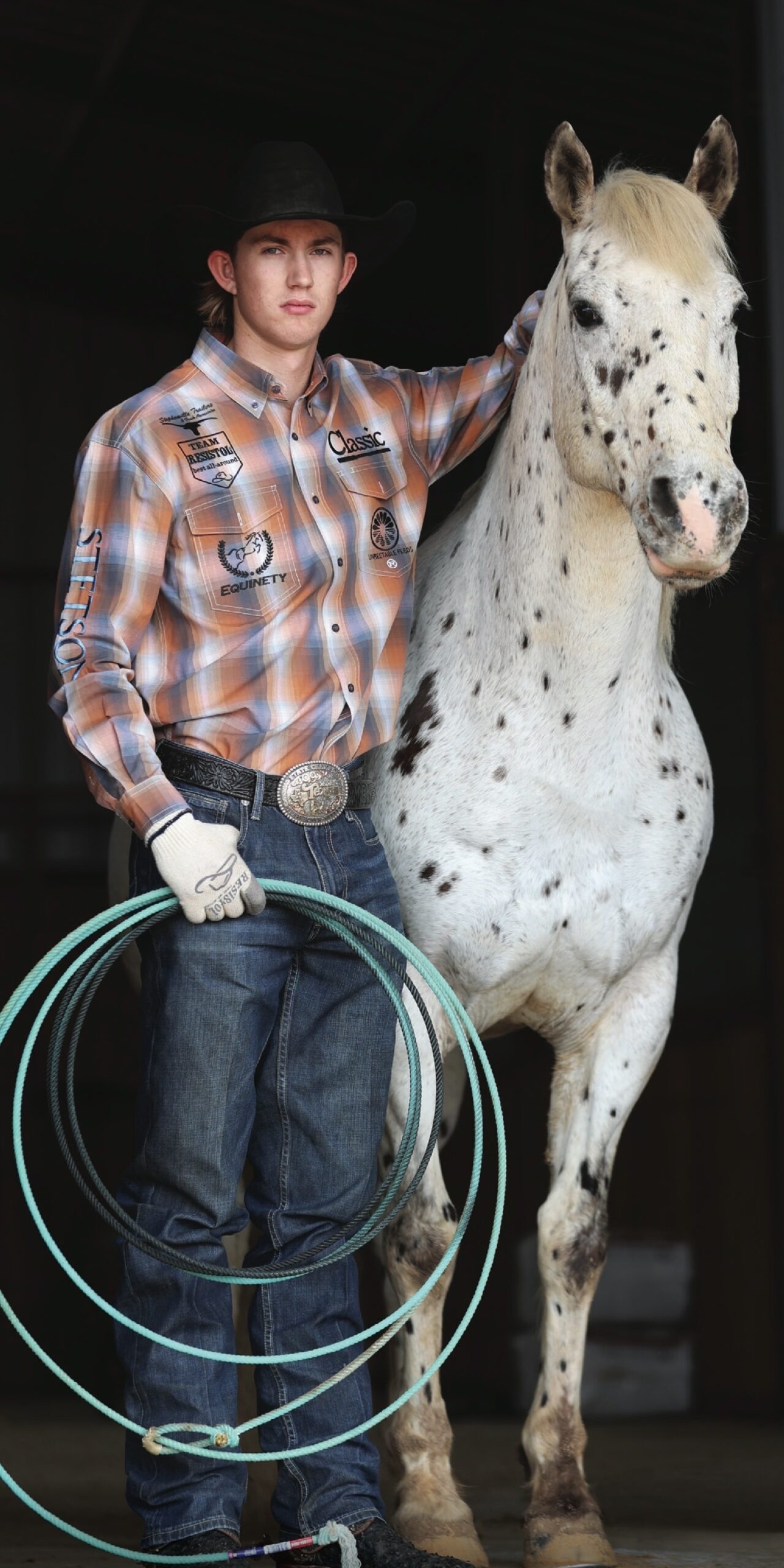
What was once an unusual sight on some of the biggest roping stages in the nation is now commonplace as Nicky Northcott and his leopard-print Appaloosa have quickly made a name for themselves.
Stretching a steer between two ropes is about as natural as breathing for Nicky Northcott and his hard-to-miss leopard-print Appaloosa. He wasn’t exactly born with a rope in his right hand, but Northcott was certainly genetically predisposed to excel in the sport.
“Ever since I was a kid, I wanted to rope. I had a goat in the barn to rope for as long as I can remember,” says the 18-year-old Northcott from Stephenville, Texas, who’s the son of world champion heeler Steve Northcott.
It’s clear the younger Northcott absorbed everything his dad had to teach him, as he’s been roping and winning with the professionals for several years now.
“I grew up around professional ropers thanks to my dad, and that’s been an advantage for me because I learned a lot just by watching them,” Northcott says. “The Tryan boys and I would rope the dummy at the rodeos where our dads were up. We would do that for hours; we didn’t know any different.”
Like most heelers, Northcott first learned to head before permanently switching ends to hopefully one day become a second-generation world champion heeler.
Longer Strides
“The very first rope horse I had was trained by my dad, and even though he was older, he was good,” Northcott says. “When I needed to step up, my dad and I found a horse [Little Johnny] from Kaleb Driggers, and I started heeling on him when I was probably 12. I was going everywhere to rope at that point, and I didn’t want to run too many on him, so I knew I needed a second horse.”
Along came an Appaloosa from another world champion roper, Travis Graves. By Drea Bluhawkrodeoday and out of Wacipi Navajo Sue, the 2009 Appaloosa gelding carried Graves through the 2019 Wrangler National Finals Rodeo. Registered as SBARL Navajo Hawk with the Appaloosa Horse Club, Graves called the gelding “Appy,” but Northcott switched his name to “Apache.” Usually, changing a horse’s name is bad luck, but Northcott and Apache prove that’s absolutely just a myth.
“When I tried Apache out for the first time, I ran 10 steers on him, and I liked him right away,” Northcott says. “I took him to a few jackpots and won them both before I decided to buy him.”
Little Johnny was a much smaller horse, best suited for a rodeo setup, while Apache took longer strides than Northcott was used to. Even though he’d grown accustomed to Little Johnny, it didn’t take long for Northcott to adjust to his new mount.
“I think riding two different styles of horses made me a better heeler,” Northcott says. “With Little Johnny, I can get closer, but on Apache, I have to be further away. His longer stride makes it easy to catch.”
Northcott simply drops his hand to Apache’s mane, and the gelding puts the steer right next to his stirrup every time.
The partnership between Northcott and Apache has proved to be exactly what the budding roper needed. Northcott just recently acquired his Professional Rodeo Cowboys Association permit, but he’s been a 9-plus heeler for several years. He’s caught two heels for professionals at places like the Bob Feist Invitational and the Timed Event Championships.
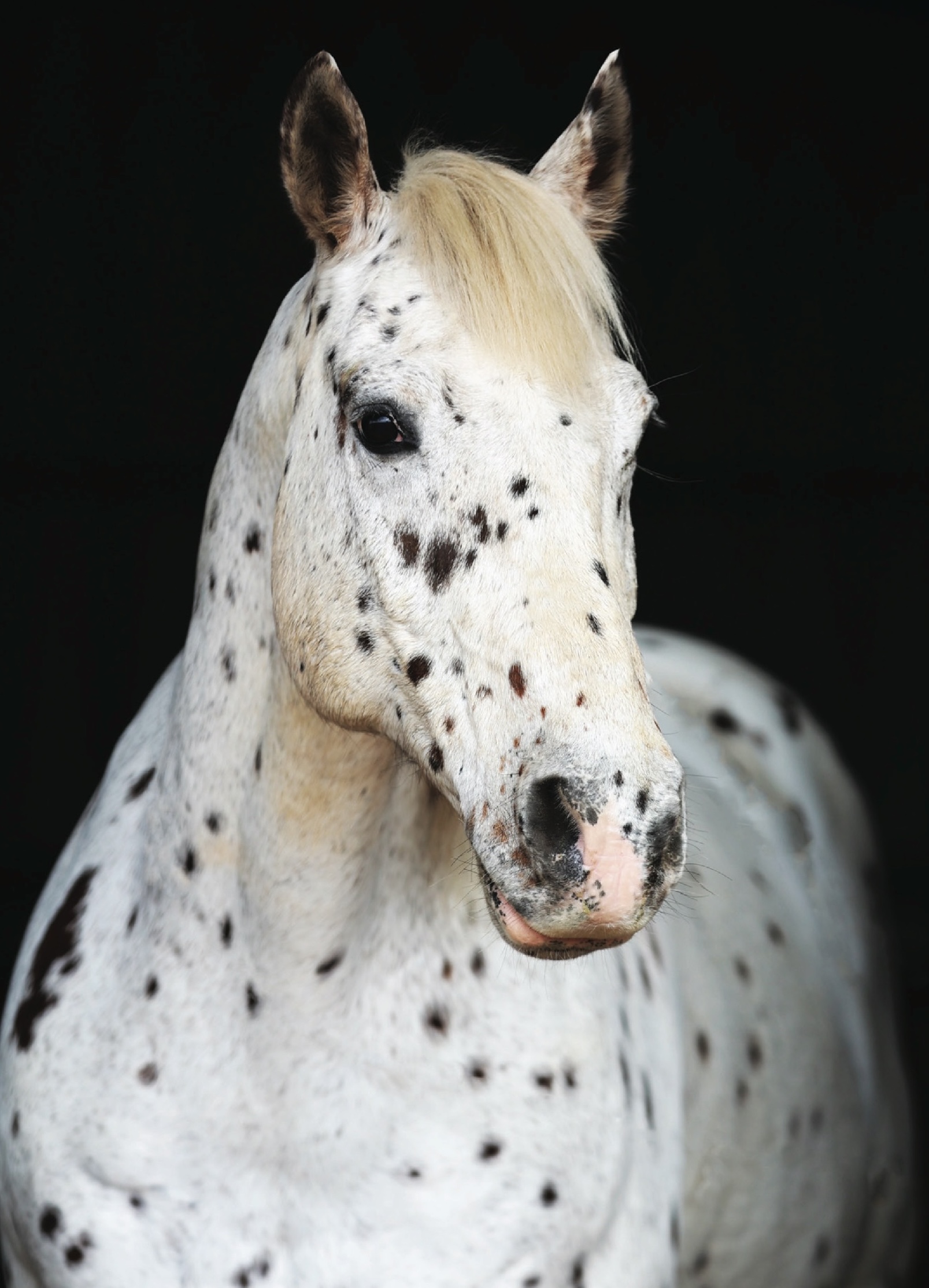
“When I bought Apache, I didn’t care what he looked like or the fact that he’s been to the NFR or anywhere at all. I just wanted a horse that I could win on no matter what,” Northcott says. “I’ve had a few people jump ride on Apache, and everyone comments on how unbelievably easy he is to rope on. That’s what I like most about him: he makes my job easy.”
Top Partners
Now a senior is high school, Northcott has just a few months left before he can put all his time and energy into roping as a professional. He’s set to take on this challenge with his partner, Apache, along with a few other mounts.
“I think Apache has gotten better as I’ve also improved. I throw a lot faster than I used to, and I think he’s gotten faster right along with me,” Northcott says. “I try to adapt to every horse I ride, but if I don’t get along with one, then I don’t generally ride them. I think you need to like your horse, and they need to fit your style if you’re going to do well together.”
Their affinity for one another has been a key ingredient in this partnership that’s racked up quite a few saddles, buckles and large paydays in the last four years.
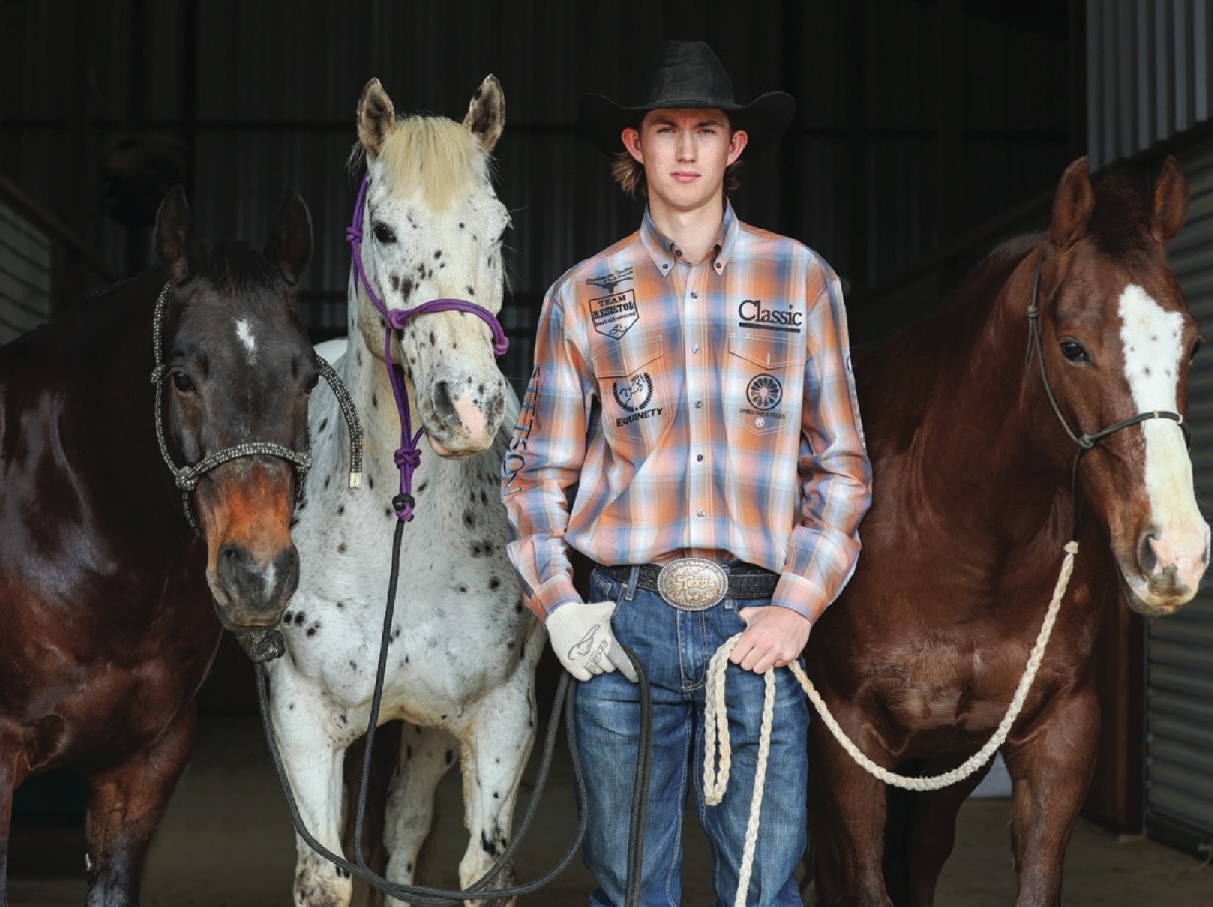
As Northcott turns his attention to the future, he’s thankful for his parents, who support his decision to rodeo professionally. Perhaps it’s an unspoken family tradition that comes second only to a work ethic punctuated by discipline and grit.
“I don’t give a lot of attention to who I’m roping against because I’m trying to beat the steer and heal him the best that I can,” Northcott says. “Every day that I rope, my goal is to be the best I can be. I’m far from being the best, but it’s something I’m always working towards, just like my dad.”
This article was originally published in the June 2025 issue of Western Horseman.
So great to see a person working hard and being outstanding on an Appaloosa!
I picked up a grade appaloosa colt at a kill sale in the early 1980s. He was about 4 months old and totally unhandled. He was smart and sassy. We put him out in the pasture one time. He started moving the 2 calves he was with to the point that they couldn’t eat and went through the fence. He never shared the pasture with calves again. He was very cowey! I love it when colts let you know early what is in their gene pool. We sold him about a year later to a couple who were going to use him as a cowhorse in the mountains. I have always thought that he lived his best life!