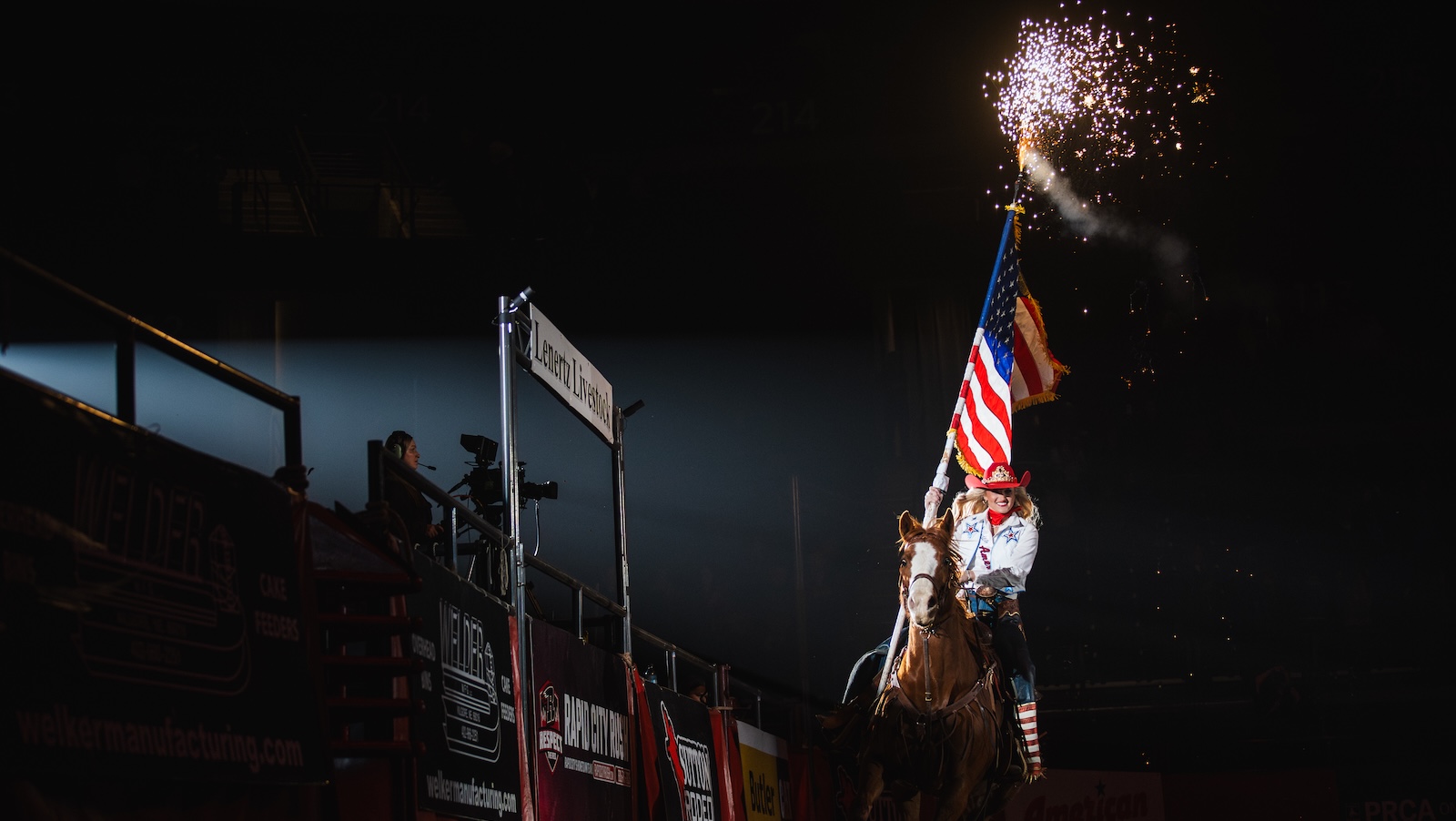
Long before the modern bright lights and smoke used today, Edwin Sutton turned Sunday afternoon ranch rodeos into a spectacle. Running six generations deep and 100 years later, the Sutton family continues that tradition nationwide, with Rapid City, South Dakota, as its centerpiece.
Picture this: It’s the late 1920s, and ladies sipping tea from hand-painted teacups and matching saucers watch as their husbands and ranch hands compete on the Sutton family ranch in one of history’s early organized rodeos. Model T automobiles align bumper to bumper to form an oval arena. Frenzied broncs do what they do best as cowboys cling during wild rides.
And just like that, the stage is set for the Sutton Rodeo Company.
What the Suttons did and still do best far exceeded expectations when they started hosting rodeos at the family homestead in Onida, South Dakota, in 1926. Daredevils leapt from airplanes with parachutes; trick riders sent their horses soaring over anything that stood still too long; and, of course, there was the sight of a cowboy riding a buffalo — a spectacle that became a familiar part of the rodeos.
Even without the smoke and lights of the 21st century, the showmanship from long ago is alive and well in the shows the Suttons produce today. One hundred years of history goes into everything they put their brand on. This includes Rodeo Rapid City, which many would contend rivals the sophistication and prestige of the Wrangler National Finals Rodeo in Las Vegas, Nevada.
As the sport of rodeo has grown and evolved, the Suttons have been a peacemaker in their role as stock contractors and rodeo producers. They’re genetically programmed to think as far into the future as possible, and it all started with the family patriarch, Edwin Sutton.
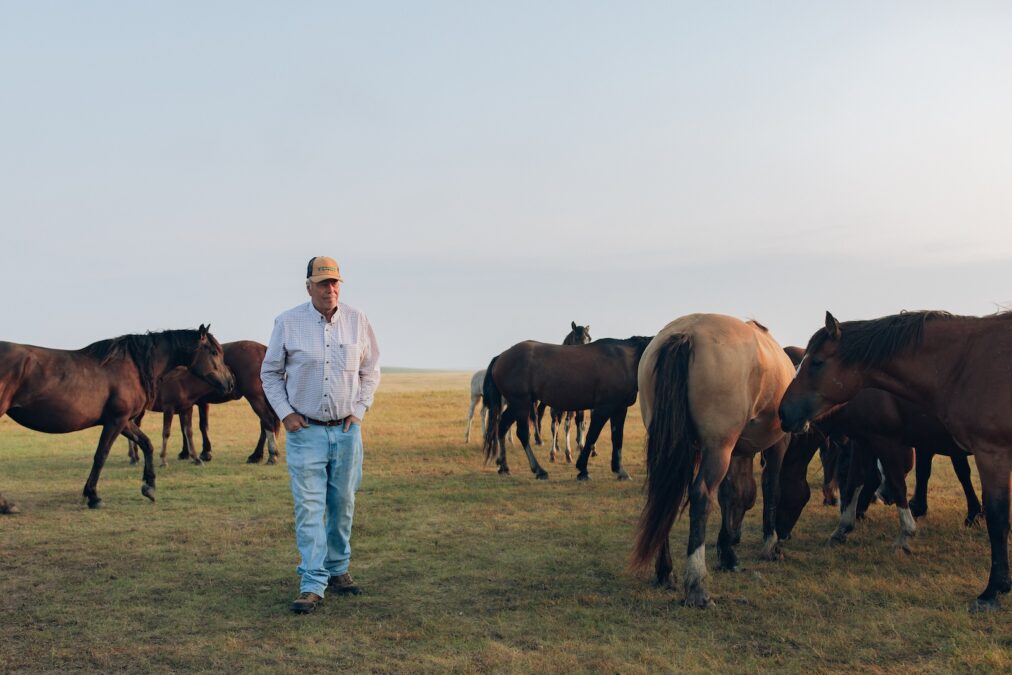
“Those first rodeos on the ranch were mostly for the neighbors, but they grew into three-day events pretty quickly,” says Kim Sutton, who married Edwin’s great-grandson, Steve Sutton, in the early ’80s. “The showmanship was on display from the very beginning. They didn’t just rope and ride. There was all kinds of entertainment going on.”
Undoubtedly, Edwin would be proud of everything his family has accomplished as a company and how they’ve carried on and even added to the pageantry of their events. In the last five years alone, Rodeo Rapid City has been named the Professional Rodeo Cowboys Association’s Large Indoor Rodeo of the Year four times, including in 2024. It’s a testament to the family’s commitment to honor their origins while continuing the path that Edwin pioneered.
The Story
Seeing a unique opportunity to produce rodeos off the ranch, Edwin teamed up with George Fairbank. They established what may have been the first stock contracting company and embarked on a kind of rodeo tour. The Great Depression quickly put out that flame, but the embers remained hot.
“Great-Grandpa and George started back up in the ’40s,” Steve says. “Later on, [in 1956], my grandpa [James Sutton Sr.] started a rodeo company with Erv Korkow.”
Around the same time, the Cowboys’ Turtle Association rebranded as the Rodeo Cowboys Association, and almost 30 years later, it would become the PRCA.
“When my dad and grandpa started in business together, that’s when they organized a string of horses to take to the RCA events; that was the launch of our professional career,” Steve says.
“I know for a fact that in those first few years, Jim and Julie lost money while they were building that event. They had a vision, and they were committed to it. They made a lot of sacrifices to make it into the success that it is today.” — David Allen
Few rodeo companies were integral players in the birth of professional rodeo, but the Suttons certainly were.
“As the story goes, Grandpa and Erv were in Erv’s garage in Blunt, South Dakota, after putting on a rodeo when they, along with Casey Tibbs and several others, thought up the idea of putting together a finals event,” Steve explains. “As far as I know, the idea of the NFR was born in that garage.”
The first NFR was in December 1959 in Dallas, Texas.
“The Suttons took stock to that very first NFR, and they’re part of a very small group of people who have taken animals to every NFR,” says David Allen, who has been immersed in the industry both personally and professionally since infancy. David grew up just down the road from the Suttons in Deadwood, South Dakota, but didn’t start working with them directly until he was on staff with the PRCA and later Wrangler Jeans.
“Jim [James Sutton Jr., Steve’s father] was a visionary; he was always willing to take risks and try new things,” David adds. “In the ’70s, it was the Suttons and Cotton Rosser who were the most progressive stock contractors in the sport.”
It wasn’t until 1968 that Sutton Rodeo Company was born on paper when Jim bought into the family business.
“My dad played basketball for South Dakota State University, and he was the first graduate from that school to be drafted by the NBA,” Steve says about the South Dakota Sports Hall of Fame Athlete who raised him. “He was drafted by the Minneapolis Lakers in 1957. And he was off playing basketball around NFR time when he finally had to make a choice. Basketball didn’t pay that much, so he left the team and took stock to the NFR instead.” It was very likely an agonizing decision for a player who still holds several free-throw shooting records at SDSU; Jim led with his heart, and his family followed his example. As a new building went up in Rapid City, Jim had an idea.
The Rodeo
“I remember going to Rapid City with my mom, [Julie], and dad, and we convinced the mayor to fill the new arena with dirt so we could put on a rodeo,” Steve says.
The first Rodeo Rapid City performance was in January 1978, and it was called the Black Hills Stock Show Rodeo. It was held in conjunction with the Black Hills Stock Show, and the two events have been running in tandem for more than 40 years.

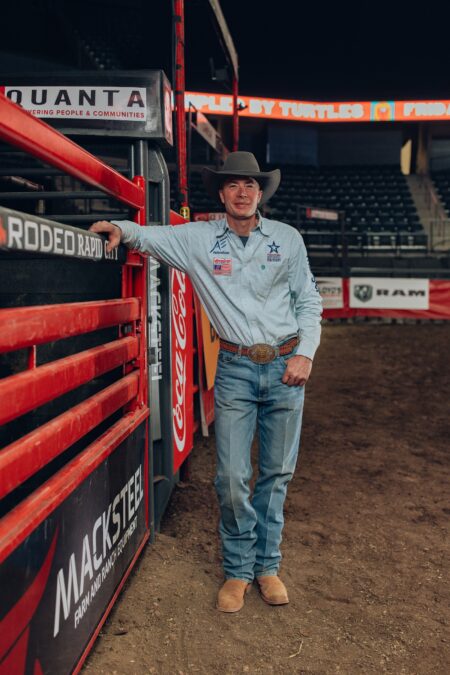


“I know for a fact that in those first few years, Jim and Julie lost money while they were building that event,” David says. “They had a vision, and they were committed to it. They made a lot of sacrifices to make it into the success that it is today.”
A rodeo in South Dakota in the middle of winter sounds like it should be dead on arrival, but the Suttons saw the broader picture.
“Steve and I started dating in 1978, so I’ve been around this rodeo for a long time,” Kim says. “Most rodeos of this size will have a committee with somewhere around 1,000 people on it, but it’s always just been the family.”
Even though committee meetings happen around the Sutton breakfast table, an army of personnel has also bought into the vision.
“We’ve had phenomenal building managers and their staff in Rapid City who have done everything they can to help us be as successful as possible,” Kim explains. “From the person at the front gate to the visual manager calling the spotlight, they bend over backward to help us put on the best show every single year.”
Much like the family themselves, everyone in the labor force pitches in where they see a hole. That’s the only way the almost 10-day event continues to be a resounding success.
“Everyone we hire works their hearts out, and it makes all the difference,” Kim says. “They’re like family to us. They’re dedicated, loyal and committed to quality, and it shows in the product they help produce — the rodeo.”
Steve and Kim’s daughter, Amy Muller, is now in charge of hiring that labor force. You might say she’s the woman behind the curtain, even a horse of a different color.
“My grandparents were known in the industry, on a national scale, for their openings and pageantry,” Amy says. “That responsibility was handed down to me when I bought into the company with my brothers and my dad.”
“Horses are the backbone of our operation. They always have been.” — Steve Sutton
Not only does Amy hire the personnel for the event, but she’s also their go-to gal during the rodeo. She plans and coordinates the tradeshow and everything outside the arena that makes Rapid City a top-tier destination.
“Rodeo Rapid City is the crown jewel of our company, and we do our best to entertain the fans not just at the rodeo but the entire time they’re in town,” Amy adds. “We try to make it a must-attend family event, and I think that lends itself to creating those forever fans. If you had a great time here as a kid, then you’ll likely bring your own kids one day.”
Rodeo Rapid City is one of the largest events in the state, surpassed only by the Sturgis Motorcycle Rally. The addition of Summit Arena three years ago helped the Suttons take their performance to the next level, and maybe one day, they’ll grow bigger than the Rally because of it.
“I can hardly remember what it was like in the old arena; it’s so small compared to the new one,” says Brent Sutton, the second oldest of the three siblings. “When they were designing the building, we were surprised that they asked us for suggestions. They implemented a lot of them, and they really helped the functionality of the building for hosting such a large rodeo.”
One of their suggestions was a tunnel connecting the old and new buildings, giving contestants an indoor arena to warm up in.
“From day one, it’s been about producing the best possible rodeo for the contestants while also focusing on interesting openings and specialty acts the whole family would enjoy,” Kim says. “On the first night of the rodeo, Jim would always joke that the crowd would double the next night, that word would get out about how good the first night was. That’s the story of Rodeo Rapid City — that it grew and grew until it was nominated for PRCA Large Indoor Rodeo of the Year.”
Nominated for the award 24 times now, they’ve won a total of six times so far. The driving force behind their success is Jim and everything his father and grandfather taught him. Jim was the mastermind behind the event in the first place and, through it, created several now well-known rodeo staples.
“When I was at Wrangler, Jim and I put our heads together and created the tour that later became the Wrangler Bull Fights,” David says.

Through Rodeo Rapid City, Jim also created the Bailey Bail-Off, World Championship Wild Horse Races, Bull Poker and the Teeter-Totter.
“Jim was willing to push the envelope and try new things to grow the event. I learned so much from him and Julie,” David says. “Back then, rodeo sponsorship was almost unheard of. Julie was light years ahead of everyone else; she had a firm grip on the Rapid City market and knew how to draw sponsors in and take very good care of them. I learned a lot of what I know about marketing and sponsorships from Julie.”
The Stock
Meanwhile, back at the ranch, Jim was more than just a rodeo man. He was also one of the top horse trainers in the region. He was making cutters, reiners and all-around ranch-type horses, many of them going on to win world titles after they left the Sutton ranch.
“Horses are the backbone of our operation. They always have been,” Steve says. “Way back when Dad was getting started, rodeos weren’t nearly as far away as they are now. They used to trail the bucking horses to and from rodeos. Erv was in the trucking business, so one of the benefits of teaming up with him was that they didn’t have to trail the horses anymore.”
Trucks didn’t eliminate the need for high-quality saddle horses running alongside the broncs. In fact, it was because Jim trained horses that the family stumbled upon an un-registered palomino son of Plaudit named Sun Up in the ’40s. Hailing from Texas, Sun Up was the first stallion on the place. He threw horses that were built right and looked like they’d make perfect saddle horses. But as time went on, the family discovered that his offspring also had the same passion to buck.
“From day one, it’s been about producing the best possible rodeo for the contestants while also focusing on interesting openings and specialty acts the whole family would enjoy.” — Kim Sutton
“He was just a Quarter Horse who bucked, and so did his colts; that’s essentially what started our string of bucking horses,” Brent says. “Probably the best thing my dad [Steve] did for our breeding program was bringing together different stock contractors and trading studs. He made a deal with those guys that every stock contractor could use the studs in the sort of pool they had on two mares.”
The studs who qualified for this handshake deal needed to have either bucked at the NFR themselves or both parents had done so. This unique idea continues to pay dividends for more than just the Suttons.
“I’ve never heard of stock contractors sharing bloodlines in that capacity other than this deal with my dad,” Brent says. “That was huge for us because we don’t buy broncs. We use 100% of our own horses at the rodeos.”
One of the founding fathers of their herd is a Sutton stallion, Justin Boots. He continues to be the backbone of the mare power, which is still strong today. More than just livestock in a pasture, these horses are part of the Sutton family.

With almost 700 head in the bucking horse pasture, it’s all Suttons on deck at home and on the road. Their work ethic was built honestly and is reflected in the recognition professional rodeo has afforded them.
“We’re known for our bucking horses, and if we didn’t raise them, I don’t think I’d go to another rodeo,” says Steve and Kim’s youngest, Brice Sutton. “Raising a horse from the time they hit the ground and then watching them make it to the NFR, that’s the fun part for me. I even named my daughter after one of them — Ruby Belle.”
Fans come to Rapid City for the rodeo but stay for the entertainment. Contestants go because they know they’re getting an even pen of animals when they enter a Sutton event. That’s why it’s not unheard of to watch the top contestants in the world at Rodeo Rapid City at any given event.
“With the caliber of contestants and the quality of the stock and production, we can go toe-to-toe with any rodeo,” Steve concludes. “We’ve been around for 100 years, and now that our kids are taking over, the way they’re making things bigger and better, there will probably be a day when we’ve been in the rodeo business for 200 years.”
This article was originally published in the June 2025 issue of Western Horseman.