


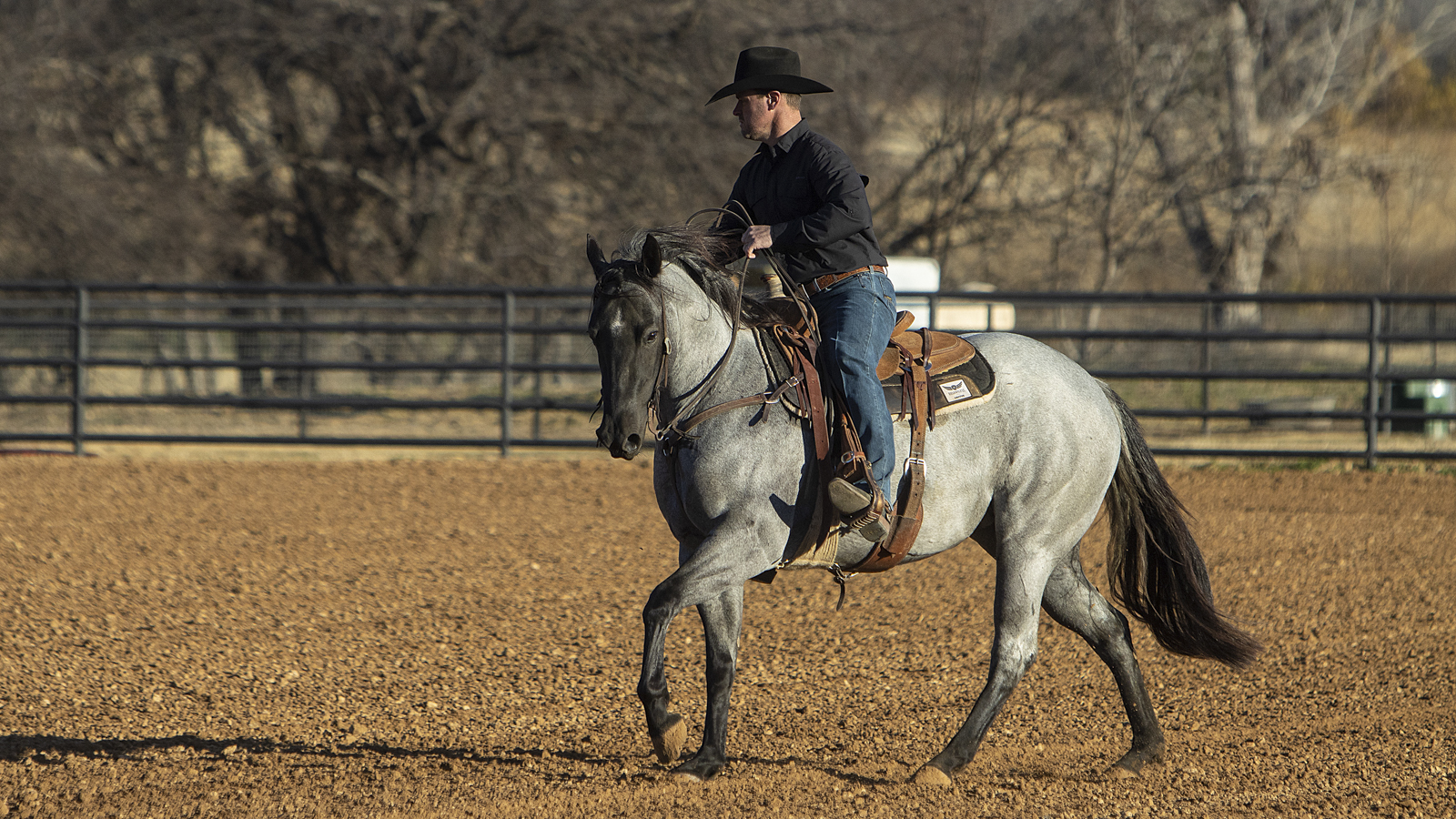
From standout sales to major program changes, recent headlines reflect a fast-moving market and a Western industry adjusting to meet the moment.
Market momentum and million-dollar horses. Major players shifting focus. The industry’s landscape is changing fast, and the social media comments are being posted even quicker and in full force last week after headlines surrounding the $1.7 million sale of rope horse Crosby Ray Von and the announcement of an absolute dispersal sale of Teton Ridge performance horses. What does this mean for the Western industry, and will the market remain strong in the months ahead?

3-year-old Crosby Ray Von sells for $1.7 million
In Heber City, Utah, Crosby Ray Von, a 2022 blue roan filly consigned by Wittwer Performance Horses (Solo Select/Relentless Remuda, agent), recently sold for a record $1.7 million. The horse is by Stevie Rey Von and out of Ma Crosby SI 80, by Valiant Hero.
The mare, who is training with Trevor Brazile and Miles Baker, is eligible for the $1 million incentive in 2026. According to the Old West Rope Horse Futurity website, “Purchasing a horse through the Old West Rope Horse Sale qualifies you for a shot at the $1 million bonus. For example, if you buy a 3-year-old in the 2025 sale, that horse becomes eligible to compete as a 4-year-old in the 2026 Old West Rope Horse Futurity for a chance at the $1 million.”
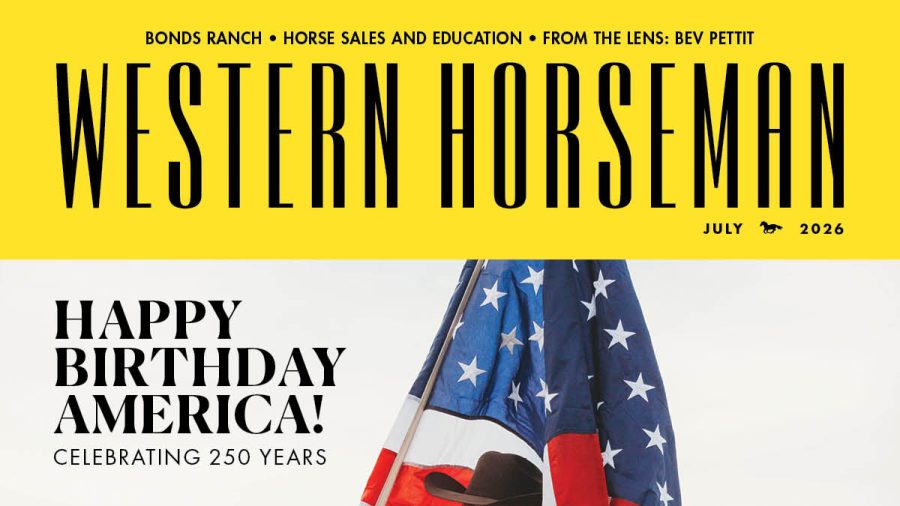
Crosby Ray Von appeared in the horsemanship article in the July issue of Western Horseman, written and photographed by Ross Hecox. Hecox had the opportunity to follow up with Baker on the sale of Crosby Ray Von.
“[The final sale bid of $1.7 million] had me in tears, because I knew she was as good as a 3-year-old can be. She’s special, and I knew she was going to bring a lot of money. I just didn’t know it was going to be that much money. At a public auction, you never know what kind of mood everyone is going to be in,” Baker says.
“She’s out of a mare that ran on the track, won a little bit of money, but wasn’t a top-end racehorse. I’m starting to see a lot of mares — big strong mares that could run enough but maybe weren’t ‘racey’ enough on the track — come over and produce good in the roping,” Baker continues. “[Crosby Ray Von] is big and strong, but she’s got a lot of feel. She has a lot of run, and she’s real quick about it. She has a lot of sting to her. On top of all that, she’s really good-minded. She’s got a lot of life to her, is talented, but she’s got a good mind and can take training good. We mixed cow [sense] with some run and mixed mind with ability. I’ve had a good feeling about her since the beginning.”
Raised on his family’s cattle operation near Snyder, Oklahoma, Baker parlayed his ranching roots and roping talent into a powerhouse partnership with Trevor Brazile, producing top rope horses through their Relentless Remuda program and earning over $1 million in competition in 2024, including major wins at American Quarter Horse Association shows, rope horse futurities and the World Series of Team Roping Finale.
“I’ve always been thankful just to do this for a living, riding good horses and training ones with that much potential. But then, for me to get to sit in the front row and witness that happen on a horse that I trained, well, if you have a passion for training horses and that doesn’t bring you to tears, your passion doesn’t run deep enough,” Baker says.
As Hecox noted, the new owners, Alan and Melissa Jones, called Baker the day before the sale and asked if he would be willing to keep training her. He said he’d love to. Alan Jones plans to visit Baker this week and put his brand on the mare. Jones, of Borger, Texas, owns a manufacturing company and now has a ranch in the area.
Dispersal Sale of Teton Ridge Performance Horses
On June 25, Western Bloodstock Ltd. announced the absolute dispersal sale of Teton Ridge Western performance horses. The post states, “Never before has the industry seen a lineup of this caliber offered in one place, at one time.”
Teton Ridge, the new home of the Cowboy Channel, will offer “more than 100 head spanning top-tier stallions, broodmares, embryos, yearlings, 2-year-olds and aged-event horses.”
Offerings include Smooth Talkin Style (lifetime earnings of more than $305,000 and sire of more than $9 million), All Spice (lifetime earnings of more than $570,000), Third Edge (lifetime earnings $342,000), Twice In Santiago (lifetime earnings $276,000), and Dunit A Lil Ruf, a producer of more than $1.2 million. Babe On The Chase, who has earned more than $550,000, is also in the offering. Her standout daughter, Tres Chasin Babe PZ, is also featured and has earned more than $546,000 in barrel racing.
While Teton Ridge made headlines in recent years for high-profile investments in breeding and competition, the decision to sell the entire program signals a shift. The company’s strategic pivot raises questions — and opportunities — across the Western industry. The sale will be September 29 in Weatherford, Texas.
Market Watch
The history of the Western horse market is interesting, especially if you’ve joined the game in the last 15 years. The market has grown into a dynamic industry that mirrors Western lifestyle, technology and even culture changes. Some may credit this to the “Yellowstone effect,” but it started way before the surge from the popular TV show.
Horse sales such as the Pitchfork Ranch Horse sale have capitalized on the current trends by reintroducing their sale, which historically was held in the 1970s and 1980s. The Wyoming ranch was founded by Otto Franc in 1878 and was well known through the late 1900s for their horse program. You can read more on the Pitchfork Ranch in our September issue of Western Horseman.
Alongside husband Ben Anson, Lindsey Anson was pivotal in reintroducing the horse sale.
“It’s been really fun to watch the sale grow over the course of the last few years,” she says. “The first year it felt like we could barely scrape together enough horses to hold a sale, and now people from all over the country are calling about their consignments.”
The sale has gained attention for its authentic preview, including a head and heel branding. On day two of the horse sale, consignors have the opportunity to throw a few loops and drag caves to the fire.
“We’re not the first people to hold a sale centered around a branding, but I do think what sets us apart is the three-day preview — we really want the buyers to be present at the sale, to try the horses and watch them preview for all three days before making a decision on the third day,” Anson says.
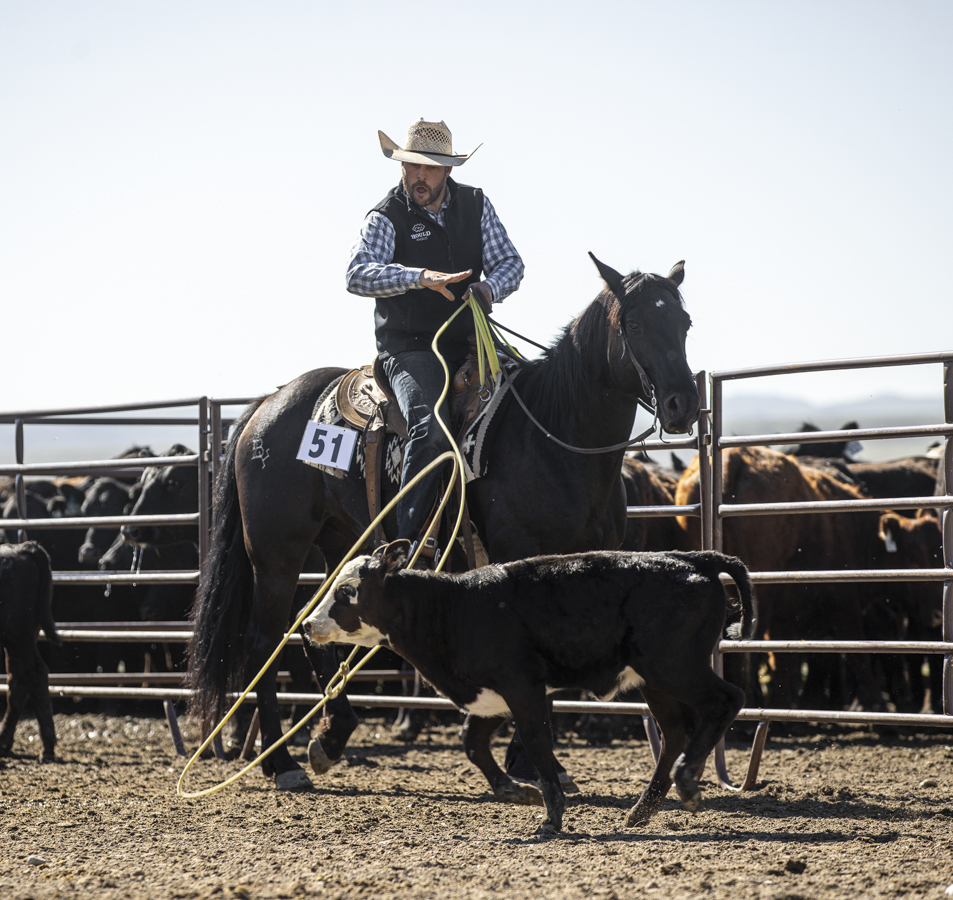
From rope horses to ranch horses, the real horsemen have their own thoughts about the market. Many commented along the lines of “it’s eclectic,” and “horses are probably worth the money, but the high prices are also shrinking the equine business.”
Even with all the talk about trends and high-dollar sales, the core values of the horse business hold steady.
“One thing I feel very strongly about is that there will always be a market for good horses,” Anson says. “You may see sale prices fluctuate year to year, but there will always be a need for well-broke, good-minded horses, and we’re grateful to both the people who make those horses and to the buyers who come year after year to support the sale.”




Interesting article. Nothing of real value here though. Just a rehashing of info already available over the last few weeks. More info-mmercial than anything. What’d solo, Teton ridge, and pitchfork have to pay for the exposure?
Not much substance to this article about real trends. I would strongly disagree that the Yellowstone ripple effect hadn’t been tremendously significant however. These sales have flat out exploded since the Yellowstone effect came into play.
It will be interesting to see what the TR folks’ real motives are for the industry overall, now that they control so much of the media representing western and ag life. The relatively quick acquisition and sudden divesture of their equine assets sure makes one doubt their motives.
Roping horse industry is moving the same way as the hunter/jumpers and cutters – better have a good trust fund to play the game!