

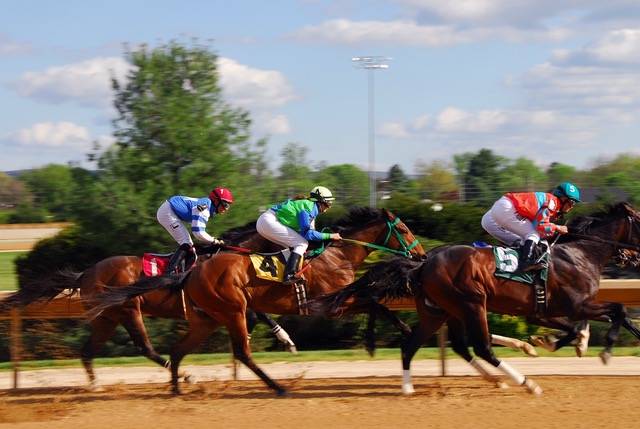
Traditional horse racing fans know there is no better feeling than the rush of adrenaline from watching horses thunder down the track. That applies to all horse fans, especially if you’re already a Western rider or a fan of the Western riding lifestyle. A love for horses and everything about them brings people together, but most Western riders are familiar with barrel racing, reining and roping. These events are judged by time and skill and have little to do with betting lines.
Betting odds belong more to the world of bookies, fancy race tracks and ladies with big sun hats and cheque books. Sure, betting odds might seem like math in the beginning, but once you understand the basics, reading odds feels less like a puzzle and more like having the key to unlock a whole new world. Let’s get into the patterns, the strategy and how to spot a winner before anyone else!
Let’s review the basics
Horse racing odds are just a fancy way of saying two things. First is how likely a horse is to win and the second is how much money you’ll get if it does. This means that the lower the odds, the more people believe that the horse will win. However, that comes with rather modest payouts. Higher odds mean that the horse is less favored, but if it wins then you could pocket a nice chunk of money.
Odds are displayed in a few formats, and the most common is fractional odds. Odds of 5/1 mean that if you bet one dollar, you’ll win five and get your initial bet back too. If you ever feel stuck or just want to double check how much you can win, a handy tool like a betting odds calculator does the math for you in seconds.
Other sites can use decimal or moneyline odds. With decimal odds, the number you see is the total amount you’ll get for every dollar you bet. For example, if you bet $10 and the odds are 3.50, you’ll could win $35, which is $25 plus your initial $10 back.
Moneyline odds are mostly used in the US in sports betting, although they might come into play in horse racing too. Moneyline odds have either a plus (+) or minus (–) sign. If you see +300, it tells you how much profit you could make on top of your bet. When betting $100 at +300 then you would win $300 plus your original $100 back. If you see a minus, like -150, that tells you how much you need to bet to win $100. Making a bet at odds of -150 means you’d have to bet $150 just for the chance to win $100. This can be a bit confusing at first, but is actually quite easy to understand.
Who comes up with the odds?
Odds are not being pulled out of thin air. Bookmakers set the opening odds based on a wide array of factors. They look at the horse’s past performance, the jockey’s skills and how good the trainer is. Even the smallest details like weather and track conditions matter. A muddy track can have serious implications on the outcome of the race.
Once the bets start coming in, the odds start to change. This is called live odds. If a lot of people start to bet on the same horse, the odds usually drop. Think of it like the horse suddenly becoming a popular kid in school. Horses that don’t attract many bets may have their odds go up and that means bigger payouts if they surprise everyone and manage to win.
The starting point for the odds is called the morning line. It’s like a track’s best guess at what the odds will look like when the betting finally opens. Before anyone can place a single bet, the track handicapper, which is the person who studies a horse’s past and sets the odds, looks at the details and sets the morning line odds.
This gives people an early idea of who the favorites are, and which horses are unlikely to win. The odds are not set in stone and will start moving up and down depending on where the money goes. A horse might open at 8/1 in the morning line but drop to 3/1 if a lot of people start betting on them, but the odds can also go the other way.
Avoid the common mistakes
The first mistake is to bet based on your gut feeling instead of your brain. We all have our favorite picks, but just because you like a horse doesn’t mean it’s the smartest choice that day. It may have had a rough training week or the track conditions may not be ideal for it. It’s always a good plan to check the details before letting your heart decide.
Another big mistake to make is to chase your losses. If you have lost a bet, don’t rush to throw more money at the next race hoping to win it back. Don’t dig yourself into a deeper hole. Step back, breathe and remember that any type of gambling should be done responsibly, with money that you can afford to lose.
Also, don’t neglect any last-minute changes. Sudden weather changes or a jockey switch can change the whole outcome of the race for a particular horse. Muddy tracks can seriously throw off a horse that prefers dry ground. Staying alert up until the race starts is your best bet.
Horse racing for Western riders is about people, stories and deepening the connection between people and horses. When you understand the betting odds, you are much more connected to the action. You can feel like you’re part of the strategy, not just spectating from the sidelines.
There is no better feeling than cheering alongside fellow racing fans when your pick charges towards the finishing line. Next time you’re watching a race, you won’t be somebody who just stumbled on the track — you’ll understand the race like a true pro.